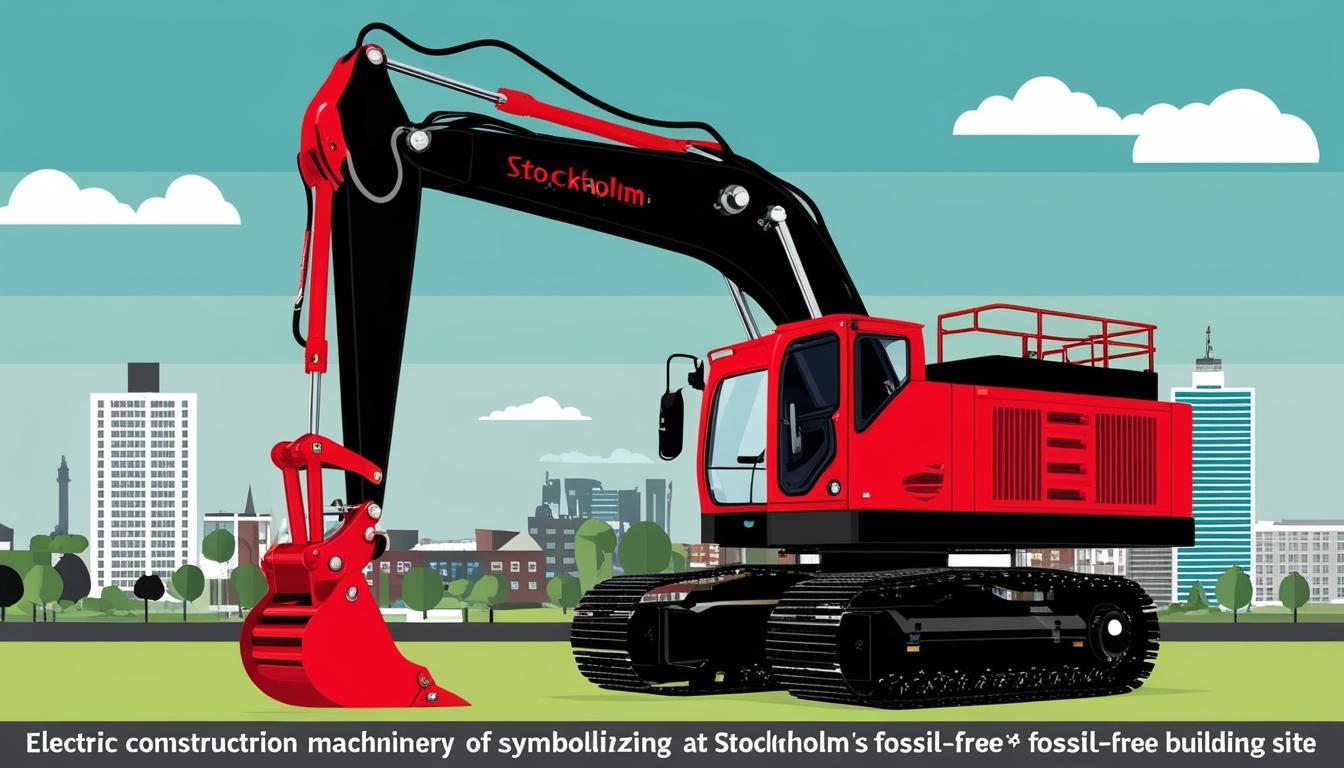
A significant transformation is underway at Stockholm’s pioneering fossil-free construction site, which is now striving to achieve a remarkable 50% electric machine operation. This target reflects a substantial increase from the 10% goal set just two years ago. The project, focused on redeveloping the Slakthusområdet, the former meat-packing area in central Stockholm, has gained recognition for its commitment to sustainability and innovation in construction practices.
By June 2024, the first phase of the Slakthusområdet project had already resulted in CO₂ savings of approximately 2,759 tons and has been awarded the title of ‘Sustainable Construction Project of the Year’ at the annual Swedish Green Building Awards. The completion of this initial phase is scheduled for early 2025. Following this success, stakeholders involved in the project, including Volvo Construction Equipment (Volvo CE), Skanska, and Swecon, are gearing up for a more ambitious second phase that emphasises even greater climate objectives.
Stockholm City has set its sights on becoming climate positive by 2030 and fossil fuel-free by 2040. Integral to this vision are the fossil-free requirements in contract procurement, which aim to drive significant change in the construction industry. For the second phase of the Slakthusområdet project, Stockholm City has incorporated carbon calculations into the tender process, establishing a new benchmark for sustainability accountability. Skanska secured the contract by demonstrating previous sustainability achievements and aligning its proposal with the City’s goals. The target for this new phase includes a reduction in emissions to below 3.5 tons of CO₂ per SEK 1 million turnover, representing a sharp decrease compared to the typical emissions of 11 to 29 tons associated with similar projects.
These ambitious goals are also made feasible by advancements in electric machine technologies. Anders Österberg, Deputy Mayor of Stockholm and Chair of the City Development Committee, stated, “In the City of Stockholm, we recognize the vital role we must play in accelerating the transition to fossil-free construction sites. The City of Stockholm has a goal of becoming climate positive by 2030. To reach this goal, we need to continue to require the use of electrically powered construction vehicles and fossil-free construction sites in our procurement.”
The plans for Phase Two include not only a 100% fossil-fuel free operation using HVO100 fuel but also an increase in the use of electric machinery. Currently, the project features three electric machines from Volvo CE: two Volvo EC230 Electric crawler excavators and a L120H Electric Conversion wheel loader, tasked with excavating approximately 68,000m³ of soil and rock, as well as preparing the area for utility infrastructure.
Fredrik Tjernström, Head of Electromobility Solutions Sales at Volvo CE, remarked, “The first phase showed the effectiveness of electric machines in performing tasks while significantly reducing CO₂ emissions. This is invaluable for city centre projects to help municipalities meet their emission reduction targets and enhance air quality, as well as reducing noise levels for everyone’s benefit.”
Innovations in electric construction equipment include two electric trucks with trailers—one of which is a Volvo electric truck provided by Bellman Group, expected to arrive in early 2025—as well as various electric-powered tools and infrastructure. The construction initiative, which commenced in the summer of 2024, is on schedule for completion in 2025.
Anna Göransdotter, Project Manager at Skanska, expressed the wider implications of such proactive municipal procurement policies, stating, “When municipalities like Stockholm City prioritize carbon reduction in contract awards, it not only sets an inspiring precedent for other regions but also drives innovation across the construction industry. This proactive approach creates a ripple effect throughout the entire value chain, pushing all stakeholders to explore new possibilities and expand the boundaries of what can be achieved in sustainable construction.”
Ultimately, the Slakthusområdet redevelopment stands as a testament to the rapid integration of AI automation and electric technologies in the construction sector, aligning with broader market forecasts that indicate a growing trend towards sustainability and efficiency in business operations.
Source: Noah Wire Services