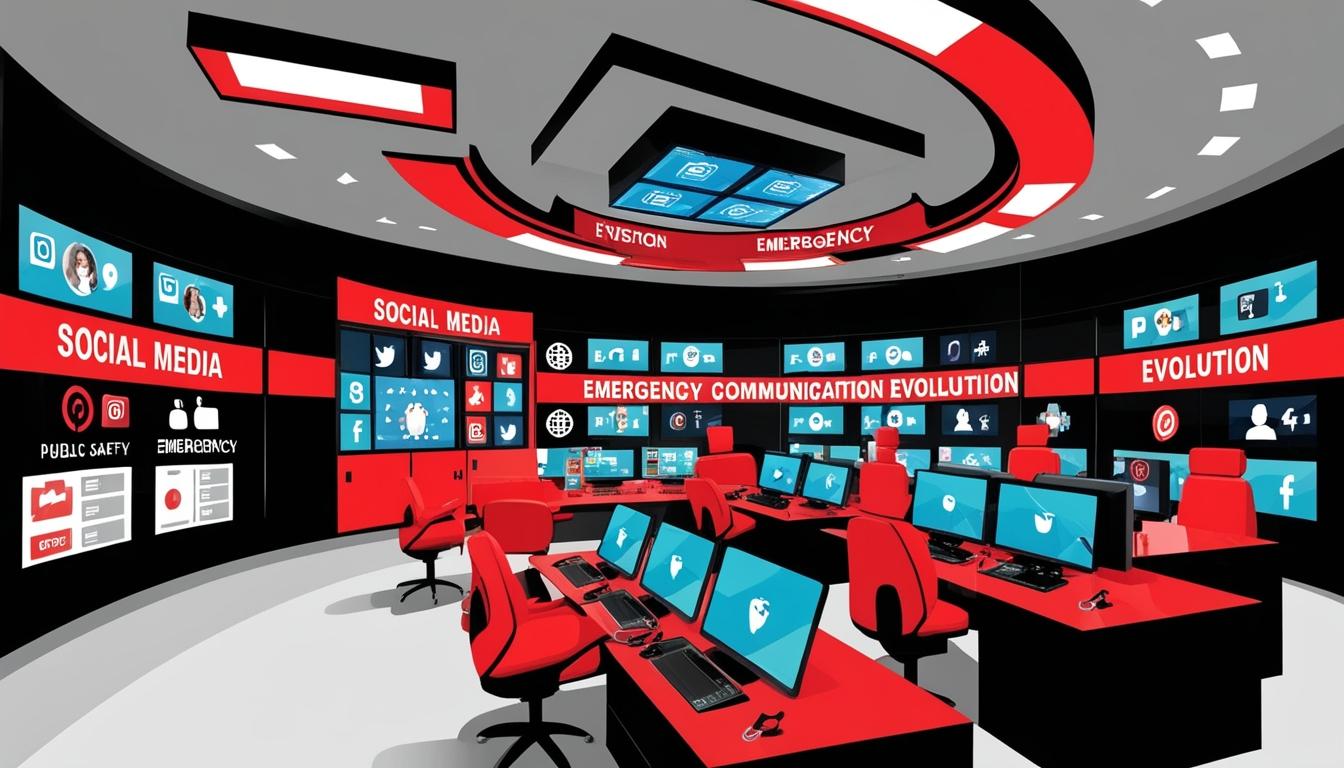
The landscape of communication for emergency services in the UK has undergone significant transformation over the past few decades as technology continues to evolve. Traditional methods, such as dialling 999, have given way to a more diverse array of communication channels, prompting a need for emergency services to adapt to these changing demands.
Jo Smith, the Head of Mobilising for the London Fire Brigade, highlighted these changes during a recent webinar hosted by Emergency Services Times. Having served over twenty years in the control room, she emphasised that the modern command centre is now fitted with multiple social media streams, 24-hour news coverage, and digital maps that enhance situational awareness for operatives responding to incidents. “People ring 999 when they are in crisis and may be going through the worst day of their lives; the calm professional response of a control room operator is the first contact that they may have with the frontline,” Smith stated. She also pointed out that BT, the first point of contact for 999 calls, is exploring the requirements for what they term the ‘next generation 999’.
The Ofcom Online Nation report recently corroborated this shift, revealing that younger demographics are increasingly reliant on social media platforms rather than traditional telephone communication. For instance, individuals aged 18-24 now spend an average of six hours daily online, with TikTok and Snapchat ranking among the most visited sites. This trend has been noted by Alex Finn, who is involved with the National Police Chiefs’ Council. During the same webinar, Finn explained that while young people are educated to use 999 in emergencies, they often avoid calling for non-urgent matters. His initiative, Your Police UK, aims to connect with adolescents primarily through platforms like Instagram to effectively convey preventative messages.
Modern emergency communication strategies are not limited to voice calls. Matt Palmer from NEC Software Solutions introduced the concept of utilising video technology such as GoodSAM, which allows control room officers to obtain live visual insights during incidents. He noted that approximately 30% of incoming emergency calls now include video footage from concerned citizens, which can greatly assist in decision-making processes.
With the emergence of advanced communication protocols such as the Multi Agency Incident Transfer (MAIT), the packaging of various digital communications has streamlined the interaction between different emergency services. However, challenges remain, particularly when it comes to managing the influx of information that control room staff are exposed to. Jo Smith pointed out that operators monitor multiple information channels alongside 999 calls, nonetheless raising the risk of information overload. The necessity for personnel resilience is critical and starts from recruitment, with high standards for individuals capable of thriving in high-pressure environments.
Furthermore, the potential of artificial intelligence (AI) in assisting emergency services is becoming increasingly prominent. According to Matt Palmer, AI could significantly enhance the management of incoming calls by facilitating the prioritisation of requests based on key phrases or emotional indicators. In practical application, this could lead to a system where a caller can track the status of their reported incident similarly to tracking an online shipment, thereby improving efficiency and empowering citizens.
Jo Smith articulated the potential benefits of AI in triaging incoming calls, particularly in scenarios where multiple calls are received from the same location regarding a singular incident. “Having a technology platform that told us that the calls were all from the same location and indicated what the caller is reporting before they reach an operator would allow us to be much more effective and efficient,” she emphasised.
As these discussions suggest, the merging of technology and communication practices within emergency services highlights a comprehensive framework aimed at enhancing public safety and operational efficiency. The ongoing exploration of these innovations may significantly influence future strategies and interactions between emergency services and the public. The webinar, titled "The challenges of taking a multi-channel approach to communicating with the public," sheds light on these evolving dynamics, and it is now available for viewing.
Source: Noah Wire Services