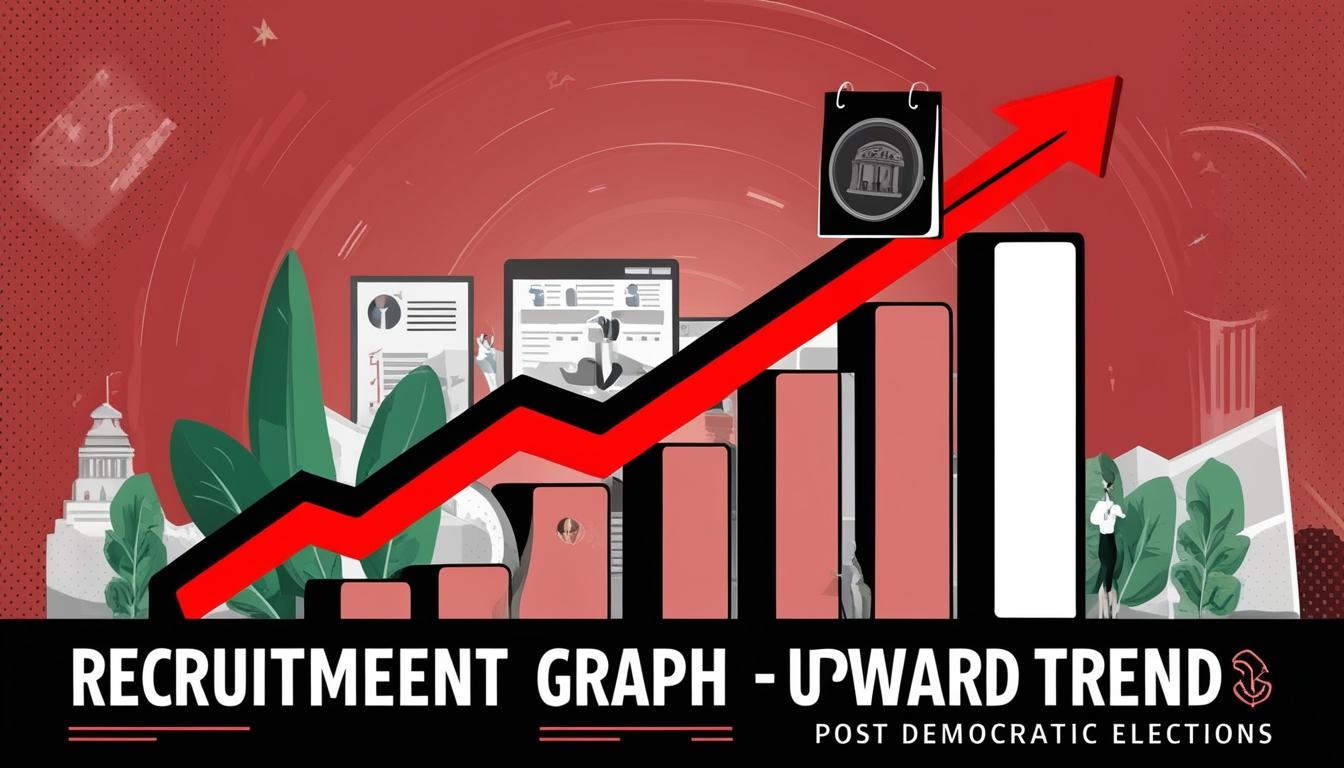
In recent analyses of the recruitment landscape within the United States, the relationship between political events, particularly presidential elections, and hiring trends has garnered significant attention. Insights from the Human Resource Executive Magazine suggest a complex interplay between election outcomes and job posting rates, elucidating patterns that talent acquisition leaders may find instructive as they navigate fluctuating hiring demands.
Data derived from the U.S. Bureau of Labor Statistics and Lightcast indicates that hiring activity tends to align more closely with the outcome of Democratic victories compared to Republican ones. Historical patterns reveal that following the 2012 and 2020 elections, job postings surged significantly, increasing by 19.3% and 10.1%, respectively. In contrast, the aftermath of the 2016 election, which resulted in a Republican administration, witnessed only a modest decline in job postings of approximately 2.5%.
While these trends provide insight, they underscore the necessity of considering broader economic contexts that may overshadow political cycles. Economic conditions significantly shape job market reactions; for instance, the post-2012 upsurge in hiring closely followed the country's recovery from the 2008 recession. This resurgence was spurred as companies sought to rebuild their workforces in a climate of economic growth.
Similarly, the 2016 election occurred during a period of economic stability marked by low unemployment rates. Consequently, the labour market approached saturation, leading businesses to prioritise employee retention over aggressive hiring initiatives, which may explain the observed dip in job postings. By 2020, the landscape shifted dramatically due to the COVID-19 pandemic. This unprecedented situation prompted substantial layoffs and economic contractions. However, the introduction of federal relief packages during the economic recovery phase saw a rebound in job postings as organisations began to rehire to meet the demands of a reopening economy.
As hiring trends correlated with these varied economic circumstances illustrate, they serve as a reminder of the multifaceted nature of decision-making processes in human resources (HR). For HR and talent acquisition professionals, understanding these correlations is crucial for anticipating potential shifts in hiring demands in the wake of elections. Historical trends wherein hiring has routinely experienced increases following Democratic victories might lead HR teams to consider enhancing recruitment resources and outreach efforts, especially in sectors that could benefit from supportive policies, including healthcare, green energy, and social services.
Conversely, in periods characterised by stable or declining hiring activity, HR departments may shift focus towards optimising existing workforce productivity and improving retention. By investing in employee development and enhancing internal mobility, organisations can remain resilient without jeopardising resources on extensive new hiring ventures.
The overarching implication for HR leaders lies in the crucial need for economic adaptability. While political factors undoubtedly influence hiring trends, they are often compounded by varying external economic conditions that can shift significantly from one electoral cycle to the next. An agile HR strategy that incorporates responses to both political and economic fluctuations—be it through scalable recruitment measures, flexible hiring models, or robust retention programmes—positions companies favourably to address the challenges and changes presented by any election outcome.
Source: Noah Wire Services