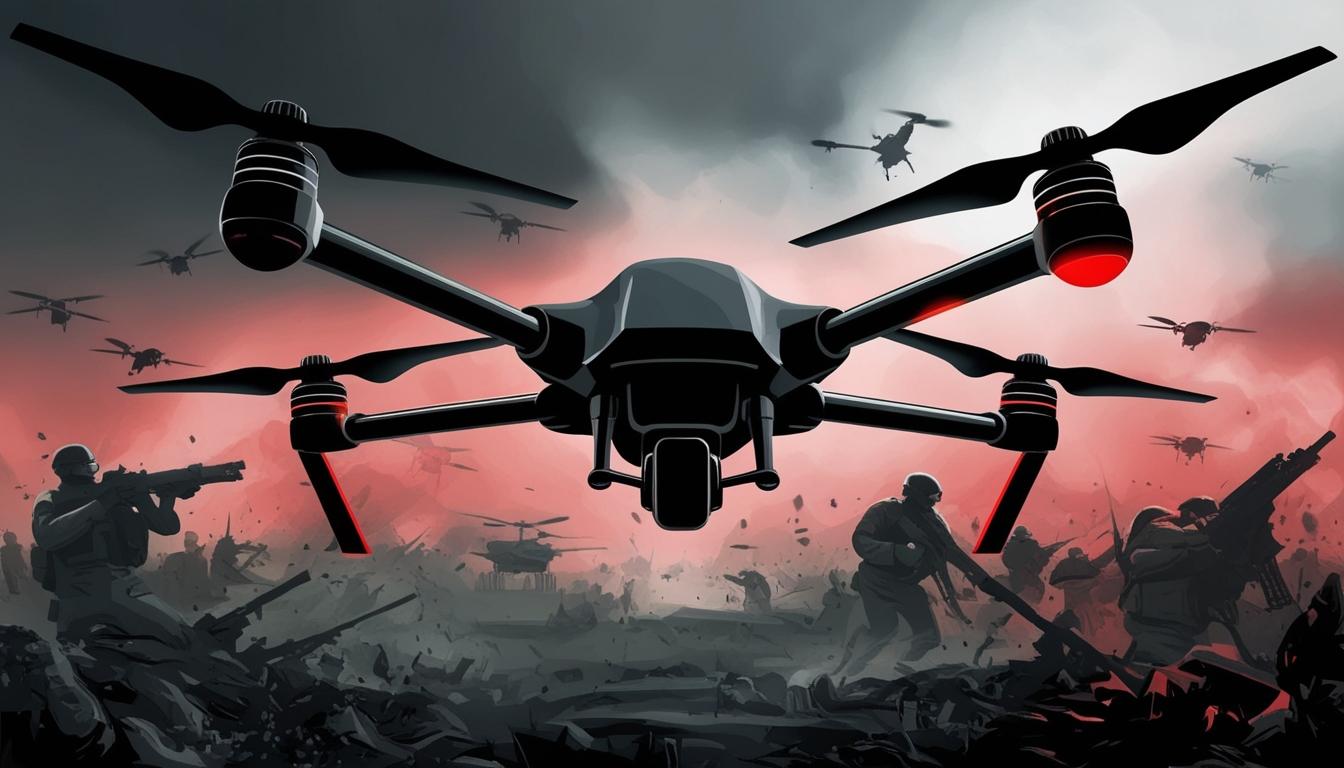
In a striking reflection of technological advancements in warfare, Arnold Schwarzenegger, the actor renowned for his role in the iconic 1984 film The Terminator, recently remarked that the film's depiction of autonomous weapons has become a reality. In an interview in 2023, he indicated that contemporary military systems, equipped with artificial intelligence capabilities, mirror the film's dystopian vision of machines operating independently, urging audiences to heed the warnings voiced by the film's director, James Cameron, regarding the perils of such technology.
Over the past four decades, the landscape of warfare has undergone significant transformation, particularly with the increasing deployment of AI-enabled weapons on active battlefields, notably in Ukraine and Gaza. Observers have noted that these developments raise pressing questions about human oversight and the ethical implications of relying on autonomous systems to make life-and-death decisions. While U.S. military policy calls for a human element in operating lethal autonomous weapons, the practicalities of engagement in high-pressure combat situations may render meaningful human intervention nearly impossible.
On the forefront of military strategy, Deputy Secretary of Defense Kathleen Hicks has underscored the importance of maintaining human accountability in the execution of force, stating, "There is always a human responsible for the use of force, full stop." The United Nations has additionally pursued a ban on fully autonomous weapons, advocating for internationally binding rules to ensure that human oversight is a mandatory element in military operations involving AI technology.
However, experts suggest that as autonomy and complexity in AI systems continue to evolve, the concept of human control may be more illusory than reassuring. The inherent sophistication of contemporary AI models often exceeds the cognitive capacity of even the best-trained operators to supervise effectively. As military conflicts escalate and evolve, the U.S. and its adversaries, particularly China, are investing heavily in systems designed to utilise AI, drones, and automation to secure tactical advantages. The pressures of security competition are accelerating the move towards these technologies, with each branch of the U.S. military developing operational doctrines that integrate unmanned systems as a fundamental component of their strategies.
In addition, military planners are looking towards innovations such as the Joint All-Domain Command and Control programme, which aims to connect all sensors and weapons platforms, creating a comprehensive data network that enhances situational awareness and decision-making capabilities. This approach recognises the challenges posed by the sheer volume of data generated through military operations and the need for rapid responses in high-stakes environments.
Yet, ethical considerations surrounding the use of autonomous weapons cannot be neglected. Critics express concerns about potential violations of principles of proportionality and discrimination in warfare, alongside fears of inherent biases in AI training data that may lead to undesirable outcomes for vulnerable populations. The argument extends to the notion that human oversight may be more capable of navigating the chaotic elements of combat compared to machines operating without human intuition.
As warfare becomes more embedded with autonomous systems, it raises questions about the capacity of human operators to act effectively in environments where rapid decision-making is required. Existing military concepts envision scenarios where personnel may operate in isolation, cut off from higher-level command structures, necessitating quick on-the-spot decision-making based on limited information. Such circumstances may diminish the supposed advantages of human decision-making over machines, complicating the control narrative.
Unexpectedly, calls to slow down the implementation of autonomous systems or to enhance operator training may not adequately address the complexities introduced by advanced AI solutions. The reality of warfare, as evidenced in conflicts like that in Ukraine, showcases the challenges of managing unmanned systems amidst interference and vulnerabilities in communication.
To navigate these multifaceted challenges, experts suggest a paradigm shift in the approach to human control of autonomous weapons. They propose that key decisions, particularly those related to ethical considerations in combat, should be deliberated in peacetime, allowing for a more thorough examination rather than in the heat of conflict. Moreover, military forces and defence contractors are urged to foster trust in these systems by demonstrating their reliability and efficacy, paving the way for the automation of warfare to proceed effectively.
In summary, the trajectory of military technology indicates an inevitable reliance on AI-enabled autonomous weapon systems in future conflict scenarios. The imperative now lies in fostering robust frameworks of trust and ethical governance for these systems, ensuring that human oversight is practical and effective rather than merely a comforting illusion. The evolving dynamics of warfare demand an urgent reassessment of how these technologies are integrated into military strategies to avoid potential adverse consequences in the realm of human involvement and decision-making.
Source: Noah Wire Services