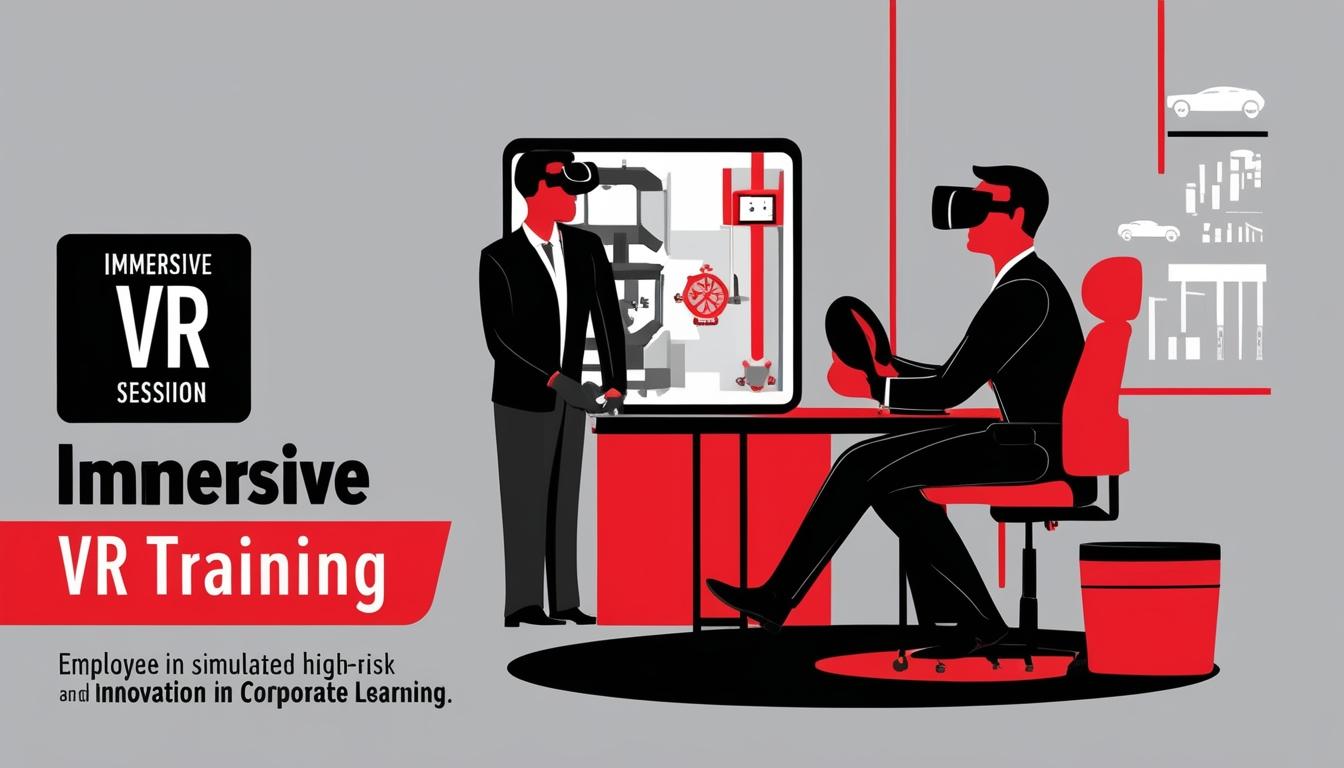
In the current landscape of business practices, embracing innovative technologies is crucial for staying competitive. Virtual Reality (VR) is emerging as a transformative tool in employee training, providing immersive experiences that are reshaping how organisations approach skill development.
According to "Insights Success," one of the primary advantages of VR training is its ability to enhance learning and knowledge retention. Unlike traditional methods, which often depend on passive observation and lectures, VR immerses employees in interactive, practical experiences. For instance, employees can engage in simulated tasks such as delivering client presentations or operating complex machinery, allowing for experiential learning that is both impactful and memorable. This form of training engages various senses, reinforcing memory retention and facilitating a better understanding of real-world applications.
However, organisations contemplating the implementation of such training programs should select reliable VR training solutions that fit their specific needs. Partnering with experienced providers ensures access to high-quality simulations that optimise learning outcomes.
Despite the initial high investment in VR hardware and software, it is reported that considerable long-term cost savings can be realised. Traditional training often incurs repetitive expenses for instructors, materials, travel, and facilities. In contrast, VR training provides a scalable and reusable platform, enabling both individual and group training without the additional costs associated with external trainers or travel. This can lead to significant savings and reduced interruptions to daily operations, particularly in industries such as aviation, manufacturing, and healthcare where errors can incur substantial costs or safety risks.
Safety is another significant advantage of VR training. Tasks considered to be high-risk can be practised in a controlled virtual environment, mitigating real-world dangers. For example, firefighters can gain experience in extinguishing fires and navigating emergency situations without the associated risks. Similarly, VR can prepare employees for scenarios such as chemical spills or equipment failures, ensuring a better preparedness for emergencies while enhancing workplace safety.
Employee engagement and satisfaction are also improved through VR. Traditional training techniques can often lead to disengagement; however, the immersive nature of VR creates an interactive and enjoyable learning experience. The incorporation of gamification elements like points and rewards enhances motivation and participation, fostering a positive culture of continuous learning within an organisation.
Flexibility stands as another strong point for VR training. The technology allows for the creation of customised training modules that cater to specific roles, skill levels, or industry requirements. For instance, healthcare organisations can design scenarios involving surgical procedures, while retail businesses might focus on customer service training. Furthermore, VR's scalability means that once a training program is developed, it can be deployed to employees across multiple locations, ensuring training quality consistency throughout large or distributed organisations.
The implementation of VR training systems also facilitates the acquisition of real-time feedback and performance insights. Advanced VR systems come equipped with tracking and analytics tools that offer immediate assessments of employee performance within scenarios. For example, in a customer service module, VR can evaluate variables such as tone and problem-solving skills, providing critical insights that help employees enhance their competencies swiftly.
The data collected during VR training not only aids employees in identifying areas for improvement but can also support employers in recognising skill gaps and refining future training initiatives. This analytical capability contributes to developing a more skilled and effective workforce.
In summary, virtual reality is positioned to address various challenges within contemporary workplaces by providing significant advantages over conventional training approaches. Enhancing learning efficiency, reducing costs, ensuring safety, and promoting employee engagement are all key benefits of VR training, establishing it as a strategic investment for organisations aiming to boost productivity and long-term success in an increasingly automated business environment.
Source: Noah Wire Services