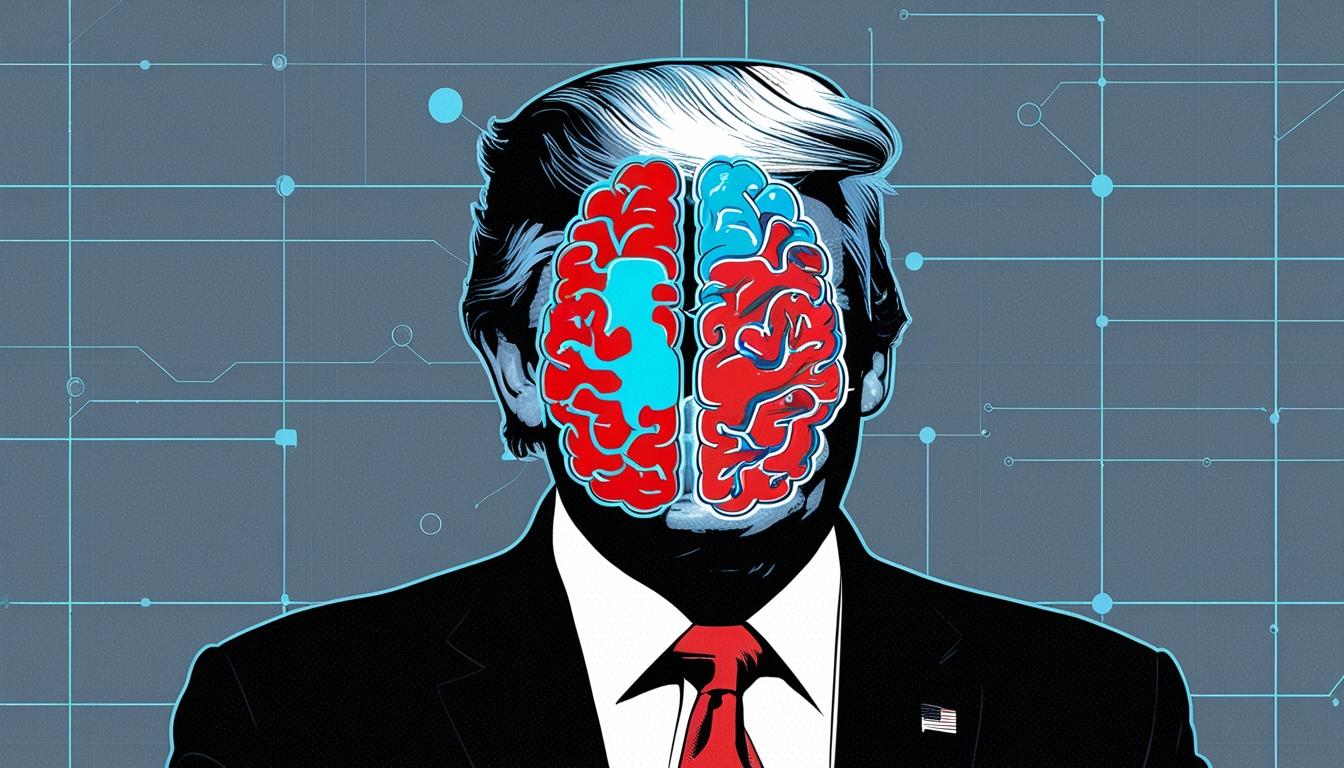
President-elect Donald Trump’s approach to artificial intelligence (AI) policy is taking shape as his campaign and post-election transition highlight substantial shifts anticipated in the coming administration. These developments not only represent a continuation of Trump's previous policy stance but also raise expectations regarding future regulatory and legislative frameworks surrounding AI in the United States.
In an interview during the campaign with podcaster Logan Paul, Trump described AI as a “superpower” that is “alarming,” particularly due to the rise of technologies like deepfakes. He underscored the urgency for the United States to maintain a competitive edge against China in AI. However, Trump also acknowledged the potential benefits of AI, mentioning that he has utilised AI in his campaign speeches. This mixture of caution and optimism reflects a nuanced understanding of the emerging technology's dual nature.
Under his first administration, Trump adopted a largely laissez-faire approach towards AI regulation, issuing two executive orders during 2019 and 2020. In contrast, the current administration led by President Biden has focused on the development of “responsible AI.” The Biden AI Executive Order (EO) issued in 2023 directed the establishment of federal guidelines for the procurement and application of AI systems, promoting ethical use as a national policy imperative. With Trump's intent to rescind this order on his first day in office, he aims to reverse policies that his campaign deems as limiting innovation and incorporating “radical leftwing ideas.” This includes the Biden administration's emphasis on ensuring AI models are unbiased.
The incoming administration’s tech policy leadership is being shaped by notable figures such as Michael Kratsios and Gail Slater, who have been appointed as co-chairs for Trump’s transition team. Kratsios, previously the chief technology officer in the Trump administration, is known for advocating increased investment in AI and the development of safe AI technologies. His return, alongside Slater, suggests a preference for minimising regulatory burdens on the industry and a focus on national security-related AI systems.
An anticipated focus of the Trump administration will be on the implications of rescinding the Biden AI EO, which established critical structures such as the U.S. AI Safety Institute (AISI). This institute, which garnered bipartisan support, involved guiding the ethical implementation of AI technologies. The potential dissolution of the AISI could have broad ramifications for the oversight of AI technologies, as its supportive functions would revert to the Office of Science and Technology Policy.
A significant aspect of Trump's upcoming AI strategy appears to be a hard stance on trade and competition with China, particularly concerning technologies classified as critical for national security. Historical trends indicate that restrictions on China’s access to AI-yielding technologies have bipartisan backing, and Trump intends to amplify these efforts. A recent report from the U.S.-China Economic and Security Review Commission has called for a concentrated initiative drawing comparisons to the Manhattan Project for advancing American AI capabilities.
Notably, the selection of an official AI czar is also being considered, a role indicative of the administration's dedication to coordinating federal AI policy. Elon Musk and Vivek Ramaswamy are expected to play pivotal roles in the selection process, although no candidates have been publicly identified. This focus on leadership in AI policy aligns with Trump’s broader vision of advocating for innovation that positions the United States at the forefront of AI development.
The Trump administration’s expected shift from the Biden administration’s emphasis on mitigating AI risks suggests a prioritisation of innovation. Stakeholders in the tech industry are advocating for a “little tech” agenda, aiming to foster a supportive ecosystem for a diverse array of tech startups to thrive rather than allowing the market to concentrate among a few large corporations.
As both houses of Congress hold a narrow Republican majority alongside the presidency, the administration may be poised to introduce new federal legislation. However, the likelihood of a cohesive response matching the European Union’s AI Act remains uncertain, especially with lingering challenges regarding AI-generated false content, such as deepfakes, which have proliferated in the digital landscape.
The influence of Musk in the new administration, particularly through his commitment to AI regulation while opposing “woke” AI, may drive unexpected policy directions as the administration solidifies its position on AI.
In summary, with Trump’s victory, significant policy shifts regarding AI regulation are poised to emerge, favouring a reduction in regulatory barriers, an emphasis on national security and innovation, and a marked departure from the regulatory frameworks introduced by the Biden administration. Stakeholders in the AI landscape should prepare for these anticipated changes, which reflect the incoming administration's inclination towards a deregulated and innovation-focused approach to artificial intelligence.
Source: Noah Wire Services