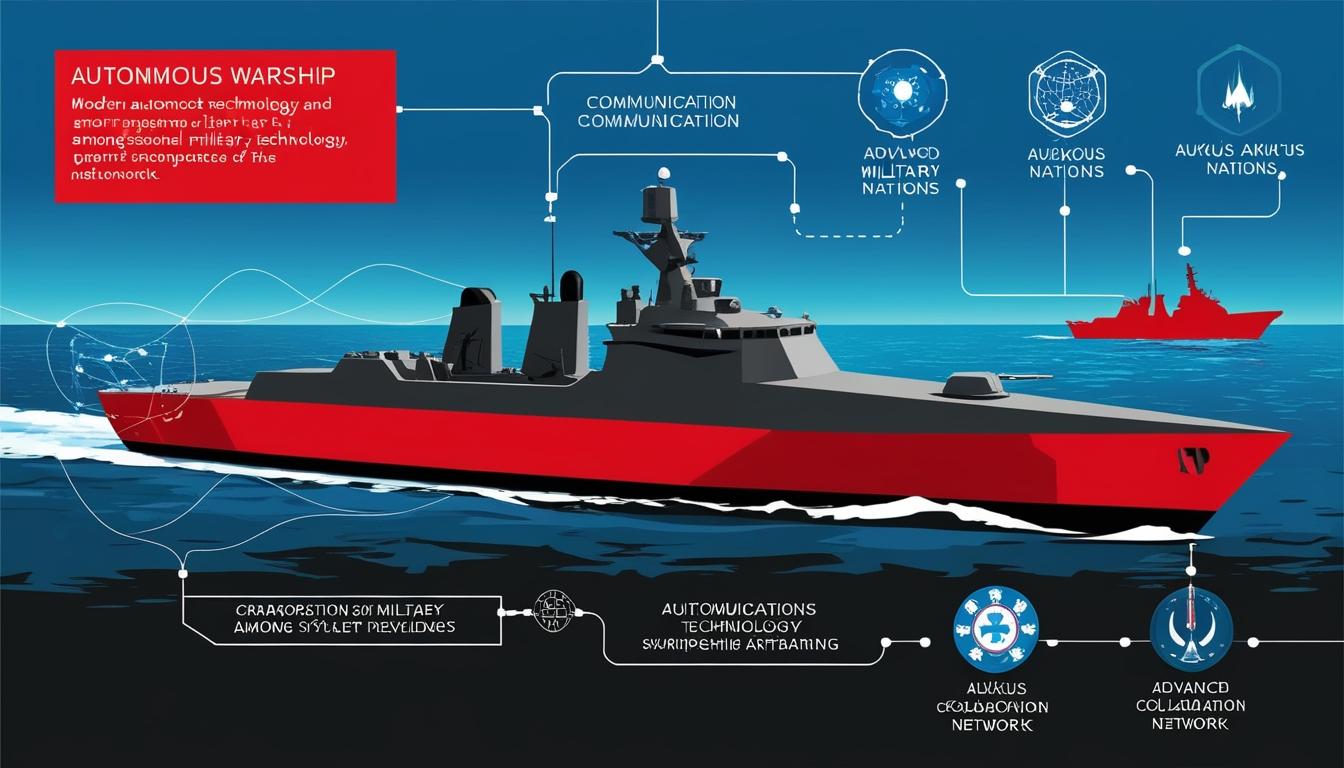
Viasat, Inc., a prominent name in network communications and technology, has successfully played a crucial role in supporting the U.S. Department of Defense (DoD) and the AUKUS alliance, consisting of the United States, Australia, and the United Kingdom, during the Autonomous Warrior 24 exercise. The exercise, conducted from October 1 to October 24 in Jervis Bay, New South Wales, Australia, is part of the AUKUS Maritime Big Play (MBP) initiative, aimed at enhancing military capability, promoting interoperability, and fostering the use of autonomous systems across maritime environments.
During the exercise, Viasat collaborated closely with the U.S. DoD Office of Under Secretary of Defense for Research and Engineering (OUSD R&E) Prototyping and Experimentation (P&E) team to deliver advanced network solutions facilitating interactions among various maritime surface, sub-surface, and aerial uncrewed systems.
One of the key technological platforms employed was Viasat's NetAgility Software Defined Networking (SDN), which facilitated Multidomain Uncrewed Secure Integrated Communications (MUSIC). This innovative platform connected uncrewed autonomous vehicles across various environments, including sub-surface vessels, uncrewed surface platforms, and stratospheric High-Altitude Platforms (HAPs). The architecture formed a backbone for enabling seamless communication and coordination, essential for the complex operations undertaken during the exercise.
Viasat integrated a range of communication technologies, including commercial satellite, cellular, and Mobile Ad-hoc Network (MANET) radio networks, through its Move Out Jump Off-Next (MOJO-Next) Tactical Data Link (TDL) gateway. This integration allowed uncrewed autonomous vehicles and sensors from different partners to communicate effectively, sharing position location information (PLI), situational awareness (SA/SU), and command and control (C2) messages across the participating platforms.
The network was designed to simplify the operational framework for all platforms involved, effectively crafting a cohesive operating picture. This shared situational awareness was instrumental in supporting Combined Joint All Domain Command and Control (CJADC2) operations, aimed at enhancing autonomous vehicle interactions within coalition and alliance frameworks.
David Schmolke, Vice President of Viasat Mission Connections and Cybersecurity, expressed pride in the company's contribution to addressing the integration challenges encountered during the experiment. “The emergence of uncrewed, autonomous vehicles in Maritime, Ground and Airborne domains, will be a key differentiator in modern warfare operations, but the MUSIC architecture can enable a true mission advantage,” Schmolke stated, highlighting the importance of Viasat’s flexible, software-defined tactical network solutions that are vital to merging disparate networks into a cohesive operational framework.
The success of the Autonomous Warrior 24 exercise marks a significant step forward in the integration of advanced technologies in military contexts, underscoring the growing emphasis on autonomous systems in modern warfare and the collaborative efforts among AUKUS nations to enhance defence capabilities through innovative solutions.
Source: Noah Wire Services