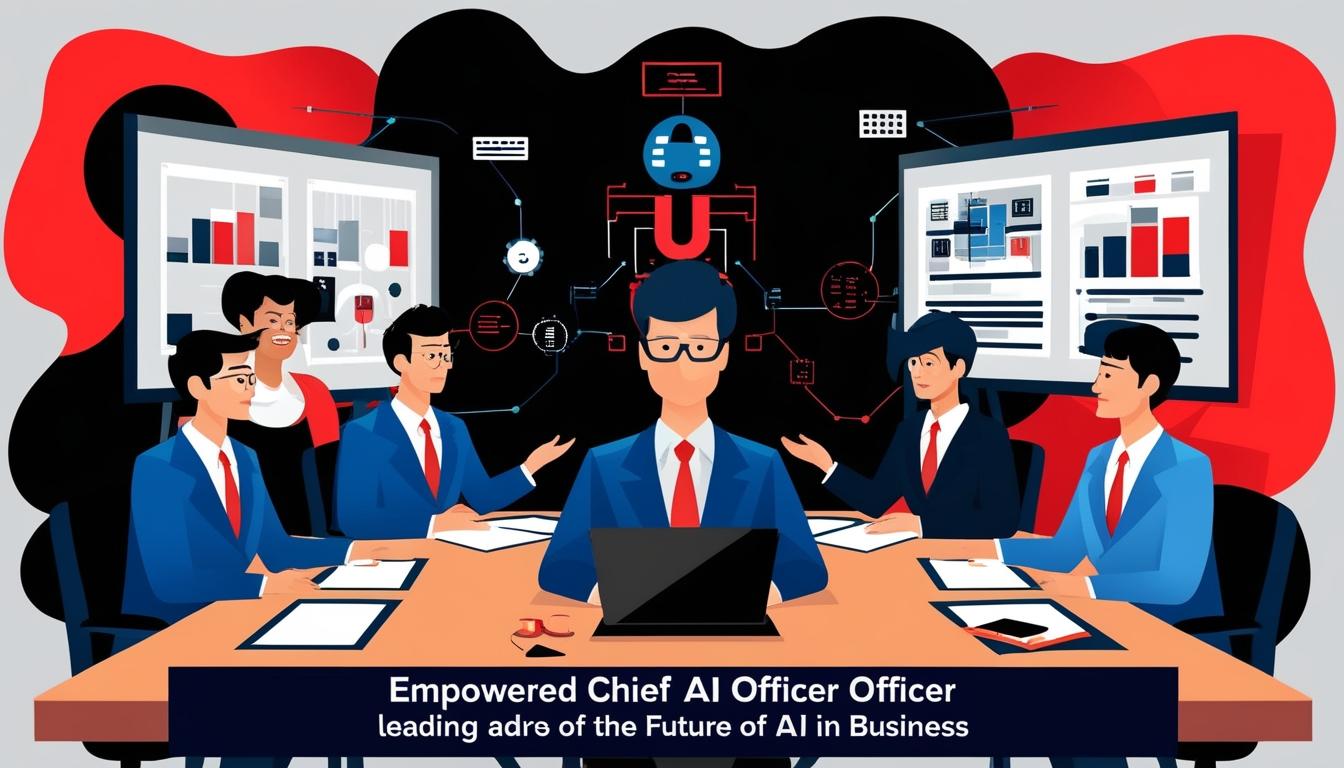
Senior executives from Dell are advocating for the creation of chief AI officer roles within enterprises across the Asia-Pacific region, asserting that a comprehensive "top-down" approach is essential for the successful implementation of artificial intelligence (AI). In a media briefing held recently, John Roese, Dell’s global chief technology officer and chief AI officer, articulated that the primary hurdle businesses face is not the technological aspects of AI but rather the establishment of the appropriate organisational strategies and frameworks to facilitate its adoption.
Dell expects a significant transition for businesses in 2025, as companies move beyond initial proof-of-concept trials to integrating AI as core elements of their operations. Roese remarked, “If you’re not the chief AI officer and you’re not empowered and supported by your board and your leadership, your ability to prioritise the right AI work in a company is limited.” He highlighted that without the proper backing, executives may struggle to secure funding or have authority over competing AI initiatives.
Peter Marrs, president for the Asia Pacific, Japan, and Greater China region at Dell, added that he frequently consults with CTOs and CEOs and has observed difficulties with AI project overload. One of his clients was reportedly managing over 300 AI projects, a situation that indicates a lack of strategic coherence. Marrs noted, “I am seeing in some of the biggest customers in the world, where they don’t have that strategy locked down, they’re still kind of swinging all over the place.”
To address these complexities, there has been a growing trend among companies in the Asia-Pacific region to appoint chief AI officers. This role is expected to foster strategic clarity and focus, which is particularly important for more mature enterprises as they navigate their AI journeys. Marrs indicated that many of these companies are also forming AI committees that include members from various business units, while ultimately being led by the chief AI officer.
The concerns highlighted by Roese and Marrs centre around organisational complexity rather than technological barriers. Roese explained that while the methodologies for implementing AI are becoming clearer, developing an effective organisational model remains a challenge. “How to organise a company to do it successfully is the really big active conversation right now,” he stated, emphasising the need for an empowered AI leader capable of making strategic decisions that may not be universally welcomed within the organisation.
Dell has implemented its internal AI strategy using a "top-down" framework, which requires that all AI initiatives gain approval from a senior leadership team including Roese, CIO Doug Schmidt, and COO Jeff Clarke. Roese expressed his preference for this approach, asserting that while a "bottom-up" strategy can encourage innovation, it often leads to disarray without clear oversight. “Our ability to implement them is limited to only a handful at a time,” he remarked, pointing out the challenges in achieving consensus among business leaders regarding the importance of various AI projects.
Looking towards the future, Dell projects that the first significant returns on AI investments will materialise in 2025, as companies leverage insights gained from prior experimentation. Roese noted that many of the necessary AI tools are now standardised and readily available for implementation, contrasting earlier conditions where companies were reluctant to invest without proven success. “If you pick the right projects and approach them the right way, there is significant business impact in terms of hard ROI dollars,” he stated, highlighting the importance of informed decision-making in AI project selection.
The discussion surrounding AI automation trends in business continues to evolve, with industry leaders underscoring the necessity of strategic leadership and organisational alignment to harness the full potential of AI technologies in driving future business success.
Source: Noah Wire Services