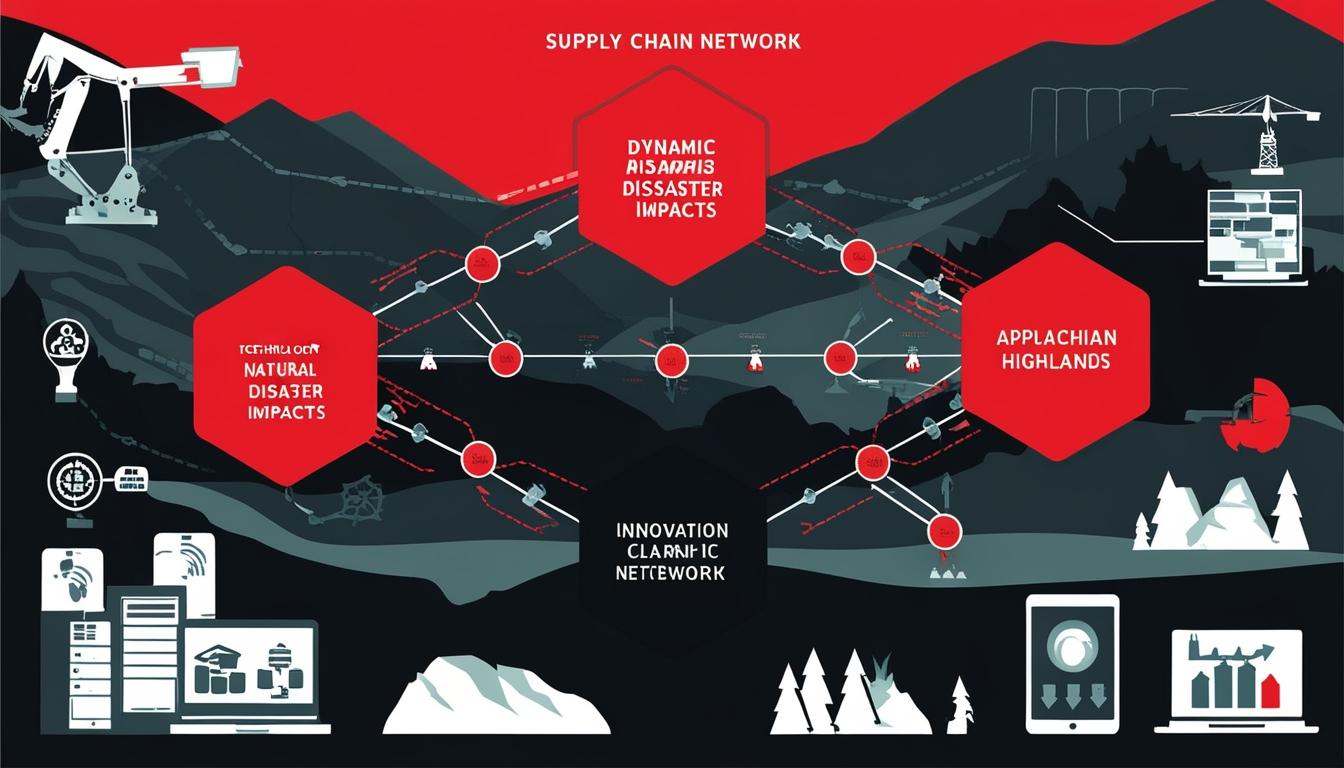
East Tennessee State University (ETSU) has taken significant steps towards fostering future supply chain and logistics leaders with its recent endeavour at the second annual Appalachian Highlands Supply Chain and Digital Technology Summit. Held on 15th November at the Martin Center, the summit drew approximately 100 participants, comprising students, academics, and business professionals, all converging under the theme “Understanding and Optimizing the Supply Chain Ecosystem (SCE).”
The SCE is essential in linking various entities, including suppliers, manufacturers, and governmental bodies within a specific geographic area, to facilitate the global flow of products and services. This year’s summit not only focused on the theoretical underpinnings of the SCE but also examined its practical implications for regional development. A strong emphasis was placed on the role that technology plays in driving innovation and aiding economic progress.
Prominent speakers at the summit included representatives from established companies such as Honeywell International, Bell Textron Inc., and Eastman Chemical Company, alongside several faculty members from ETSU. The event served as a platform for sharing insights on the future of supply chains, particularly in the wake of disruptions such as Hurricane Helene.
Kyle Kramer, Digital Strategy Manager with Aberdeen Advisors, commented on the summit's focus, stating, “What stood out to me was the emphasis on how the Appalachian Highlands is evolving into a hub for supply chain innovation.” He continued to note the collaboration between significant manufacturers and the region's small and medium-sized enterprises (SMEs), highlighting a commitment to advancing the supply chain ecosystem through technology and partnerships. “It was inspiring to see how homegrown innovation and shared expertise are propelling our local economy onto the global stage,” he added.
During the summit, Matthew Jenkins, an assistant professor of supply chain management at ETSU, delivered a presentation on the cascading impacts of natural disasters on logistics networks. He pointed out that the rerouting of trucks for hurricane relief exemplified how local disruptions can create ripple effects across national logistics. Jenkins elaborated, “Supply chains are very complex multi-tiered and multi-directional networks. It’s not what we see in our textbooks...this is not reality.”
The summit’s discussions also touched on healthcare challenges emerging from recent disasters. Notably, Baxter International suspended operations at its western North Carolina plant, which is responsible for producing a substantial portion of the IV fluids used in hospitals nationwide. This disruption led to widespread shortages, with nearly 90% of healthcare providers reporting difficulties in obtaining IV fluids just weeks before the event.
Despite the challenges presented by such disruptions, the field of supply chain management offers promising career prospects. Data suggest that graduates from supply chain management programmes enjoy nearly 100% job placement rates, often securing multiple high-paying job offers before completing their degrees. At ETSU, students may choose to concentrate in areas such as supply chain marketing, leadership, or operations and analytics within their Bachelor of Business Administration degree.
Reflecting on the success of the summit, Jenkins expressed enthusiasm about bringing the event back for a second year. He noted the deep dive into Hurricane Helene's impacts, alongside discussions on digital technologies and sustainability in the supply chain. Jenkins highlighted the value participants found in networking opportunities during the summit, stating, “This community event is designed to promote building relationships across our region and support economic development, and that mission was undoubtedly accomplished this year.” Looking ahead, the summit is set for exciting changes next year, including interactive sessions and targeted workshops to enhance participant engagement.
Source: Noah Wire Services