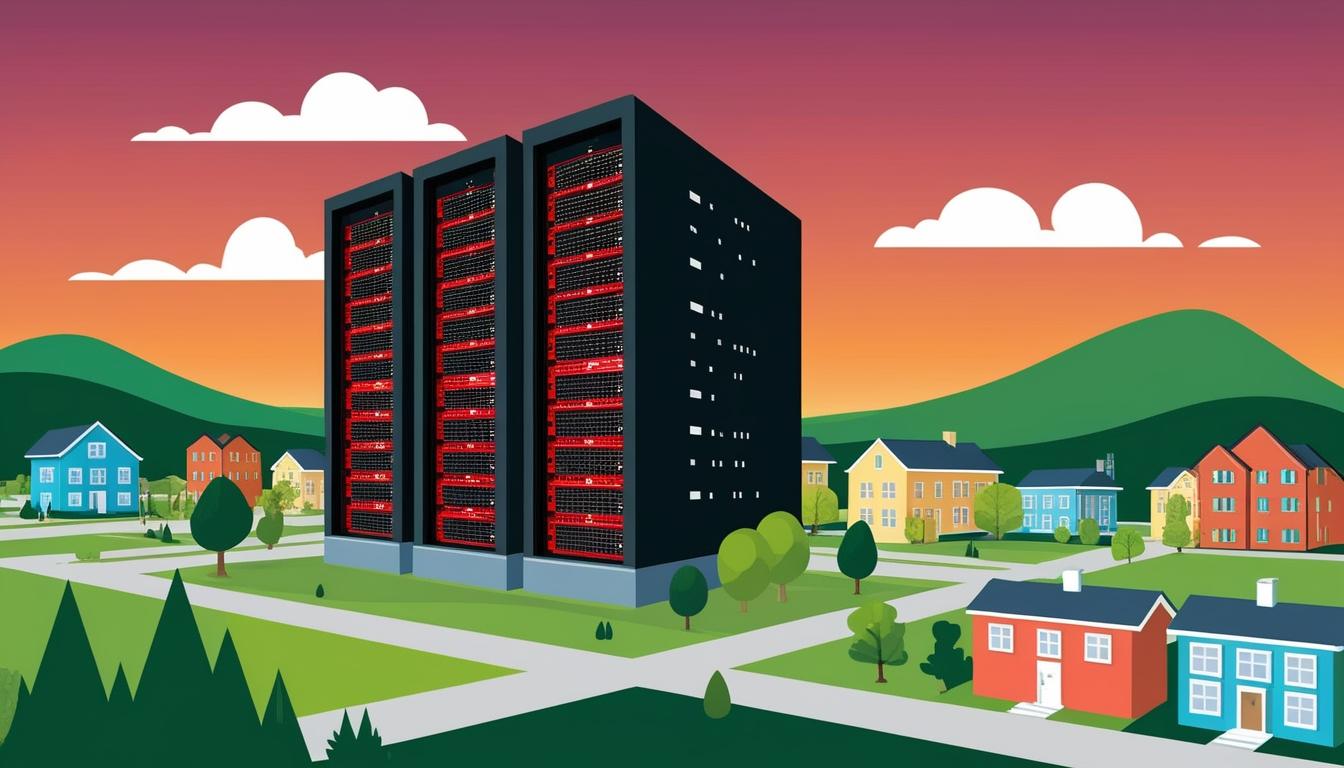
The proliferation of data centres across the United States is reshaping urban and rural landscapes alike, driven by burgeoning demand from cloud computing and artificial intelligence. As communities confront the implications of these high-speed server farms, local sentiments vary significantly, leading to a complex interplay of economic incentives and residential concerns.
In Alexandria, Virginia, the impending construction of Plaza 500, a 466,000-square-foot data centre, has sparked considerable backlash. Richard Andre Newman, a long-time resident of Bren Mar Park, now faces uncertainty about his future amid plans for this facility to be erected just a few hundred feet from his home. “I planned on staying here until I died,” he remarked, reflecting a widespread discontent among residents who find themselves in close proximity to such developments.
Tyler Ray, a community activist and vocal critic of data centre proliferation, emphasised the urgent need for a balance between economic growth and community well-being. He expressed his apprehensions regarding the project, stating, “All that we are asking for is... that they are doing it in a way that doesn’t run residents away from their homes.” The plea highlights the friction between local desires for growth and the perceived threat to the quality of life for residents.
Northern Virginia, particularly, has become a hotspot, with over 300 data centres now established in its western counties. As cyclists traverse the popular Washington & Old Dominion trail, many are flanked by these massive structures, a clear testament to the changing landscape. Local governments are drawn to the financial prospects presented by companies such as Starwood Capital, which touted significant property tax revenues and job creation associated with the Plaza 500 project.
However, the local response has underscored growing concerns over the strain on resources, particularly power and water. Recent data indicates that over 25% of all power generated in Virginia in 2023 was consumed by data centres, a number projected to rise to 46% by 2030 if current trends persist. Additionally, Ray pointed out that a mid-sized data centre's water usage parallels that of 1,000 households, raising alarms about local water supply sustainability amidst growing usage.
In contrast, the narrative in Morrow County, Oregon, paints a different picture of data centre development. Amazon Web Services (AWS) currently operates at least five data centres surrounding Boardman, a town with a population of just 4,200. Here, the financial implications of such businesses have been more positively received by some community leaders. AWS produced approximately $34 million in property taxes in the previous year, despite receiving a substantial tax break of $66 million. The influx of funds has facilitated vital infrastructure upgrades and community services, indicating a more collaborative partnership between the company and local governance.
Yet, scepticism regarding the scale of tax incentive agreements remains prevalent. Ethical concerns surfaced when former officials faced scrutiny for their alleged connections to AWS during negotiations. Former county commissioner Jim Doherty recalled a meeting with AWS representatives that discomforted him, stating, “They said, ‘Tell us what your dreams are. Tell us what you need.’” Although AWS has assured its commitment to community engagement, residents and former officials alike have expressed fears of potential exploitation of their governmental bodies.
Local leaders such as Boardman Mayor Paul Keefer and Police Chief Rick Stokoe have articulated the tangible benefits AWS has afforded their community while acknowledging the necessity of incentives for retaining business operations. “These companies would not be here if they weren’t getting some kind of incentive,” Stokoe noted, implying that such arrangements, while sometimes contentious, can lead to direct improvements in community infrastructure and services.
As society strides deeper into the digital age, the ramifications of AI automation and data centre proliferation become increasingly evident. Communities across the nation face an ongoing challenge to reconcile the undeniable economic benefits of these technologies with the essential needs and concerns of their residents, a balancing act set to define the landscape of the future.
Source: Noah Wire Services