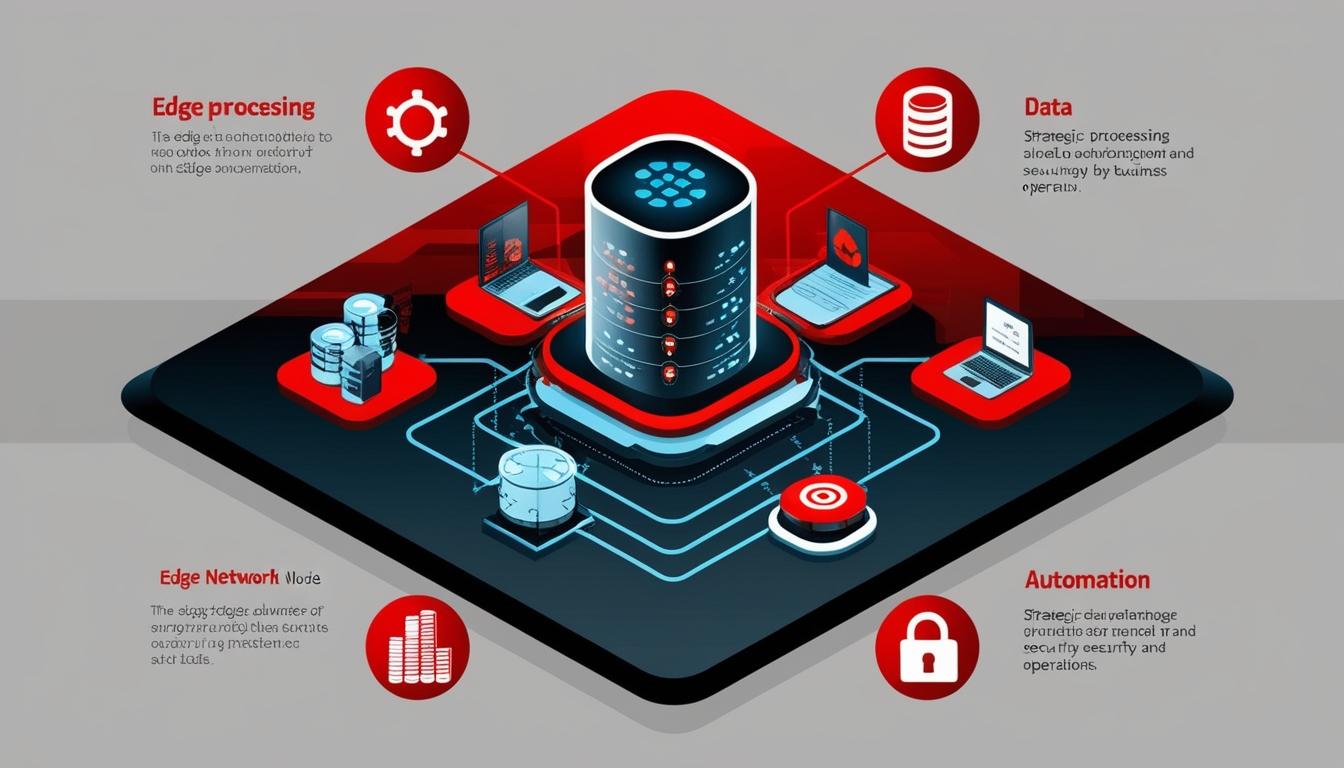
Businesses are increasingly recognising the importance of adapting to the latest technological advancements, particularly in the realm of artificial intelligence and automation. The emergence of innovative technologies such as generative artificial intelligence and the Internet of Things (IoT) is prompting organisations to explore new operational frameworks that enhance efficiency and security. A focal point of these developments is the network edge, which offers a strategic advantage by processing data closer to its source, contrasting with traditional cloud-based solutions.
According to a report by Cybersecurity Insiders, many businesses are investing in edge computing to alleviate common bandwidth and connectivity issues. The network edge enables organisations to make quicker business decisions by reducing latency, thereby significantly improving performance and enhancing customer experiences. By processing data at the edge, companies minimise the need for extensive data transfer through external networks, which can ultimately lead to stronger security protocols and improved bandwidth management.
However, the transition to edge networking is not without its challenges. While optimised edge networks can yield substantial performance benefits, a poorly configured setup may result in vulnerabilities, particularly concerning security. It is critical for businesses to ensure that their edge networks are safeguarded against potential threats while maintaining robust performance. Moreover, the successful implementation of edge networking requires a skilled IT team, capable of managing the array of devices and applications associated with such systems. The investment required to build an effective edge network can also pose significant barriers, as organisations may need to procure new devices and technologies.
One significant advancement in this field is the rise of the automated edge, a concept that incorporates intelligent systems within edge devices to autonomously handle networking functions such as configuration and monitoring. This innovation offers businesses the potential to optimise network performance dynamically, adapting to changes in operations without manual intervention. By integrating automated edge technologies with generative AI, companies can enhance their data analysis capabilities and improve decision-making processes across diverse devices and applications.
Despite its potential benefits, the automated edge can introduce complexities that many organisations may find challenging to navigate independently. In response, many businesses are choosing to partner with Network-as-a-Service (NaaS) providers. NaaS solutions offer organisations flexible, subscription-based management of network operations, allowing them to construct tailored private networks that align with their unique requirements. This partnership facilitates the adoption of edge automation by alleviating the burdens of implementation and security management from the organisations themselves.
An ideal NaaS platform integrates advanced automated edge functionalities and offers comprehensive support in terms of network monitoring and security. This collaboration empowers businesses to deploy new technologies confidently while freeing their IT resources to focus on more critical tasks. Additionally, user-friendly dashboards provided by NaaS platforms grant companies visibility into their network infrastructure, helping to inform strategic decisions regarding scalability and agility.
As organisations look to harness the potential of IoT, generative AI, and other emerging technologies, the strategic emphasis on edge networking is crucial. By investing in the edge network today, businesses are positioning themselves to leverage future innovations in this rapidly evolving landscape, thereby ensuring they remain competitive in an increasingly digital marketplace.
Source: Noah Wire Services