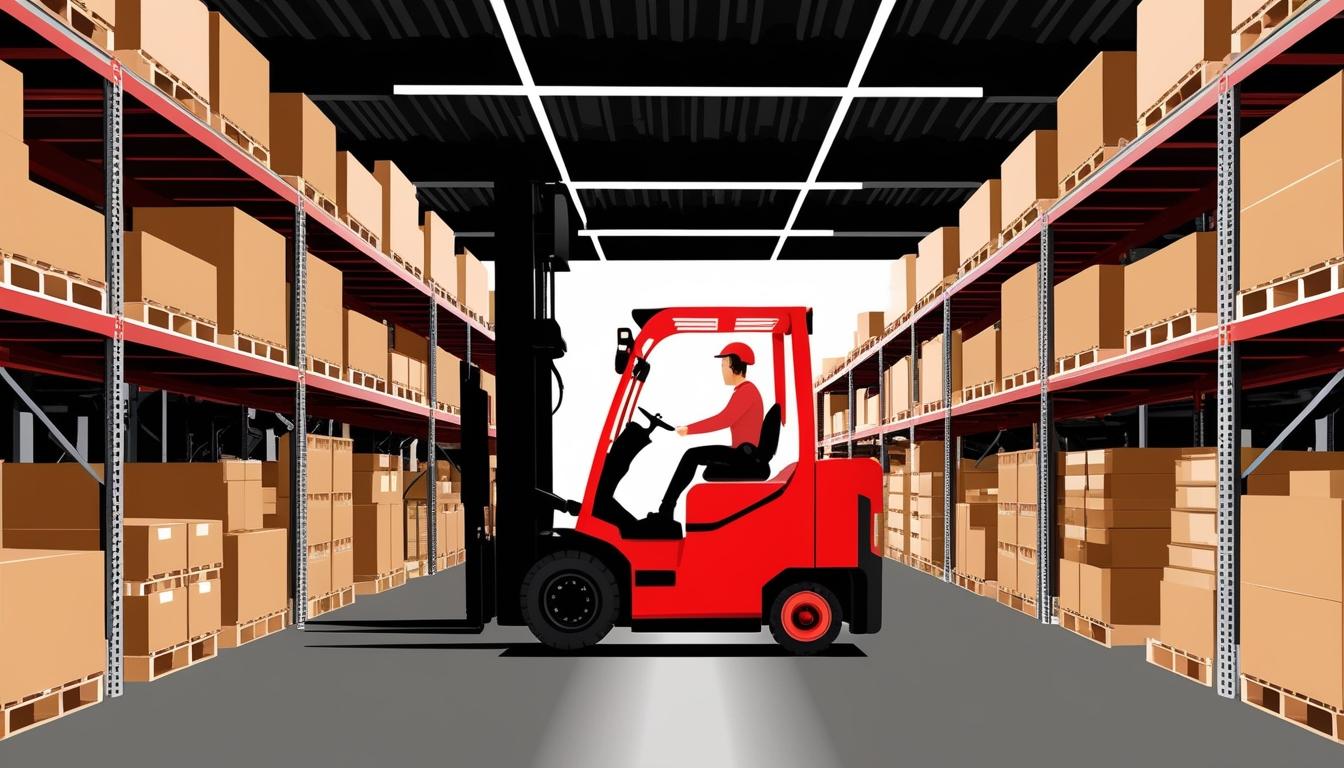
The UK material handling sector is confronting significant challenges, primarily due to an ageing workforce and a lack of young professionals entering the industry. This situation poses a risk to the long-term viability of numerous businesses that depend on efficient material handling equipment for their operations. In response to these pressing issues, the UK Material Handling Association (UKMHA) has announced the launch of 11 new technical training courses, marking a three-fold increase in educational offerings aimed at equipping the workforce with essential skills.
This initiative comes amid a backdrop of heightened demands on warehouses, driven largely by the boom in e-commerce, which has resulted in substantial pressure to maximise storage in increasingly constrained spaces. Companies are finding it increasingly difficult to manoeuvre large and bulky loads, such as timber and piping, among tightly spaced racks. To address this challenge, equipment manufacturers like Combilift are introducing specialized machinery designed to operate efficiently in narrow aisles. Notable models from Combilift include the Combi-WR4, Combi-CB range, and Combi-GT, which are tailored for handling long loads while optimizing available space.
In tandem with these developments, Hyster has released a comprehensive white paper that examines effective forklift safety strategies, indicating a rising emphasis on operational best practices within high-intensity applications. The white paper, titled "Three layers of forklift safety: Promoting operating best practices", outlines a three-tiered approach consisting of forklift training, telematics systems, and operator assistance systems, which Hyster asserts are essential for enhancing safety in the workplace.
Linde Material Handling is also staying ahead in the industry by modernising its fleet; the company is set to replace its current range of electric forklifts with 26 new three- and four-wheel models, with load capacities between 1.0 to 2.0 tons. These advanced forklifts, particularly those equipped with integrated lithium-ion batteries, promise notable improvements in both ergonomics and performance.
As the material handling sector continues to adapt to the evolving market demands and workforce demographic shifts, it remains crucial for industry stakeholders to prioritize training and innovation to ensure resilience and efficiency in operations.
Source: Noah Wire Services