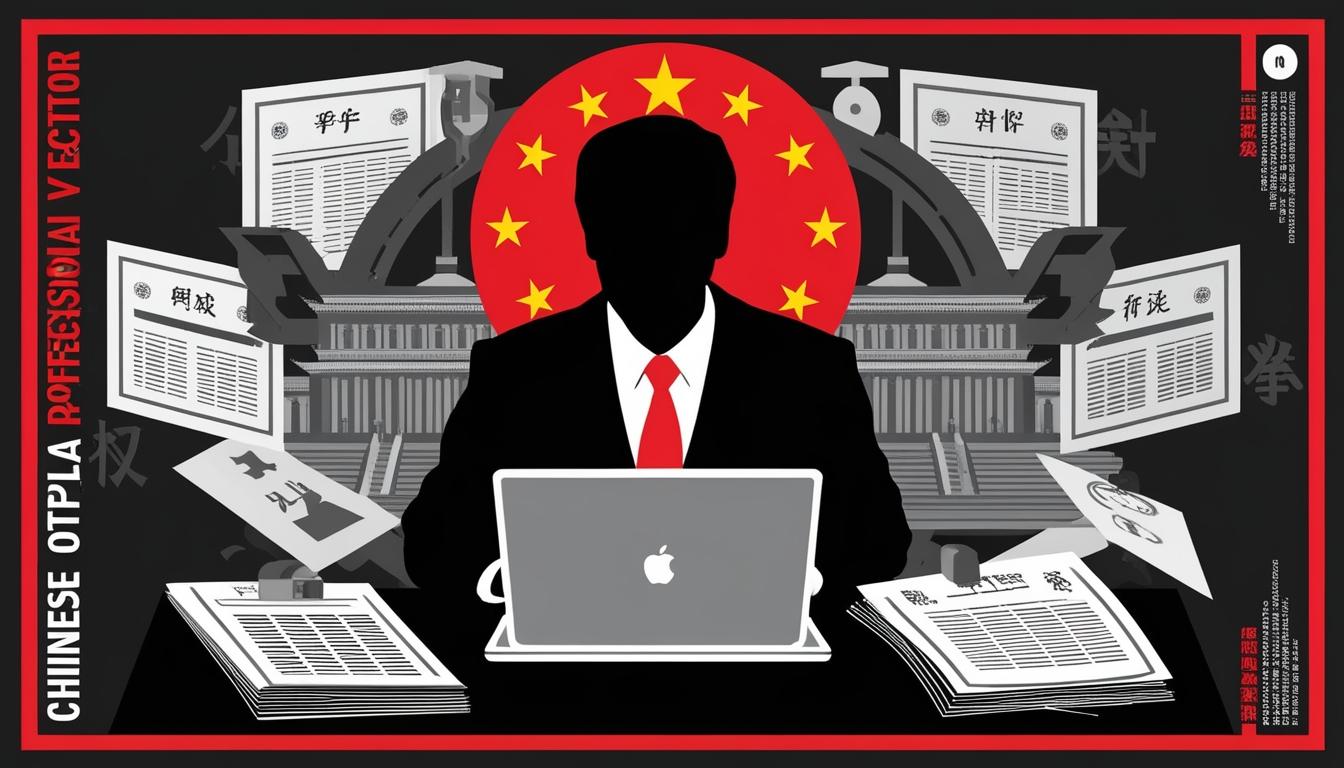
Chinese technology firm Baidu has recently partnered with Xuexi, a government-affiliated communications platform, to develop a tool aimed at generating politically correct documents for bureaucratic use. This collaboration is designed to assist Chinese officials by ensuring that the documents they create reflect the political ideologies of President Xi Jinping and cite verified sources. The application, which has been informally dubbed "Chat Xi-PT," also enables the production of documents that incorporate government statistics and policies, aligning with the Chinese government's emphasis on maintaining ideological consistency in official documentation.
In a separate development, Apple has committed to a significant $1 billion investment in Indonesia, following regulatory challenges faced by the company regarding its iPhone 16 model. The Indonesian government had previously rejected a $100 million investment offer due to local production requirements that Apple had not fulfilled. To address this, the investment will focus on establishing a manufacturing facility for smartphone components within the country, as confirmed by Indonesia's Investment Minister Rosan Roeslani.
In South Korea, political turmoil arose when opposition leader Lee Jae-myung expressed disbelief upon viewing a video of President Yoon Suk Yeol announcing martial law. Initially viewing it as a potential deepfake, the controversy ensued before the order was rapidly rescinded in the face of public outcry and market instability. This event caused fluctuations in the national currency and stock prices, particularly affecting local tech companies, and was deemed a serious constitutional breach by critics.
Simultaneously, regulatory actions have unfolded in Vietnam, where notable Chinese e-commerce platforms, including Temu and Shein, faced suspensions due to failure to comply with local registration laws. Vietnam's Ministry of Industry and Trade has mandated that these e-retailers resolve their regulatory issues by the end of December or risk permanent bans. Concerns have been raised regarding their business models, which allegedly exploit tax exemptions to undercut local competitors and raise issues around the sale of counterfeit goods.
In terms of national security, China's Ministry of State Security (MSS) addressed potential risks associated with open-source intelligence, highlighting the dangers posed by publicly available information from social media and online platforms. The MSS warned that this data could be leveraged by foreign espionage entities for continuous surveillance and intelligence gathering, stating that inadequate oversight could lead to significant leaks and vacuums in sensitive national information.
In terms of finance and industry movements, recent developments included China Mobile's proposal to acquire Hong Kong broadband provider HKBN and the reported acquisition of Boost Mobile by Australian carrier Telstra for approximately $140 million. Additionally, Indian payments giant PayTM divested its Stock Acquisition Rights in Japan's PayPay Corporation, selling them to SoftBank's Vision Fund for around $279 million.
These events encapsulate significant trends in AI automation and regulatory interactions within and across Asian markets, reflecting the rapidly evolving landscape of technology and governance in the region.
Source: Noah Wire Services