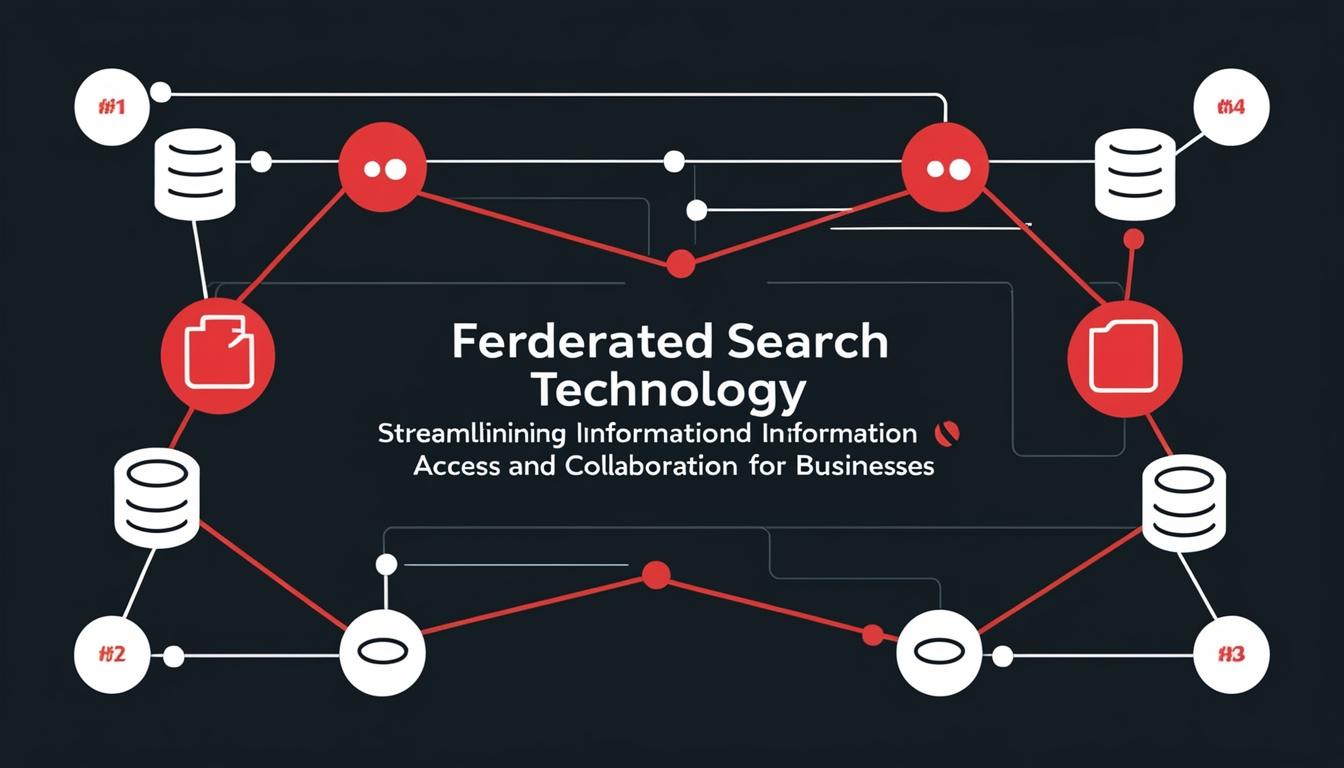
Businesses are grappling with the challenges posed by the exponential growth of data, necessitating the implementation of effective strategies to manage and leverage this information. The concept of federated search has emerged as a pivotal tool aimed at streamlining data accessibility and utilisation. This technology enables simultaneous searches across various databases or indexes, collating results into a singular, organized collection. As detailed by Tech Hubs Media, this method eliminates the need for individual searches across disparate data sources, thereby providing comprehensive and relevant results efficiently.
Federated search is notably beneficial for large organisations that manage extensive data distributed across numerous departments or geographical locations. By enabling swift access to consolidated data, businesses can enhance their decision-making processes significantly. Decision-makers can gain insights quickly, allowing them to make informed choices in a timely manner. Furthermore, as tasks become more focused, overall productivity within the workforce is likely to improve. The technology also fosters collaboration; teams can effortlessly share data, driving innovation and better solutions.
When considering the cost of implementing federated search, it is important to recognize that expenses may fluctuate based on several factors, such as the size of the business and the scale of their data operations. The initial investment could involve costs related to software and hardware acquisition, system configuration, and any necessary organisational restructuring to effectively integrate the new system. Ongoing costs may also include maintenance, updates, and staff training. However, businesses often observe significant long-term cost benefits; the reduction in time spent searching for information leads to substantial savings in both time and resources. Additionally, effective data management through federated search can mitigate risks associated with data mismanagement, such as compliance penalties and reputation damage.
As organisations navigate the digital landscape, the significance of federated search continues to expand. The rapid acceleration of data generation compels businesses to adopt more efficient management strategies. Additionally, advancements in cloud computing offer new avenues for federated search to traverse geographical data limitations, facilitating enhanced global accessibility and collaboration.
In summary, federated search technology provides an efficient and dependable solution to the complexities of managing large volumes of data. Its incorporation into business practices stands to empower organisations in staying competitive within a data-driven market. As technological integrations, including cloud computing, evolve, the capabilities of federated search are likely to improve further, establishing it as an essential asset for organisations looking to optimise their data utilisation.
Source: Noah Wire Services