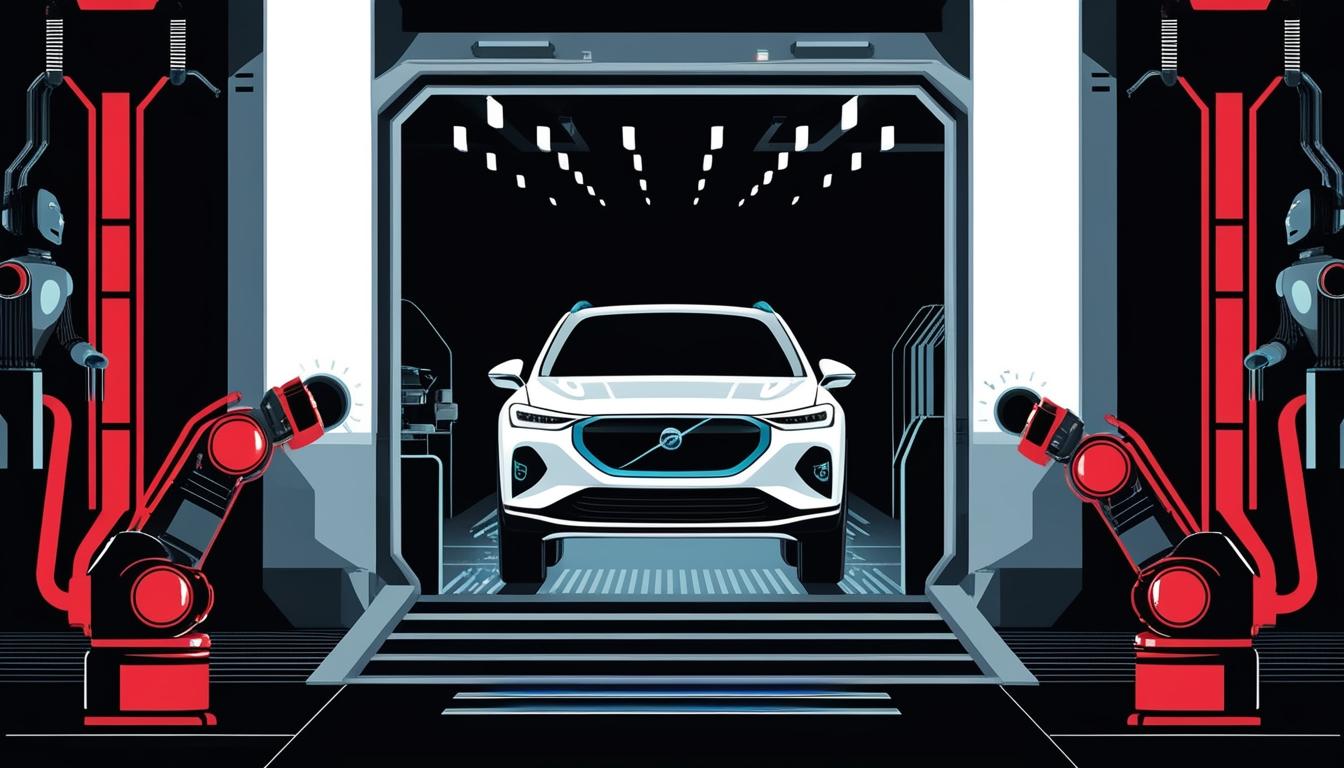
Jaguar Land Rover (JLR) is currently undertaking a significant transformation of its Halewood manufacturing plant in Merseyside, England, with an investment of £250 million ($323.4 million). This modernisation aims to adapt the site, which has been operational since 1963, for the production of advanced AI-powered autonomous vehicles. The facility has a storied history, initially established by Ford of Britain to manufacture the Anglia and has long been a cornerstone of the UK's automotive industry. JLR is notable for being the largest automotive employer in the UK.
The project began in late 2020 and has encountered a few challenges, including outdated architectural drawings from the 1960s and complications caused by weather conditions, which briefly delayed progress. Dan Ford, the site director at Halewood, described the need for precision during the upgrade, stating, “We had to survey everything and go out with the tape measure." He went on to illustrate the difficulties faced when they found that “the drawing’s measurements were off: we struck a drainpipe.”
To facilitate the upgrade, Ford’s team has replaced traditional measuring methodologies with the use of digital twin technology, a process that involves scanning the entire facility—a total of 1,000 square metres (about 10,764 square feet) each weekend. As a result of this initiative, the plant has integrated cutting-edge technology, including a fleet of 750 robots, advanced laser alignment systems, and a cloud-based infrastructure, all designed to streamline production and complement the work of JLR’s 3,500 employees.
The renovation's initial phase saw the establishment of a new body shop within the factory, featuring heavy machinery reinforced by two floors separated by 2.5 meters (approximately eight feet) of concrete. This upgrade enables the plant to produce up to 500 vehicle bodies each day. Currently, the new build line is in the commissioning stage, with plans to commence testing of pre-production electric medium-sized SUVs through to 2025.
In addition to the body shop, the new facility includes 40 autonomous mobile robots, which assist with the installation of high-voltage batteries into vehicles. A significant addition to the plant is a £10 million ($12.9 million) automated painted body storage tower, capable of stacking 600 vehicles and retrieving them via cranes for just-in-time delivery to customers. Each vehicle undergoes thorough inspections, including a final audit for paint quality using handheld microscopes to ensure adherence to high standards.
Importantly, Halewood has been designated as JLR's first all-electric production facility. This strategic move aligns with the UK government's zero-emission vehicle mandate, which will become effective at the beginning of 2024. The regulation stipulates that 22 per cent of all new car sales must comprise zero-emission vehicles, thereby accelerating the automotive industry's transition to electric vehicle production. JLR has also committed to offering a pure electric model in each of its luxury marques by 2030. The only currently available battery-electric vehicle, the Jaguar I-Pace, is scheduled to be discontinued, with the Range Rover Electric available for pre-order as the next step in the company's electric vehicle strategy.
As JLR continues to modernise the Halewood plant, the emphasis on AI automation and sustainable practices reflects broader industry trends poised to shape the future of automotive manufacturing in line with evolving consumer demands and regulatory frameworks.
Source: Noah Wire Services