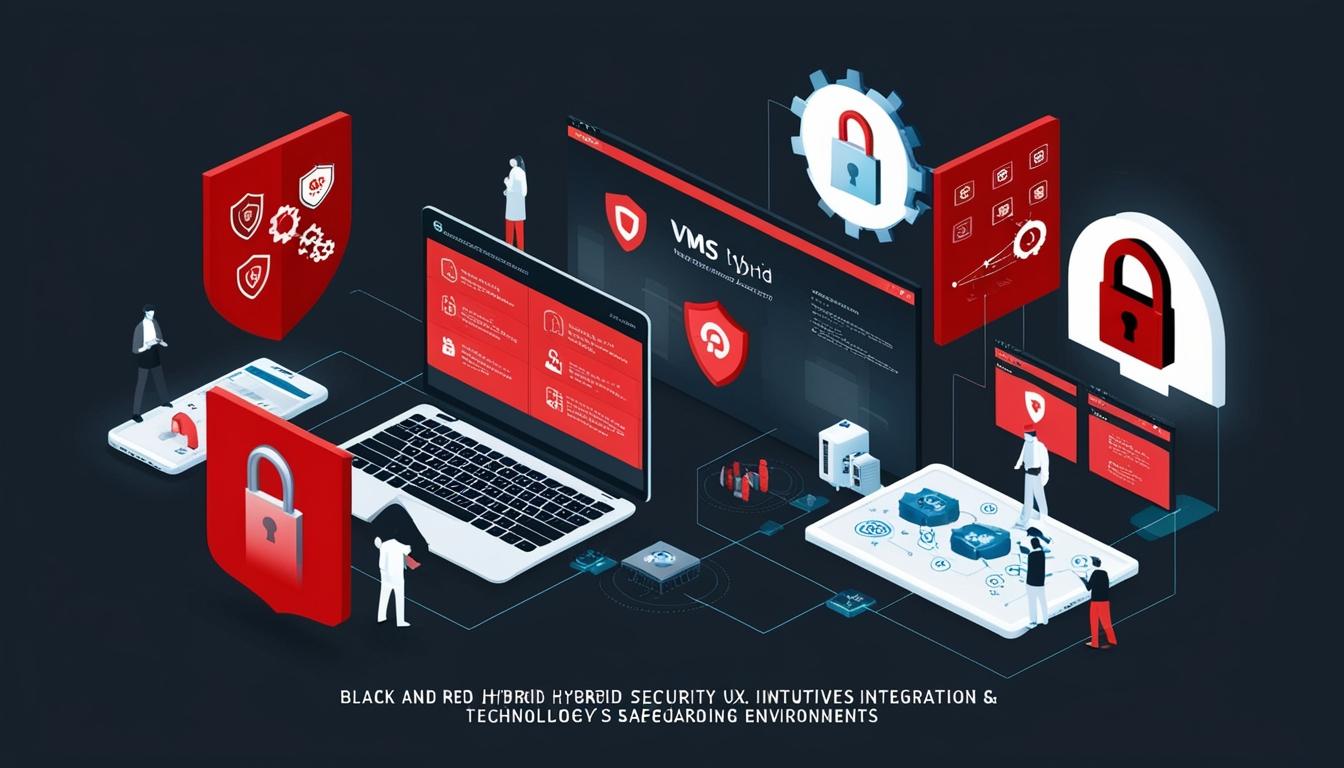
Video management systems (VMS) are evolving as integral components in the design and implementation of security infrastructures across various business sectors. As these systems adapt to technological advancements, industry demands, and regulatory changes, their application in hybrid security solutions is gaining momentum. Recent discussions held by SDM Magazine with representatives from leading manufacturers, including Milestone Systems, Genetec, Honeywell Building Automation, and Axis Communications, highlight the current state and future trends of VMS in a transforming security landscape.
A significant focus is on hybrid security systems, which combine physical and digital security measures. Rahul Yadav of Milestone Systems emphasized the ease of installation, configuration, and management that hybrid VMS systems offer. He noted the flexibility these systems provide in deployment, whether on-premises or cloud-based, allowing for effective remote management of traditional setups. Yadav pointed out, "One of the primary benefits of hybrid VMS systems is that they are designed to be easy to install, configure and manage." He further added that the scalability of these systems allows for elastic compute and storage capabilities, optimising overall security management.
Chirayo Shah from Honeywell Building Automation elaborated on the data challenges associated with high-resolution cameras. He explained that aggregating video feeds locally into a Network Video Recorder (NVR) allows for near real-time analysis without the delays often experienced in traditional systems. Shah said, "Having remote access capabilities is important for property managers," illustrating the practical applications of modern VMS in facilitating swift responses to incidents.
The role of VMS platforms in ensuring data privacy and compliance with regulations such as the General Data Protection Regulation (GDPR) is another paramount topic. Charles Nguyen from Genetec outlined how these platforms are being designed to help integrators navigate the evolving regulatory landscape, incorporating features like automatic video redaction and role-based access controls. He stated, "Compliance requires strict data protection, user consent, and limited retention periods for video data," reinforcing the importance of integrated solutions that safeguard user privacy while delivering advanced analytics.
The customization of VMS for niche applications, including healthcare, retail, and education, illustrates how integral these systems can be across sectors. Axis Communications’ Vincent Campisano highlighted that bespoke integrations, such as connecting VMS with point-of-sale systems in retail or nurse call systems in healthcare, can enhance operational efficiency and security. He mentioned that “open systems make integration with other types of systems and software a much easier lift overall,” confirming the need for flexibility in VMS to suit diverse industry requirements.
As VMS software continues to evolve, user experience (UX) design features are becoming increasingly critical. Companies are actively transforming VMS interfaces to be more intuitive, supporting seamless interaction. Shah explained that advancements in AI are paving the way for smarter user interfaces which anticipate the needs of security administrators. By providing proactive algorithms to direct users to relevant feeds, VMS platforms are improving the responsiveness and functionality of security management systems.
Nguyen reiterated that engaging with end users for continuous feedback is vital for developing practical solutions that are user-friendly. He noted, "Effective security management relies not only on robust functionality but also on how easily users can access and use those capabilities." This user-centric approach is designed to enhance operational efficiency while fostering stronger customer relationships.
In summary, the ongoing developments in video management systems reflect a trend towards hybrid solutions that combine physical and digital security features. With a strong emphasis on compliance, customization for specific sectors, and improved user experience through advanced design and AI technology, VMS platforms are set to play an increasingly pivotal role in business security infrastructures. As security integrators navigate these changes, their ability to leverage such advancements will dictate the future of industry practices and client engagement.
Source: Noah Wire Services