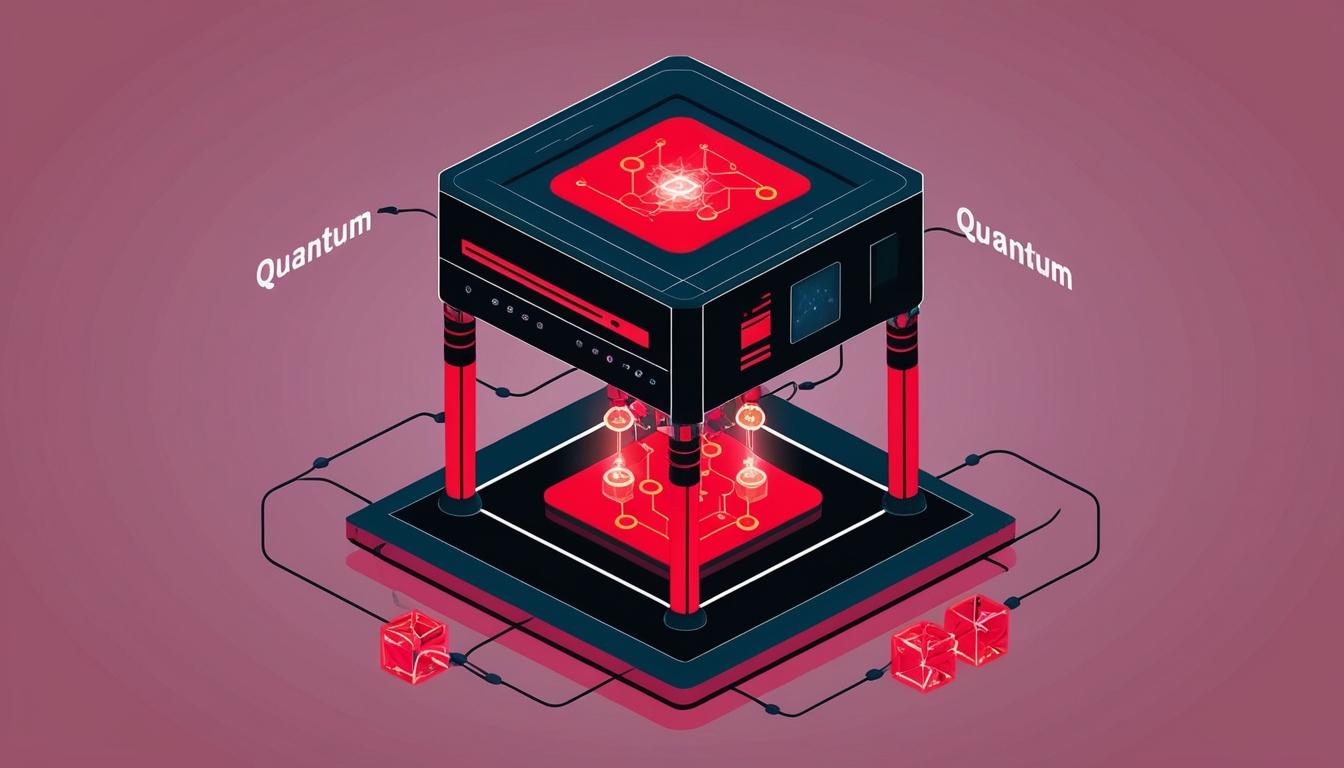
In recent discussions about the trajectory of artificial intelligence and automation within the business sector, an emerging focus has been on the evolution of quantum computing technologies and their potential implications on various industries.
Developed from the initial theories proposed by American physicist Paul Benioff in 1980, quantum computers operate on principles vastly different from traditional computers. While conventional systems rely on binary bits—representing data as either 1s or 0s—quantum computers utilise quantum bits, or qubits. These qubits can exist in multiple states simultaneously, allowing quantum computers to carry out complex calculations exponentially faster than today's most advanced systems, including supercomputers. Reports indicate that companies like Microsoft and IBM are already making strides in delivering quantum solutions.
The applications of quantum computing extend beyond mere speed; they hold promise for revolutionising fields such as data encryption, materials science, and complex simulations. However, the technology is still facing challenges. Producing stable qubits is fraught with difficulties, especially issues related to quantum decoherence, which has potential implications for the reliability of quantum computation. Efforts are ongoing to enhance the coherence and reduce error rates, with companies such as IonQ leading advancements in launching quantum computers in both the U.S. and Europe.
Moreover, the experimental nature of quantum computing is becoming increasingly relevant as industries seek improved computational abilities. For instance, aerospace leader Airbus is reportedly employing quantum computing to address the intricate computational demands of fluid dynamics, aerodynamics, and flight mechanics, while also investing in quantum technology firms. In collaboration with BMW, Airbus is exploring the modelling of chemical reactions within hydrogen fuel cells, reflecting a shared industry ambition towards a decarbonised future.
The ramifications of quantum computing are not limited to the aerospace sector; they are poised to substantially impact finance, governance, and data security as well. Increased computing powers from quantum advancements can break traditional encryption, prompting the need for alternative security measures that can counteract the vulnerabilities exploited in modern systems. This evolution suggests that the adoption and integration of quantum computing into various business practices could lead to significant advancements in how industries operate.
As quantum technology continues to develop, organisations will need to prepare for the transformative potential it holds. The dialogue around quantum computing signifies a broader trend towards innovative automation solutions, which may ultimately shape the business landscape for future generations.
Source: Noah Wire Services