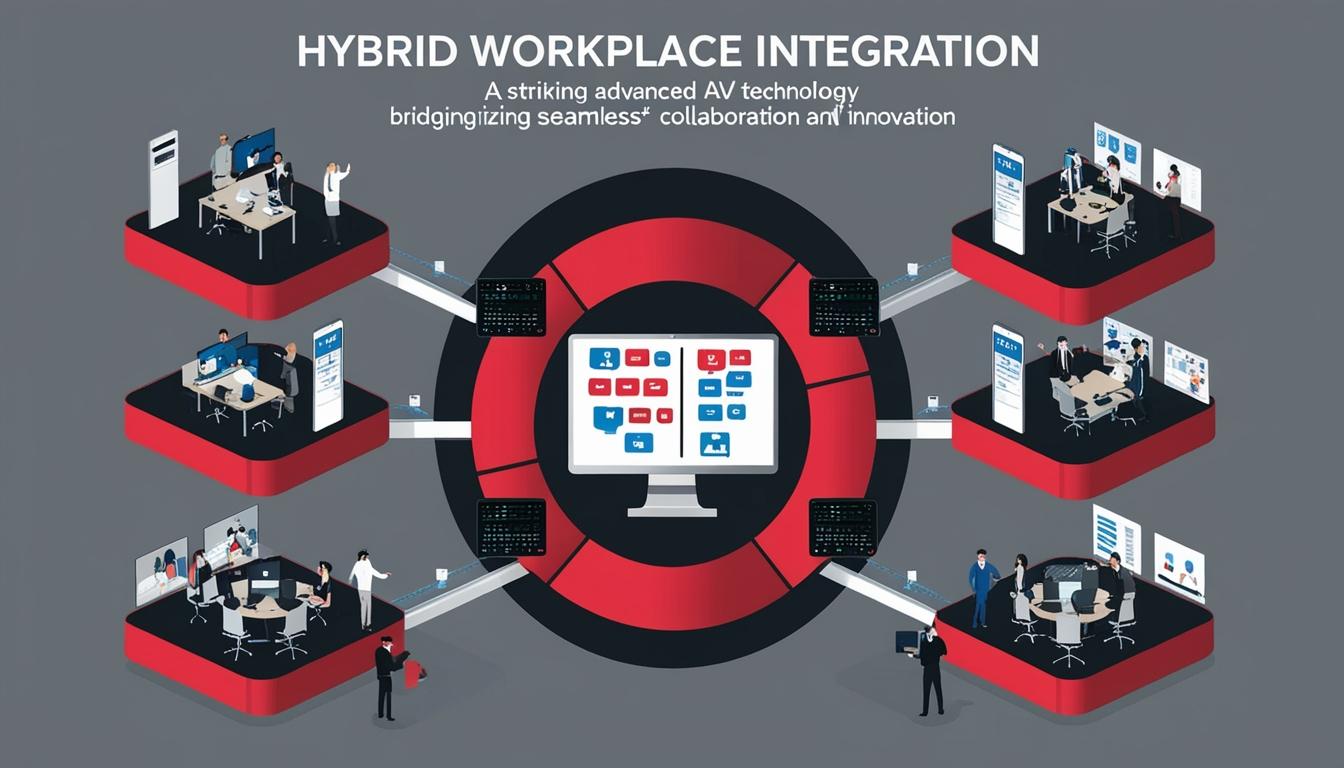
The evolution of the workplace is increasingly characterised by the rise of hybrid models, prompting businesses to rethink their audiovisual (AV) integration strategies to facilitate seamless communication and collaboration for both in-office and remote teams. This transformation is underpinned by a strong emphasis on flexibility, resilience, and innovation in AV systems, which are now critical to success in this new work landscape.
As companies strive to optimise their operations in these hybrid environments, the adoption of innovative AV technologies is paving the way. Cloud-based solutions have emerged as central to AV integration, providing both flexibility and scalability. With these platforms, teams are able to share resources effortlessly, regardless of their physical locations. The emphasis is on creating a connected experience for all participants, whether through collaborative document suites or sophisticated video conferencing tools.
Furthermore, as video meetings become a standard practice, the demand for robust conferencing solutions has surged. Industry innovations, such as AI-enhanced cameras, noise-cancellation technology, and immersive audio systems, are being deployed to recreate the subtleties of in-person meetings. Such advancements are essential for bridging the divide between home and office environments, reinforcing a more connected workplace culture.
Interactive displays and digital whiteboards have also transformed remote collaboration. These tools facilitate dynamic brainstorming sessions and presentations, seamlessly integrating with various software platforms to enhance productivity and creativity. As such, they contribute to making workplaces—whether remote or in-person—more engaging and interactive.
Creating synergy between in-office and remote teams relies heavily on effective AV technology. A key approach being adopted by businesses is unified communication platforms. These systems integrate chat, video, email, and document sharing into a singular interface, thus ensuring a smooth user experience regardless of employee location. By centralising communication channels, organisations can reduce friction and enhance overall productivity.
In-office meeting spaces are similarly evolving to promote flexibility. Equipped with sophisticated AV technologies, these spaces can accommodate participants from any location, offering capabilities for screen sharing, real-time collaboration, and instant technical support. This adaptability is vital for ensuring that meetings remain inclusive and efficient, catering to both physical and virtual attendees.
Looking to the future, the trend of hybrid work environments is set to continue evolving, thus necessitating ongoing adaptation in AV integration. Potential advancements may include more immersive virtual reality (VR) experiences, machine learning technologies to optimise meeting workflows, or the introduction of holographic displays that offer new interaction dimensions.
For companies that remain vigilant towards these emerging trends, there is the potential not only to enhance operational efficiencies but also to cultivate a workplace culture that values both flexibility and inclusivity. The continuous integration of cutting-edge AV technologies represents not just a reaction to current market demands but also an investment in a more connected, agile, and collaborative future.
As the AV landscape evolves, platforms like AV Beat, owned by Relevant Media Properties, LLC, serve as crucial resources, showcasing the latest trends and solutions within the industry. Their efforts empower AV professionals to adapt and thrive amidst these changes, ensuring that transitions into hybrid working environments are as seamless as possible.
Source: Noah Wire Services