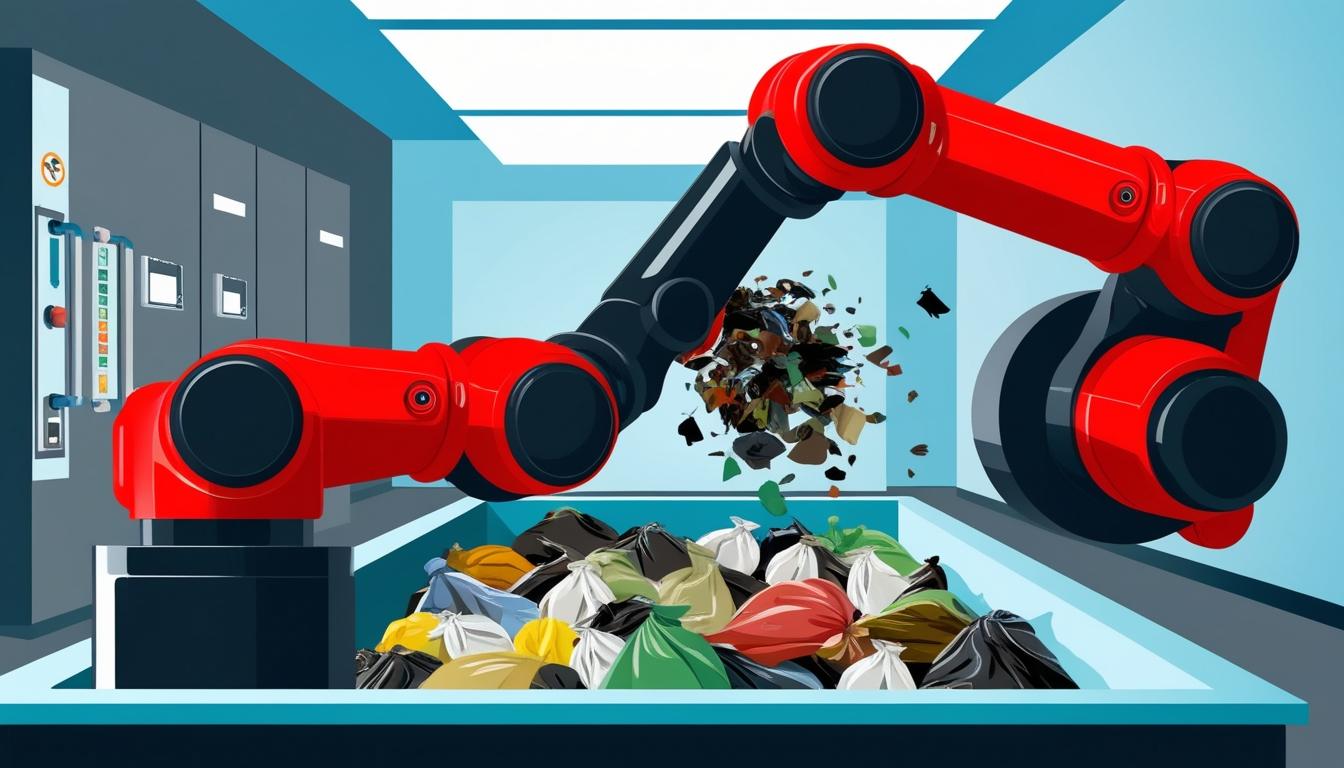
AMP Robotics, a Colorado-based company specializing in advanced recycling technology, has successfully raised $91 million to enhance its operations powered by artificial intelligence (AI). This funding aims to expand AMP's capabilities in the recycling industry, which is currently confronting challenges such as rising operational costs and increasingly stringent contamination standards. The company employs robots equipped with sophisticated vision systems that can sort waste at a pace and accuracy unrivalled by human beings.
The introduction of AMP's technology could potentially transform the recycling landscape by boosting recovery rates and optimising waste management processes. AMP's AI employs deep learning techniques, enabling it to continuously learn from and analyse millions of waste images. According to AMP founder Matanya Horowitz, “Recycling rates have stagnated in the United States. Our AI systems help recover more materials, reduce contamination, and ultimately optimize waste operations.”
One of the key advantages of the AMP system is its capability to address the prevalent issue of labour shortages in the industry. These robots operate tirelessly, alleviating the manual and often arduous efforts required for sorting waste. With over 400 AI systems already in operation globally, the demand for sustainable waste solutions is projected to drive further growth in this sector.
Speaking to PYMNTS, Amazon AI software engineer Abhishek Agrawal suggested an innovative concept where “bins themselves can be made intelligent to reduce human errors”, hinting at a future where entire recycling systems are enhanced through AI technology.
The push for AI integration in waste management isn’t limited to AMP. In Europe, Greyparrot, based in London, has introduced its AI technology at over 50 recycling facilities, using cameras and machine learning to process waste on conveyor belts in real time. This technology is assisting in identifying various materials such as plastics, paper, and metals, and consequently improving sorting efficiency while reducing contamination. Additionally, Greyparrot is influencing manufacturers to rethink packaging for enhanced recyclability.
Another technology innovator, Recycleye, employs robotic arms that utilize AI to automate the sorting process, effectively addressing both productivity and labour shortage issues. Notably, Recorra, a U.K.-based recycling firm, has upgraded its operations using Recycleye’s technology to modernise its material recovery strategy.
The application of AI in waste management is not restricted to sorting operations; companies like WestRock are researching AI-driven designs to create sustainable packaging that facilitates recycling processes. This aligns with a broader objective of advancing towards a circular economy, which seeks to minimise waste and promote resource reuse.
Municipalities are increasingly adopting AI solutions to tackle recycling difficulties. A $24 million materials recovery facility in Tasmania, for instance, now processes recyclables from over 100,000 households through AI sorting systems.
Joe Floam, owner of ScrapWare, discussed the implications of AI in the metals recycling industry, stating that “AI is being used to predict market trends” which assist recyclers in making strategic buying, selling, and inventory management decisions. The ability of AI algorithms to analyse vast amounts of market data enables recyclers to optimise production and manage their inventory based on anticipated demand for specific metals.
As AI continues to evolve and integrate into various aspects of the recycling and waste management sectors, its potential to reshape industry practices and enhance operational efficiency remains significantly promising.
Source: Noah Wire Services