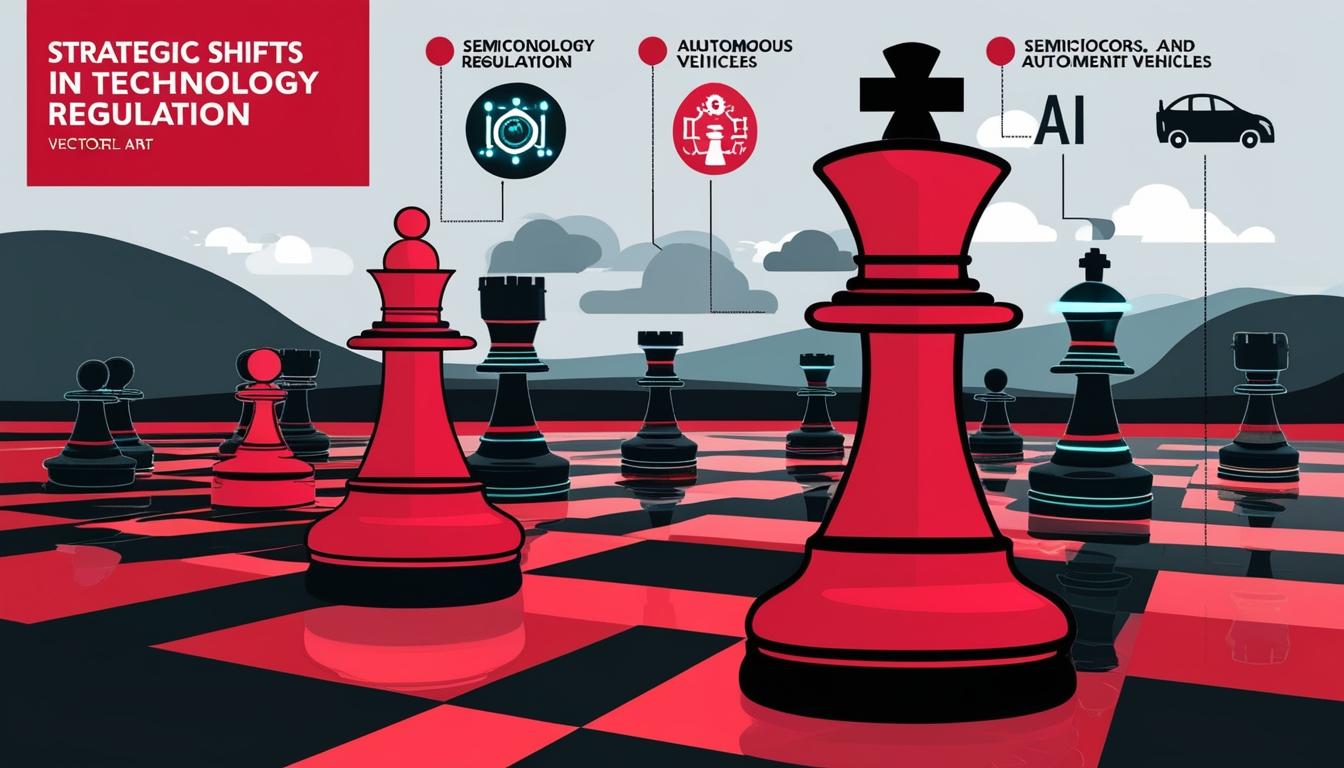
The technology landscape in the United States is on the brink of considerable transformation as the second Trump administration prepares to implement a series of regulatory and policy changes. Significant sectors such as semiconductors, autonomous vehicles, digital payments, and artificial intelligence (AI) are expected to undergo substantial shifts that could reshape innovation, investment, and operational strategies across the industry. Analysts suggest that these transformations may have far-reaching impacts on financing and mergers and acquisitions within the technology sector.
One of the most notable pieces of legislation, the CHIPS Act, which supports the semiconductor industry, is likely to face challenges under the new administration. While a complete repeal is improbable, funding streams under the Act may experience delays or re-evaluation. Reports indicate a potential pivot from reliance on subsidies to a strategy favouring tariffs, a shift that could stifle innovation and growth in the semiconductor sector. Companies heavily reliant on these subsidies are assessing the need to pivot towards domestic production and enhancing supply chain resilience to cope with anticipated changes.
In particular, the semiconductor sector, which has experienced rapid growth due to the demand from data centres supporting AI applications, may find itself in a dual situation where specific companies could either thrive or struggle based on the administration's support for fewer regulations surrounding AI technologies.
Moreover, the autonomous vehicle industry is anticipated to benefit from a more lenient regulatory framework. The Trump administration appears committed to easing regulations around self-driving cars, potentially allowing for a streamlined federal framework that would support testing and deployment while encouraging private sector investment. This could accelerate innovation in autonomous technology, positioning the U.S. at the forefront of this emerging field.
The digital payments landscape is also witnessing regulatory shifts, particularly with the U.S. Consumer Financial Protection Bureau (CFPB) recently implementing a rule that subjects tech companies processing more than 50 million transactions yearly to the same oversight as traditional banks. This has stirred debate within the banking community, as some stakeholders assert that the move fortifies the oversight necessary for ‘bank-like’ services, while others contend that it represents overreach by the CFPB. The incoming administration may contest these new regulations, potentially altering the regulatory landscape for digital banking services and cryptocurrencies.
Similarly, the existing regulatory climate surrounding AI technologies is set for a re-evaluation. The Biden administration’s AI Bill of Rights, which sought to enhance AI safety and privacy protections, faces potential repeal under the new administration, leading to an anticipated increase in AI implementation within federal operations. Experts forecast that reduced regulation could stimulate further investment in pure-play AI companies, as well as those developing supporting technologies critical to computational demands.
In the realm of clean technology, companies are preparing for the potential repeal of favourable tax incentives that had previously been afforded through the Inflation Reduction Act. Such changes could lead to increased costs from tariffs on clean-energy equipment and complicate access to tax credits for consumers purchasing electric vehicles. This segment of the technology landscape is arguably among the most vulnerable to shifts in policy.
Furthermore, significant adjustments to patent policy may emerge, as the upcoming administration appears poised to follow a path similar to its predecessor. There is a possibility of a strengthened patent system that could lead to fewer obstacles for obtaining patents, though differing opinions within the administration regarding patent enforcement may introduce uncertainty.
Overall, the implications of these prospective regulatory shifts are profound, with potential winners and losers emerging from the changing landscape. Whilst companies in emerging fields such as AI and cryptocurrency may find new opportunities for growth, those in sectors like clean technology could face formidable challenges amid evolving policies. As the new administration settles in, continued observation of these trends will be critical for understanding their impact on the broader technology sector, especially in relation to privacy, antitrust, and export control laws.
Source: Noah Wire Services