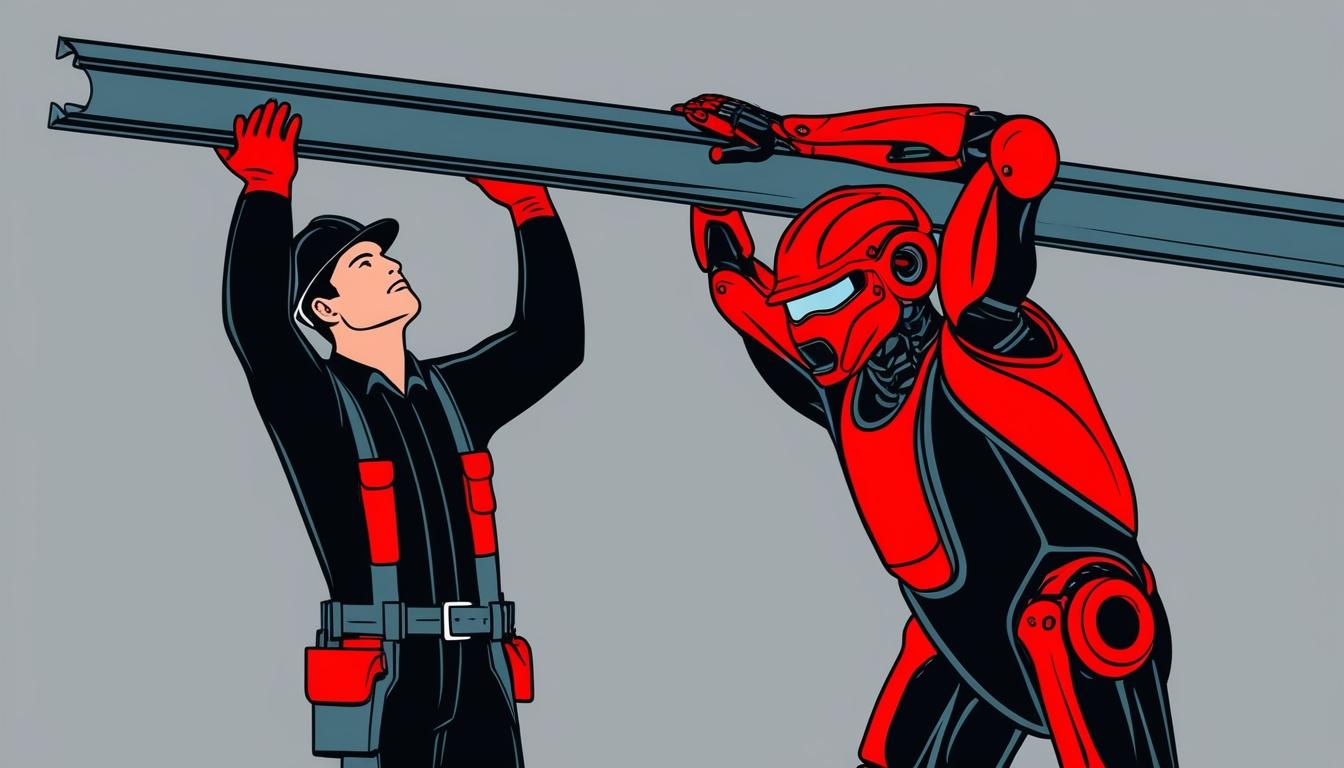
A recent trial of artificial intelligence-driven exoskeleton technology at TECHNAL UK has highlighted the potential for significant reductions in workplace fatigue and back injuries among employees in the construction industry. This trial, which took place over a two-week period, involved health and safety experts from Stanley, who were enlisted to provide the innovative technology aimed at improving worker comfort and safety.
The exoskeleton trial was initiated in response to the physical demands placed upon Technal UK workers, many of whom are required to lift heavy metal profiles—some weighing up to 25 kg—while preparing products for dispatch. These tasks often necessitate bending and lifting movements that can lead to fatigue and musculoskeletal disorders. The trial was conducted with two workers, one in his 60s and the other in his 20s, who were the first users of the Hapo Back exoskeleton system.
Andre Jutel, Solutions Consultant at Stanley, expressed satisfaction with the outcomes of the trial, stating, “We are delighted with the results of the two-week trial with the TECHNAL UK team.” He noted that both workers reported immediate relief from fatigue while wearing the exoskeletons. The trial involved an initial one-week orientation phase, allowing the workers to become accustomed to the technology, followed by a week of data collection using sensors to assess the effectiveness of the exoskeleton in real-time working conditions.
The assessment yielded significant findings, indicating that the use of exoskeletons could reduce the risk of lower back strain at work by an estimated 30%. Furthermore, the technology may lessen the daily load on the back by as much as five tons, suggesting a remarkable impact on physical strain and potential long-term health benefits for workers.
Matthew Hickman of TECHNAL elaborated on the adoption of the technology, remarking, “Both workers quickly adopted the exoskeleton technology and could see how it really contributed to helping them with their daily tasks, having a real impact on their fatigue at the end of the day.” Following the success of the trial, TECHNAL UK has taken steps to expand the use of the Hapo Back exosuits within the company, with plans to purchase additional units to accommodate more employees eager to embrace this technological advancement.
The trial underscores how emerging automation technologies, particularly those leveraging artificial intelligence, are being integrated into business practices to enhance worker safety and efficiency. As companies continue to evaluate the implications of AI in the workplace, the developments at TECHNAL UK represent a forward-looking approach that could inform future initiatives throughout the construction industry and beyond.
Source: Noah Wire Services