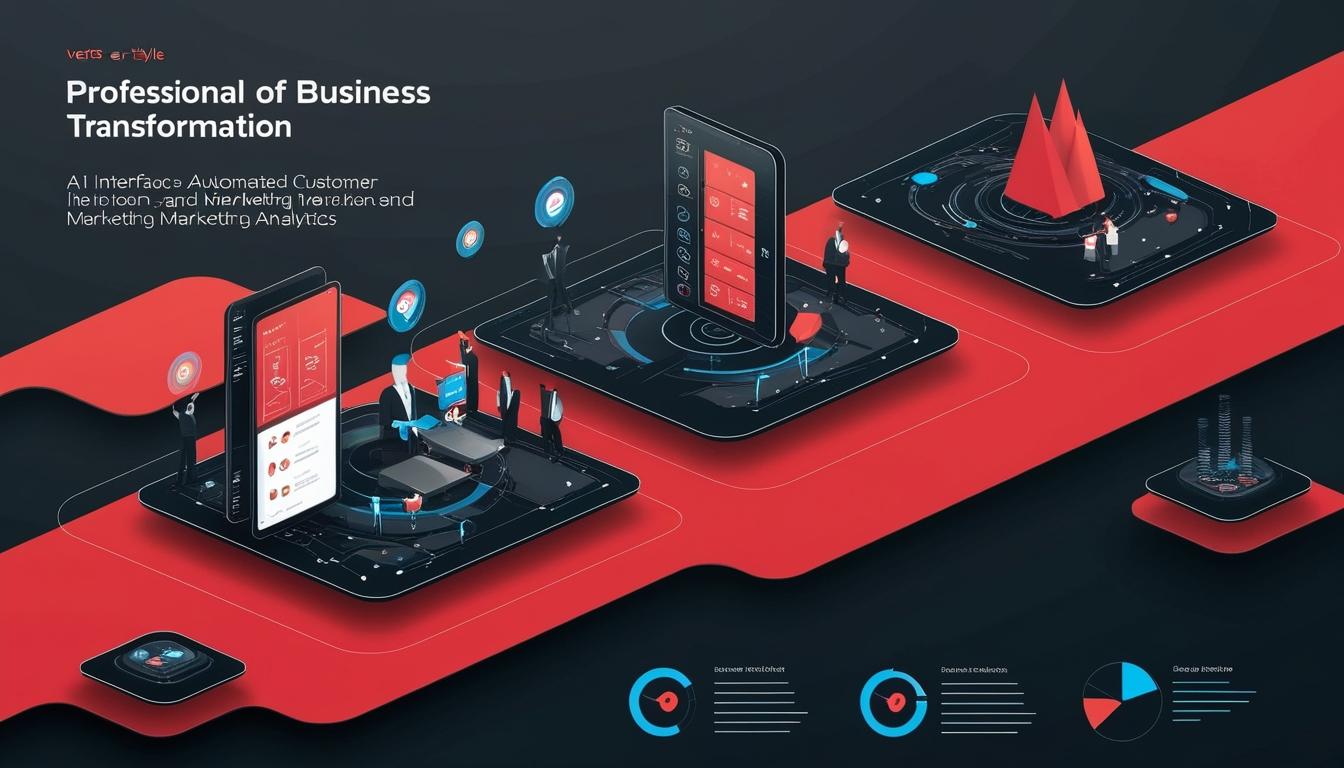
The corporate landscape is witnessing a seismic shift as businesses increasingly turn to artificial intelligence (AI) and automation to redefine marketing strategies. An article from Redmond Pie highlights the transformative impact these technologies are having on traditional marketing processes, particularly in lead generation and customer interaction optimisation.
In a rapidly evolving corporate environment, companies must adapt to maintain their competitive edge. AI is aiding in this effort by automating repetitive tasks and facilitating new processes that enhance organisational efficiency. Businesses utilise AI-powered tools to streamline sales funnels, guiding potential customers from initial interest to final purchase with greater speed and accuracy. Technologies such as Interactive Voice Response (IVR) systems are evolving to deliver personalised customer interactions, which not only improves user experiences but also drives revenue.
Real-world applications of these technologies are increasingly evident. For instance, Phonexa, a provider of call tracking and analytics solutions, has developed a unified platform that manages intricate customer journeys across various touchpoints. The platform's capabilities allow businesses to glean deep insights into caller behaviours, thereby optimising call flows and enhancing overall customer service. Its IVR and call routing features contribute to reducing customer wait times while increasing the chances of first-call resolutions.
The use of automation technologies is another critical aspect transforming the marketing landscape. Performance marketing software enables companies to oversee and refine their advertising campaigns in real-time, while Voice over Internet Protocol (VoIP) systems facilitate seamless integration between digital marketing strategies and telecommunication systems. This amalgamation fosters superior customer relationships and more effective communication.
Automation encompasses a broad spectrum of tools, including email marketing, automated social media posting, and ad management, which collectively save time and ensure comprehensive marketing consistency. Leading marketing automation platforms offer functionalities like campaign management and customer segmentation, equipping marketers with invaluable insights that inform their decision-making processes.
The integration of AI and automation yields substantial advantages, particularly in lead management and customer engagement. Advanced analytics applications, powered by AI, allow organisations to understand customer interactions better, thereby driving enhancements in products and services. Notably, AI facilitates performance tracking and targeted marketing strategies that enable timely and relevant customer outreach.
As businesses consider the future implications of these technologies, new trends are emerging, indicative of an evolution in marketing practices propelled by AI and automation. The empowerment of marketing automation platforms through AI analytics enhances customer experiences, allowing for personalised engagement based on data insights.
Moreover, AI predictive analytics can streamline the sales funnel, improving conversion rates by providing valuable insights into customer behaviours. Businesses are recognising the importance of AI-driven lead generation solutions that can efficiently identify and qualify potential customers, thus reducing acquisition costs while enhancing overall performance.
Challenges exist, particularly in ensuring that AI-generated content aligns with brand identity and conveys a human touch. Additionally, companies must navigate data security and privacy concerns as they deploy AI solutions, ensuring compliance with regulatory standards while safeguarding customer information.
The future of marketing stands to benefit significantly from AI and automation. As organisations harness these tools effectively, they are likely to achieve heightened marketing impact and efficiency. AI-driven customer analytics platforms will further illuminate consumer preferences and behaviours, allowing businesses to adapt their strategies in real-time to meet evolving market conditions.
In conclusion, the deployment of AI and automation within marketing realms is not only fostering operational efficiency but also reshaping customer engagement strategies. As companies increasingly leverage these technologies, substantial improvements in lead generation, customer relationship management, and overall marketing return on investment are anticipated, setting the stage for a more innovative and agile marketing landscape.
Source: Noah Wire Services