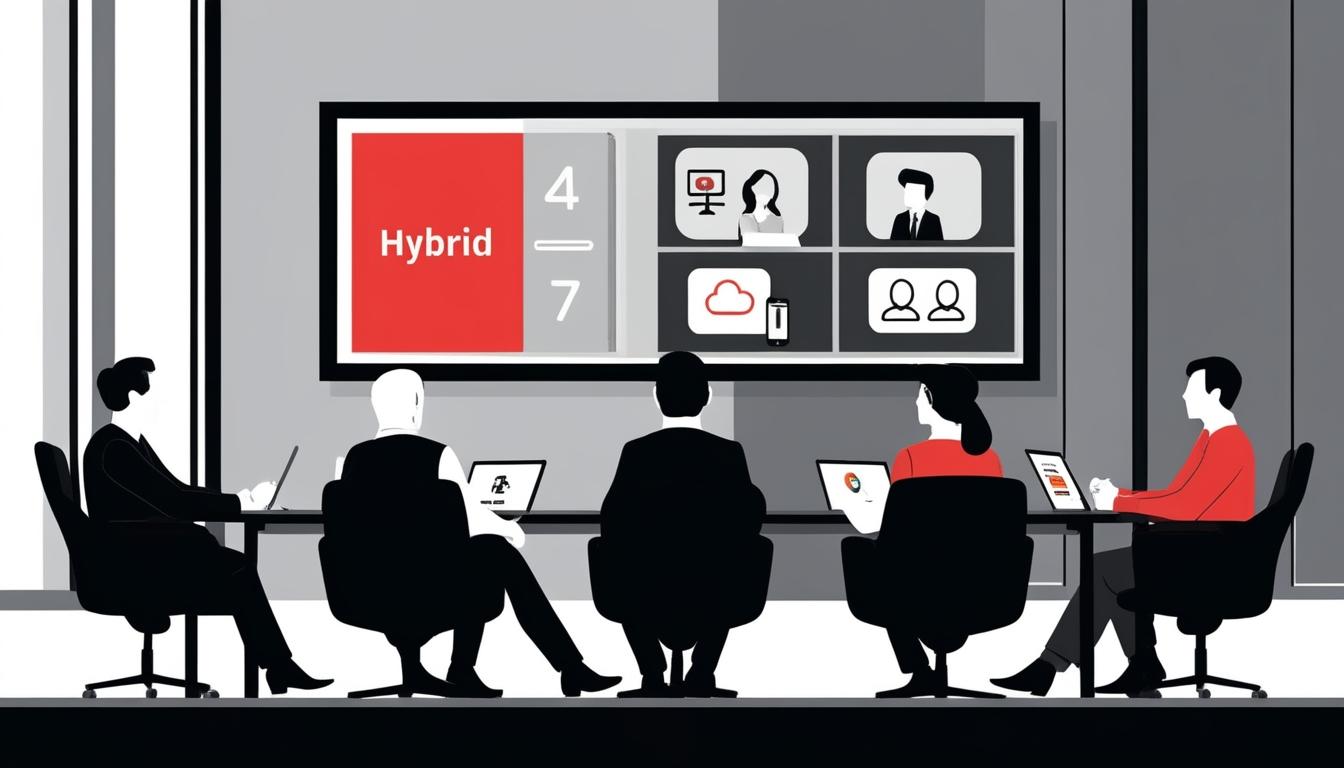
In an evolving business landscape increasingly dominated by technology, companies are exploring current and future trends in artificial intelligence (AI) automation that promise to reshape business practices significantly. Recent insights shared in BizTech Magazine underscore the importance of integrating appropriate hardware, training staff, and optimising meeting spaces to adapt to the hybrid work environment that many organisations are now embracing.
With the rise of hybrid working arrangements, identifying essential activities performed during in-person meetings is paramount. Businesses are encouraged to invest in technology that supports collaborative efforts, particularly for teams with both remote and in-person participants. As discussed in BizTech Magazine, investing in advanced tools such as digital whiteboards can enhance the productivity of collaborative sessions. Companies are urged to evaluate existing hardware and software to ensure they align with current operational needs.
Training staff effectively is another critical aspect highlighted by BizTech Magazine. The publication noted that many employees face challenges when connecting laptops to conference room equipment, a situation that has become a familiar source of humour in many workplaces. Simple plug-and-play setups do not always function as expected; thus, organisations should consider conducting brief training and practice sessions. These initiatives can prepare employees for their meetings, allowing them to navigate any connectivity issues confidently. Understanding which cables to use or how to operate the various remote controls can significantly reduce frustrations and downtime during important sessions.
Moreover, optimising meeting environments for hybrid participation is essential. The layout and design of conference rooms should cater to the needs of both on-site and remote attendees. This may require rearranging furniture to create a more inclusive setting, adjusting camera angles, and improving lighting for better visibility. Regular maintenance of equipment and ensuring that technology is user-friendly—such as clearly labelled tools—are necessary steps to facilitate efficient meetings. Furthermore, ensuring robust wireless internet connectivity and easy access to power sources is critical for a seamless experience.
These evolving practices highlight a broader trend in AI automation and its impact on business operations, as companies seek to enhance collaboration and productivity in a hybrid workforce model. As organisations continue to adapt to these transformations, the integration of advanced technology and strategic preparation will be key factors determining their success in this new era of work.
Source: Noah Wire Services