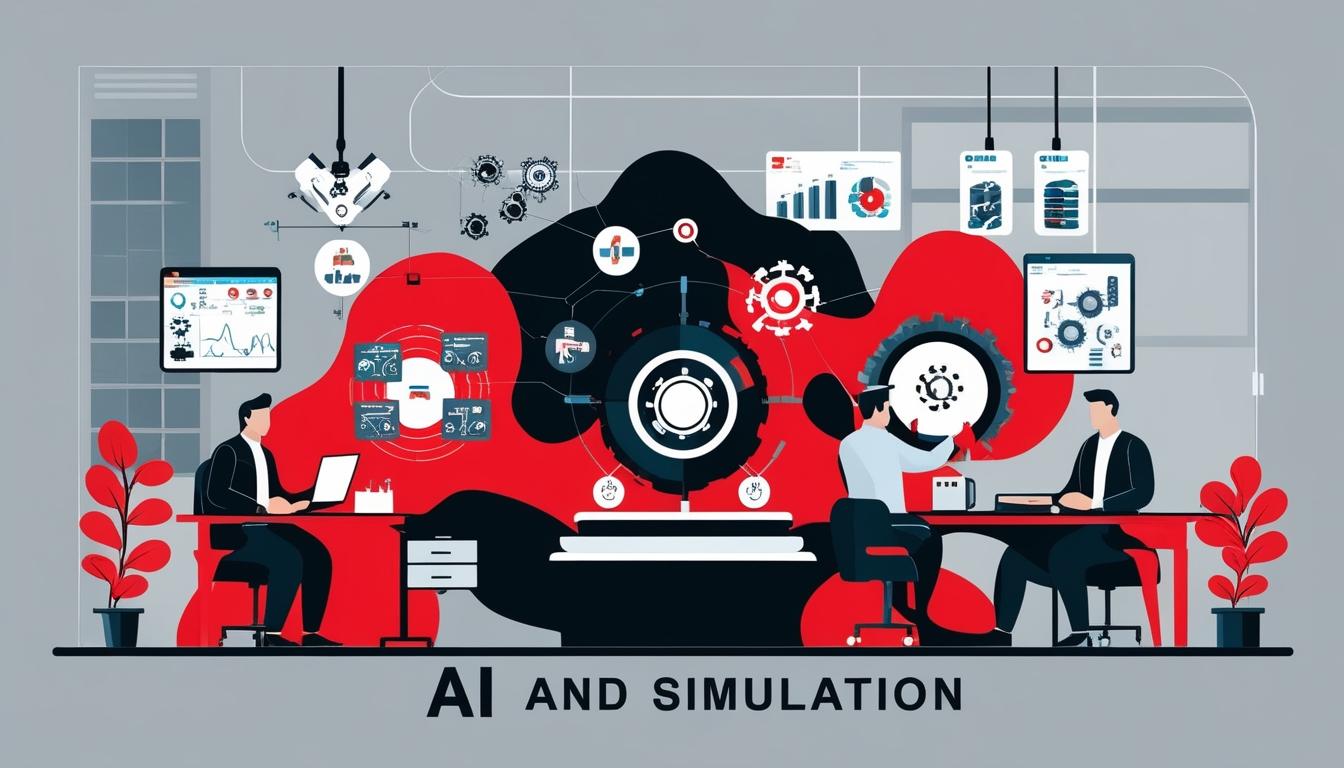
The integration of artificial intelligence (AI) with simulation technology is significantly transforming the manufacturing sector, delivering enhanced predictive insights and process optimisations. This development comes as engineering companies enhance their capabilities to keep pace with modern demands, transitioning from traditional methods to more advanced workflows.
According to Paweł Z. Chądzyński, Senior Director of Strategic Research at Aras Corporation, despite ongoing innovations in engineering, key elements of systems engineering and product development have remained compartmentalised, notably in research and development (R&D) and product design. However, with the maturation and increasing accessibility of AI and machine learning (ML) technologies, many engineering firms are beginning to merge AI with their simulation processes. This fusion of AI and simulation is prompting rapid advancements in product quality, design optimisation, and significantly reducing time to market.
Traditional simulation methods, while effective, carry distinct limitations. They necessitate substantial expertise, detailed setup, and continuous oversight, typically allowing engineers to execute one complex simulation at a time. These traditional methods also face challenges in adapting to evolving requirements and lack the speed and scalability of AI-enhanced solutions. When AI is integrated into simulation workflows, it unlocks new potential for flexibility, scalability, reusability, and cost-effectiveness. Chądzyński asserts that AI's ability to solve problems quickly through neural networks and algorithms constitutes a major advantage.
The implementation of AI within modern simulation processes enables engineers to swiftly update and scale simulations, conduct multiple simulations concurrently, and uncover previously overlooked design options through predictive and prescriptive AI input. This modern approach to simulation not only streamlines processes but also facilitates multidisciplinary product development by making simulation methodologies more accessible.
AI-driven simulation is gaining traction across several industries with notable applications. In the automotive sector, for instance, engineers can perform virtual tests on vehicle performance, safety, and durability under simulated real-world conditions, facilitating earlier detection and rectification of design flaws and thereby streamlining time to market. The aerospace industry benefits from AI-driven simulations that enhance aircraft design and performance, augment safety features, and improve customer-oriented functionalities in commercial aircraft.
Furthermore, in the field of medical devices, AI simulations contribute to various functions including the optimisation of medical device designs and testing surgical procedures, alongside creating HIPAA-compliant synthetic data. Consulting and professional services firms are also applying these advanced simulations to generate user-friendly visualizations that allow customers to engage and provide feedback during the product development process, thus minimising delays.
In order for organisations to leverage the advantages of AI-driven simulation effectively, robust data management strategies are essential. AI models utilised in simulations require high-quality, well-structured, and relevant data for optimal performance. Companies must focus on organising data, contextualising it, and ensuring accessibility across different data sources. Fostering a digital thread infrastructure will enhance traceability and provide necessary insights for informed simulation decisions.
The operational landscape for engineers is rapidly evolving due to AI. To navigate this shift, business leaders are encouraged to invest in data management, digital thread, and cloud technologies. Tailored training for employees is vital, focusing not only on the use of AI in product development and simulations but also on the efficiencies it introduces into daily tasks. Additionally, implementing “zero trust” practices concerning AI outputs is essential to mitigate potential errors and ensure reliability.
To harness the long-term benefits of AI-driven simulation, organisations must empower their workforce by fostering adaptive thinking and a comprehensive understanding of AI tools. This foundation will ultimately equip engineers with the competencies needed to leverage AI as a fundamental driver of future design innovations.
Source: Noah Wire Services