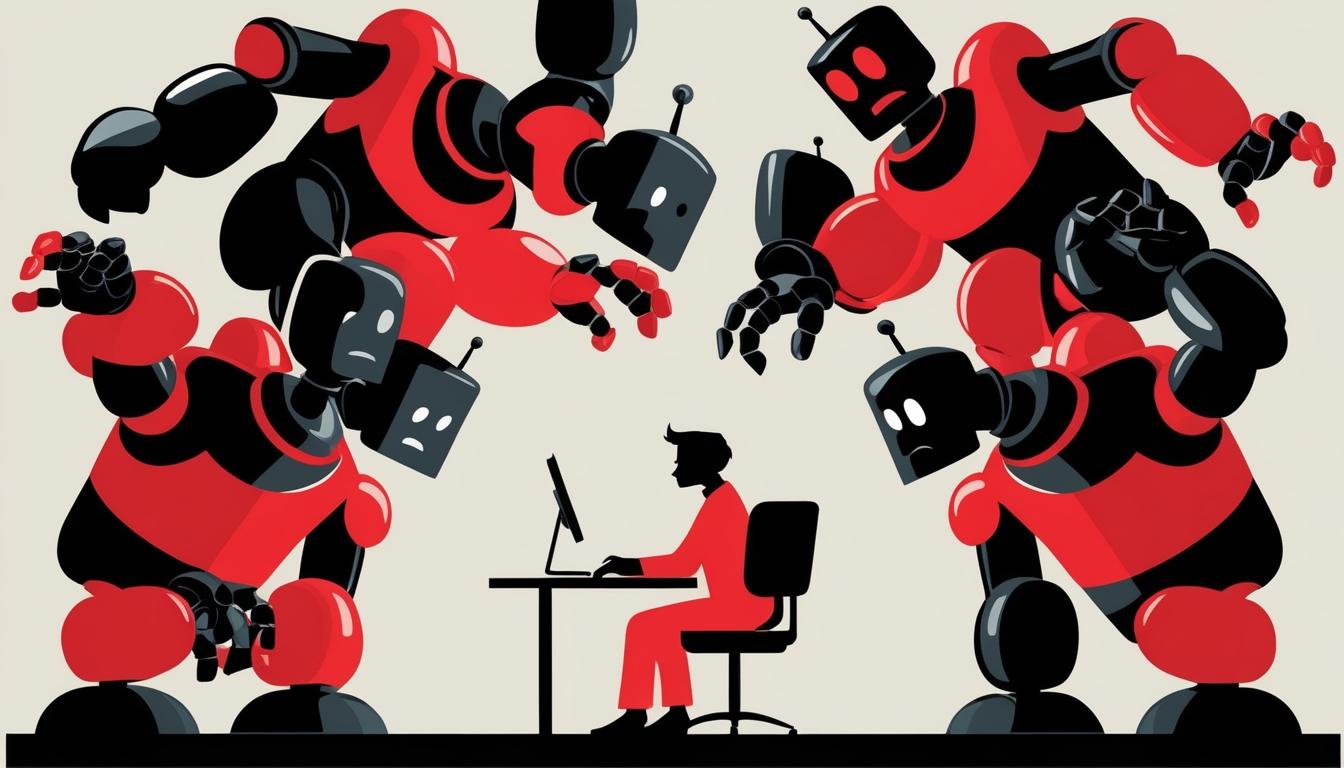
Two members of the Animation Guild's negotiating committee have publicly expressed their intentions to vote against ratification of a new contract, citing insufficient protections against artificial intelligence. This decision comes amid a rapidly evolving landscape for animation professionals, amid rising concerns about the potential impact of AI on job security within the industry.
Mike Rianda, director of the critically acclaimed film "The Mitchells vs. the Machines," shared his concerns on Instagram, stating that the AI guidelines included in the contract are “far from what we were going for.” Rianda strongly opposed the recommendation to ratify the deal, asserting, “Studios can replace workers with AI. Studios can force you to use AI. Studios can give you AI work to finish on any timeline.” He drew attention to the absence of staffing minimums, which he argued are crucial for protecting crew sizes from layoffs attributed to AI advancements, and expressed that this lack of provisions represents a significant shortfall, stating, “This was gutting.”
The Animation Guild, which represents approximately 6,000 artists, technicians, and writers, had reached a tentative agreement with the Alliance of Motion Picture and Television Producers on November 23. The voting for the ratification of this contract commenced on Tuesday and is expected to conclude on December 22.
While some negotiating committee members support the agreement as the best outcome achievable under the given circumstances, they acknowledge the limitations of the terms related to AI. Mairghread Scott, another committee member who voted in favour of the deal, noted the importance of remaining composed about AI and stated, “AI is not an issue that is going to get solved solely in contract language.” She emphasised the necessity of open discussions around the implications of AI in the industry, highlighting that the contract includes provisions for notifying and consulting members about AI usage.
The committee featured 56 members, with 29 serving on the “table team” that recommended the tentative agreement. Although a substantial majority of the voting members approved the contract, the specific vote totals were not disclosed. However, concerns remain pervasive among members. Joey Clift, a non-voting member of the committee, expressed discontent over the agreement on social media platform BlueSky, describing it as inadequate in addressing key priorities regarding AI protections.
The ratification process follows virtual town hall meetings intended to foster dialogue between leadership and union members. Despite differing views, some animation professionals have voiced satisfaction with the gains achieved in the contract, citing it as the best deal secured in years. Conversely, others remain sceptical regarding the efficacy of the proposed provisions against the backdrop of growing AI capabilities in animation.
Chad Quandt, an animation writer, echoed apprehensions within the community, arguing that merely notifying employees of AI use is insufficient. He underscored the necessity for stronger standards, asserting that, “Even if the studios say they have the best intentions, if they can find any way to undercut humans out of this industry they will.”
As negotiations progress, the union aims to address the overarching anxiety surrounding job security while navigating the complex interplay between technology and employment in animation. Paula Spence, an art director and committee member, acknowledged the uncertainty surrounding AI's future role within the industry and advocated for a focus on mastering the technology as a creative tool rather than as a replacement for human talent.
If the Animation Guild membership rejects the contract, negotiators will need to reconvene to seek better terms, which may necessitate a strike authorization vote to strengthen their bargaining position. Rianda reiterated the critical nature of the current circumstances, urging members to consider the long-term implications of their vote, stating, “If AI protections are important to you… this is the time to fight.” The unfolding situation illustrates a contentious and challenging environment for animation professionals as they confront the ramifications of AI technologies in their field.
Source: Noah Wire Services