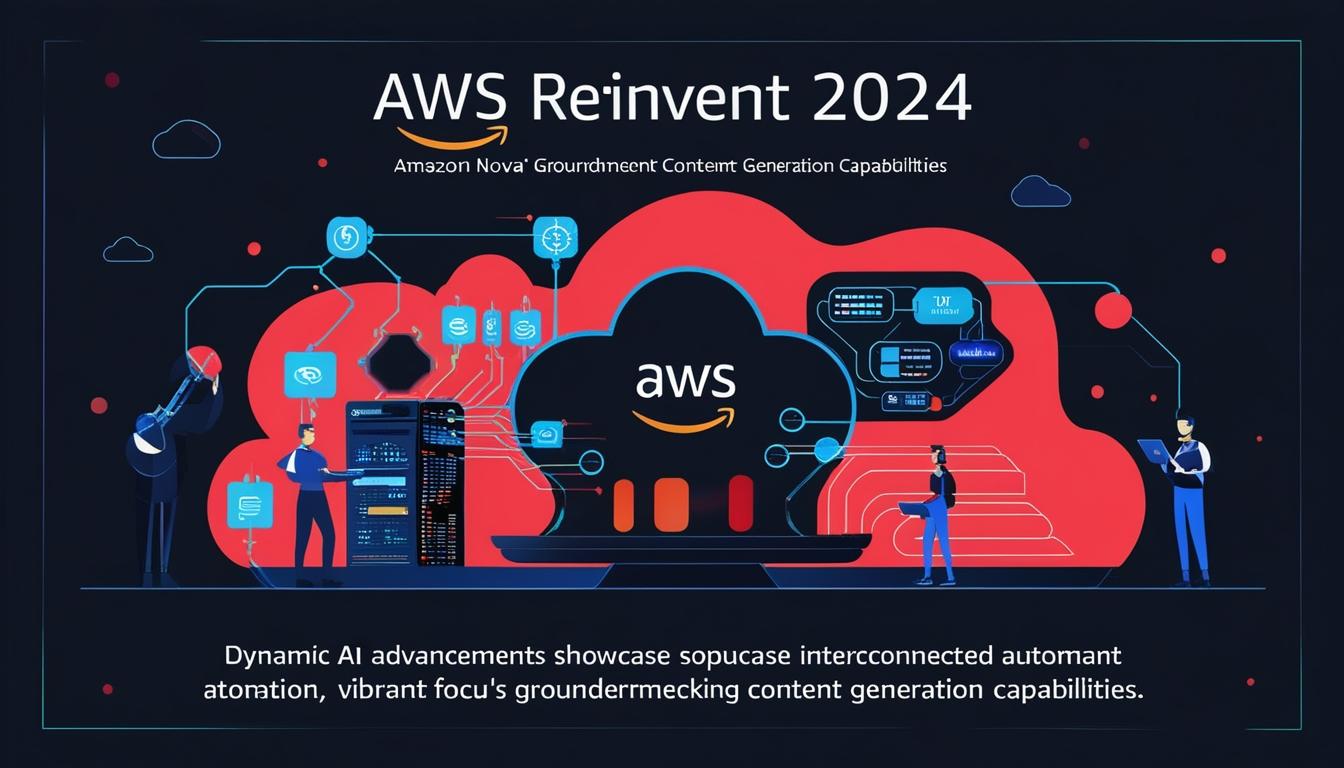
AWS has recently wrapped up its much-anticipated annual learning conference, re:Invent 2024, which featured significant advancements in AI automation and its wider ecosystem. The event attracted approximately 60,000 attendees and included 2,000 learning sessions, alongside notable activities such as the giving of 186 tattoos. Although no single announcement dominated the headlines, several key product upgrades were unveiled.
Among the most impactful announcements was the next generation of Amazon SageMaker, AWS’s comprehensive solution for data organisation, AI model building, and deployment. This new iteration has two principal components: SageMaker Lakehouse, which aggregates crucial company data from various sources—such as Amazon S3, Redshift, and third-party SaaS tools like Salesforce and ServiceNow—into a central location; and SageMaker Unified Studio, which integrates multiple tools from the SageMaker ecosystem into a single interface to facilitate collaborative analytics and AI tasks.
Additionally, AWS highlighted enhancements to Q Developer, its virtual assistant tailored for software developers. These improvements include Q Transformation, which streamlines the transition between different development platforms, thereby reducing the time involved in migrating from mainframe systems.
AWS has shifted from its previous foundational AI model offering, “Titan”, to a new suite named “Amazon Nova”. This suite introduces foundational AI models categorised by their functionality, with initial offerings centred around "understanding" models that can process text, images, and video to generate text outputs. The models fall into four sizes, with options ranging from a minimal “Micro” to an extensive “Premier”. Nova’s content generation capabilities were particularly emphasised, featuring products like Nova Canvas, a text-to-image generator, and Nova Reels, which converts text to video. Liz Miller, VP & Principal Analyst at Constellation Research, noted that these should be viewed as foundational models with the potential for further development.
AWS also recognised a need to support various user types in their development process. While traditionally, AWS engaged with "master builders"—those who could construct intricate systems without guidance—there is now an acknowledged demographic of "master players" who prefer more streamlined tools. AWS’s recent product announcements aim to cater to these diverse needs, allowing customers to utilise ready-made solutions while still retaining the option to innovate.
In the domain of customer experience (CX), AWS introduced new automation options for its cloud contact centre customers. The virtual assistant, Amazon Q, has been enhanced to enable users to resolve their issues independently. This is complemented by the introduction of a no-code bot designer within the Lex framework, enabling the automation of various customer interactions, thus streamlining processes for businesses relying on AI-led customer engagement.
A noteworthy addition to the Amazon Connect offering was the introduction of the Analytics Data Lake, which aims to centralise contact centre data, creating a unified view of customer interactions. This feature now incorporates generative AI to allow users to create customer segments using natural language, coupled with trigger-based campaigns that respond dynamically to customer activities.
Furthermore, the conference spotlighted the importance of collaboration among partnered enterprises. Vijoy Pandey of Cisco introduced the concept of an “Internet of Agents”, which addresses the issues arising from different AI systems potentially providing conflicting information within enterprises. This interconnected approach aims to enhance the alignment of insights across departments, ensuring a cohesive operational strategy.
As AWS continues to evolve its offerings in AI and automation, the implications for various business sectors, including contact centres and development environments, are significant. The integration of advanced analytics, streamlined automation tools, and collaborative frameworks is set to redefine how businesses operate, fostering an environment where responsive and customer-centric practices can flourish.
Source: Noah Wire Services