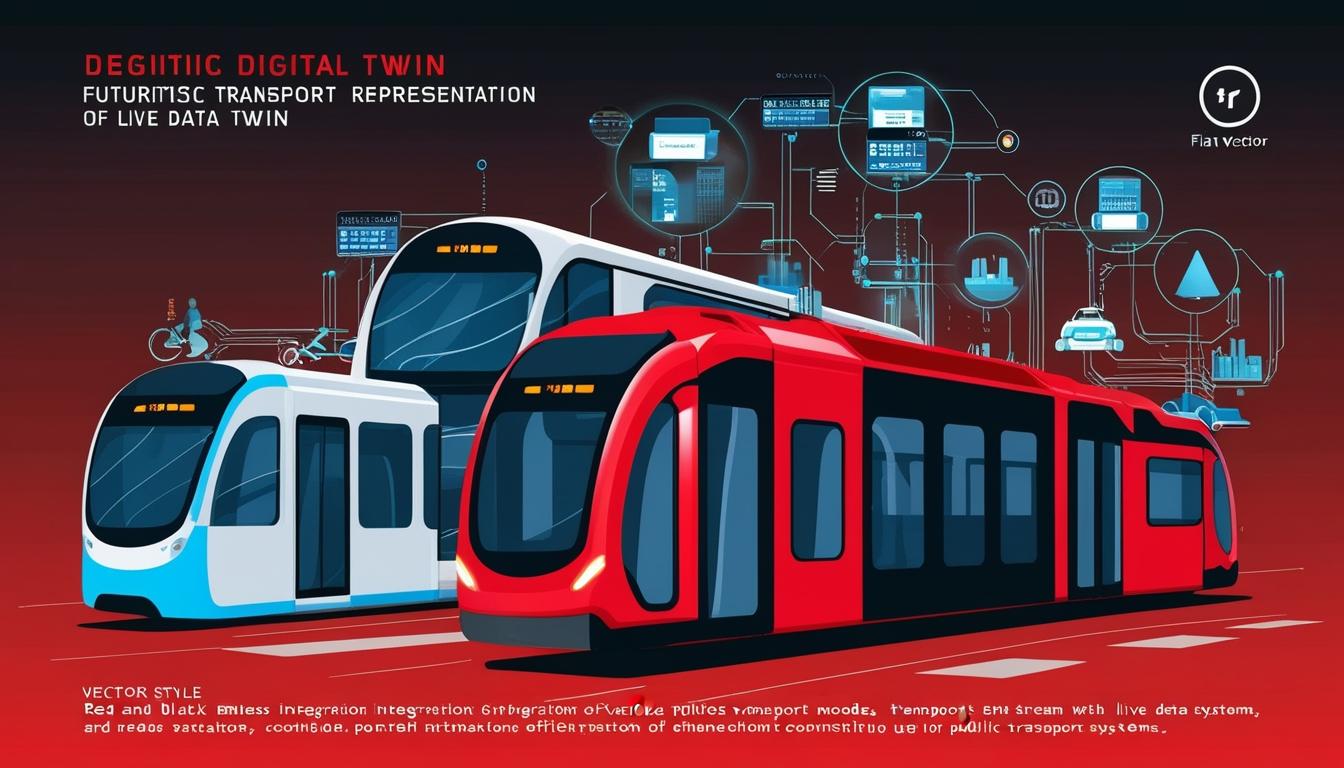
The transport sector is poised for a significant transformation, driven by advancements in technology such as digital twins, which create virtual replicas of physical systems. Ryan Hood, the digital highways leader at Arup, a global engineering consultancy, provided insights on this pivotal change in a report commissioned by the Department for Transport titled Integrated Network Management Digital Twin: Economic Benefits Analysis. Hood's report outlines how these technologies could enhance the efficiency of the UK’s public transport systems.
Current statistics indicate that a substantial 79% of drivers would utilise public transport if it were improved, underscoring the potential for digital twins to facilitate a paradigm shift in transportation. The technology is expected to enable seamless multimodal integration, which is the ability of different transport modes—including surface, maritime, and air traffic—to work together within a unified framework. This integration has not only been theoretical; it has already begun to yield tangible benefits. By optimising links between various forms of transport, digital twins can lead to decreased delays, reduced congestion, and lower emissions, thus providing passengers with shorter journey times and a more reliable experience.
Real-time data sharing is a crucial component of this integration. For example, Portsmouth City Council employs a ferry tracking system that utilises digital twin technology to monitor ferry schedules and unusual patterns, thus smoothing transitions between ferry and road transport. Similarly, Transport for London’s Surface Intelligent Transport System (SITS) exemplifies how this technology can prioritise bus travel, enhance traffic flow, and improve air quality across London.
Moreover, digital twins play an essential role in incident management. Transport networks frequently encounter unplanned incidents attributable to adverse weather, collisions, or structural failures. Digital twins facilitate a comprehensive and real-time overview of the network, equipping transport operators with the ability to respond swiftly and effectively to emergencies. Centralised dashboards that utilise digital twin data bring together incident information from various sources, enabling operators to promptly identify issues and mobilise resources. Furthermore, predictive tools that analyse both historical and real-time data help mitigate the risk of future disruptions. A case study from Transport for West Midlands highlights the effectiveness of this approach through the use of a multimodal dashboard and incident management system that fosters communication between transport authorities, emergency services, and government bodies.
At the core of digital twin technology is its capacity to integrate vast amounts of data, fostering collaboration between transport operators and adjacent sectors. This collaboration ultimately leads to improved decision-making and supports innovation. For example, Network Rail’s ENRICH programme leverages data analytics to enhance remote monitoring of rail infrastructure, thereby reducing delays and maintenance expenditures.
Despite the promising advantages of digital twins, widespread adoption is crucial for unlocking their full potential. The report from Arup indicates that challenges such as standardisation, interoperability, and cross-sector collaboration need to be resolved. The economic rationale for investment in integrated transport digital twins is compelling, with the potential to generate £1.85 billion in economic benefits over the next decade, including improvements in journey quality, reliability, and environmental outcomes.
Ryan Hood encapsulated the importance of viewing digital twins not merely as a technological innovation, but as a fundamental shift in how transport is designed, managed, and experienced. He stated, "Digital twins must be perceived as more than just a technological innovation. Rather, they represent a paradigm shift." The presentation of this report was conducted in partnership with the Digital Twin Hub at Connected Places Catapult on the 11th of November, further highlighting the growing acknowledgment of the transformative potential that digital twins hold for the transport sector.
Source: Noah Wire Services