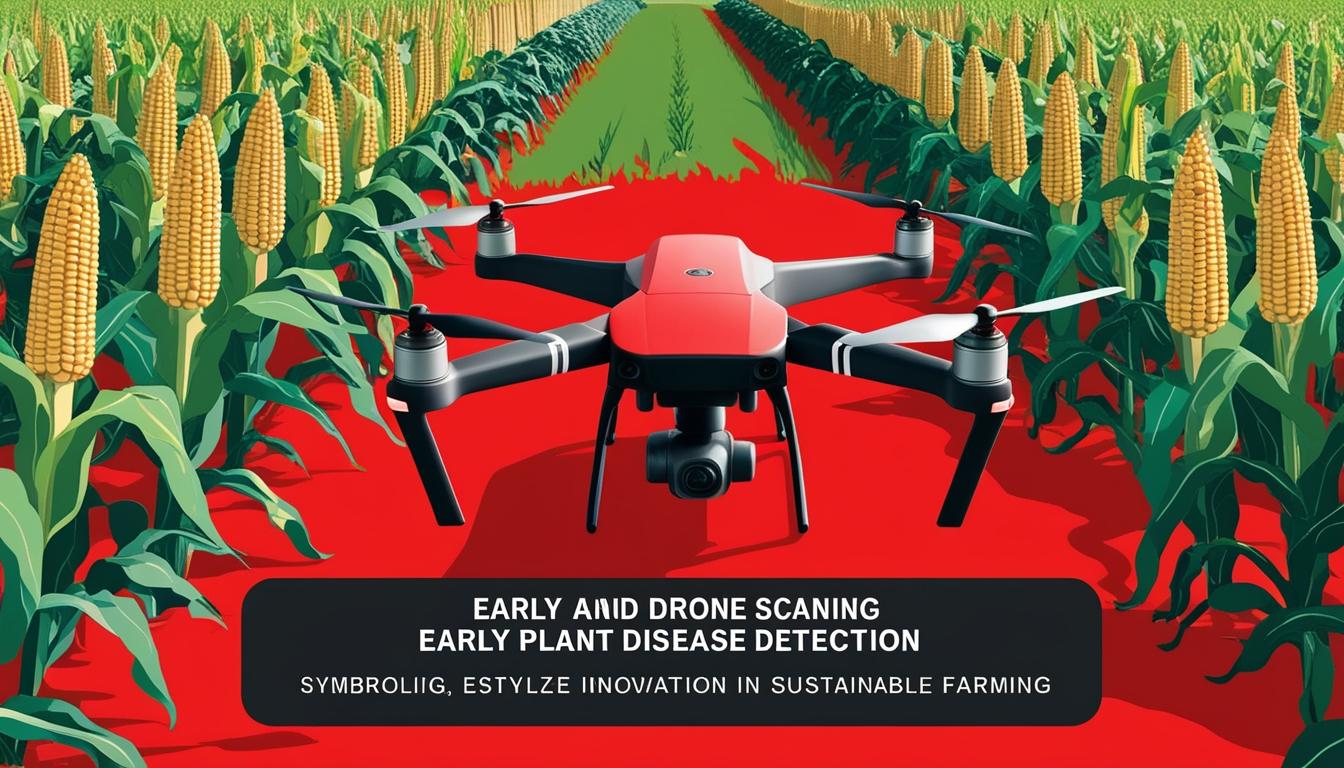
Recent research conducted at the University of New Hampshire is exploring the use of drone technology to aid small and medium-sized farms in New England by enabling earlier and more cost-effective detection of plant diseases. This study is the result of a collaborative effort involving scientists from the New Hampshire Agricultural Experiment Station, UNH Farm Services operations staff, UNH Cooperative Extension field specialists, and a commercial crop advisor who initially highlighted the challenges faced by northern New England dairy farmers.
The investigation focuses on the deployment of drones, also known as Unpiloted Aerial Vehicles (UAVs), outfitted with multispectral cameras. This advanced technology is being tested for its ability to detect early signs of disease in experimental plots primarily composed of brown mid-rib (BMR) and non-BMR corn varieties. The research specifically targets fungal diseases, such as Northern corn leaf blight (NCLB), which can sometimes be identified weeks before they are visible to the naked eye.
Tom Beaudry, a Commercial Crop Advisor involved in the study, remarked, "When harvest time comes, often the BMR corn is brown from top to bottom — it doesn’t have the disease resistance of non-BMR corn, and that’s a big issue for farmers." He elaborated on the advantages of drone technology, stating, “From my perspective, drones provide a completely new way to look at a cornfield. I’m used to being on the ground, but seeing the fields from the air allows us to spot problems much earlier — sometimes before they’re even visible on the plant."
One of the main hurdles for small farms in adopting UAV technology is the substantial financial investment required; many agricultural drone systems are priced in the tens of thousands of dollars. The primary objective of this ongoing multi-year study is to investigate strategies for lowering costs while retaining the effectiveness of the technology. Beaudry noted that larger farms in the Midwest have increasingly employed drones for disease and weed scouting due to the ability to distribute costs over larger areas.
The research team asserts that demonstrating the efficacy of lower-cost drones could significantly benefit small and medium-sized New England farms. The ability to detect diseases early can enable farmers to apply necessary treatments promptly, optimise application volumes, adjust harvest schedules, and make informed crop management decisions. This approach could lead to reduced yield losses and enhanced economic returns while improving overall resilience in food production.
"Drones could help farmers identify issues with crop health, soil health, or weed infestations, and it would be easier to see changes over time," said Carl Majewski, a UNH Extension field specialist and a member of the research group, further underscoring the potential of aerial technology in modern agriculture.
This innovative exploration into UAVs opens the door to more precise and economically viable farming practices in New England, ensuring that local farmers can keep pace with the technological advancements shaping the agricultural landscape. For further details on this ongoing research, additional information will be available at unh.edu/unhtoday.
Source: Noah Wire Services