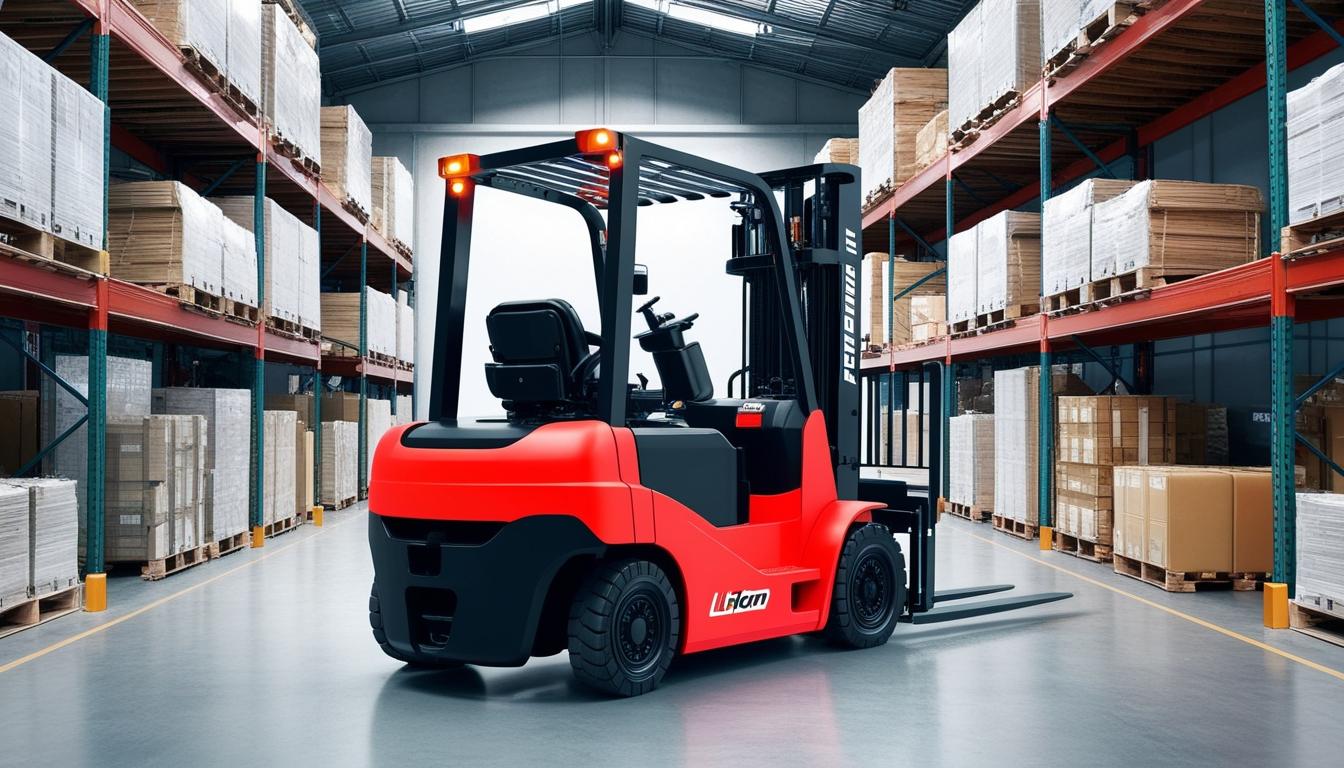
Global forklift sales have encountered a notable decline in 2024, falling significantly below earlier predictions due to ongoing economic challenges in Europe and sluggish project funding in the United States, according to a report by market analysis firm Interact Analysis. The London-based firm revised its shipment forecast for the year to a modest increase of only 0.3%, but retains an optimistic outlook, projecting consistent growth rates of approximately 4-5% from now until 2034.
The report highlights a concerning stagnation in the European economy during the latter half of 2024, severely impacting two key sectors for forklift sales: automotive and logistics. Compounding these issues, the backlog of orders created during the pandemic has now been fully processed, leading to a projected decrease in global forklift order volumes compared to shipment levels over the next few years.
In a more positive twist, Interact Analysis predicts that by 2031, shipments will reach approximately 3 million forklifts annually. The anticipated increase is largely attributed to businesses optimising their operations and reducing reliance on manual labour in the face of a changing economic landscape. Despite the fluctuating demand, major original equipment manufacturers (OEMs) in the forklift sector are proceeding with their long-term expansion strategies, although other manufacturers are exercising increased caution regarding expenditure on automation projects due to the current demand variability.
Another significant trend identified in the forklift market is the transition towards alternative power sources. There has been a remarkable increase in demand for lithium-ion battery-powered forklifts, with a growth rate exceeding 10%. In contrast, the demand for internal combustion engine (ICE) forklifts has decreased by 1%, while lead-acid battery-powered models have seen a decline of 7%. Interact Analysis anticipates that this shift will continue, predicting a substantial drop in annual market demand for ICE forklifts, expected to fall from 670,000 units in 2024 to a projected 500,000 units by 2034. By that year, it is forecasted that 81% of fully electric forklifts will be powered by lithium-ion batteries.
Several factors are driving this shift towards electric power sources, particularly in Europe, where stringent environmental policies are pushing for cleaner alternatives. Additionally, the customer base for forklifts has shifted from traditional manufacturing towards logistics and warehousing, a change propelled by the rapid rise of e-commerce. Emerging markets such as China, India, and Eastern Europe are also witnessing increased electric forklift demand, stemming from rising labour costs which necessitate greater automation in production facilities. The geographical concentration of lithium-ion battery production in Asia plays a crucial role, significantly lowering the average costs associated with equipping forklifts with these advanced batteries compared to alternatives used elsewhere.
As the market for forklifts evolves, the convergence of economic pressures and technological advancements appears set to reshape business practices within the industry, paving the way for new operational efficiencies and embracing innovation in automation.
Source: Noah Wire Services