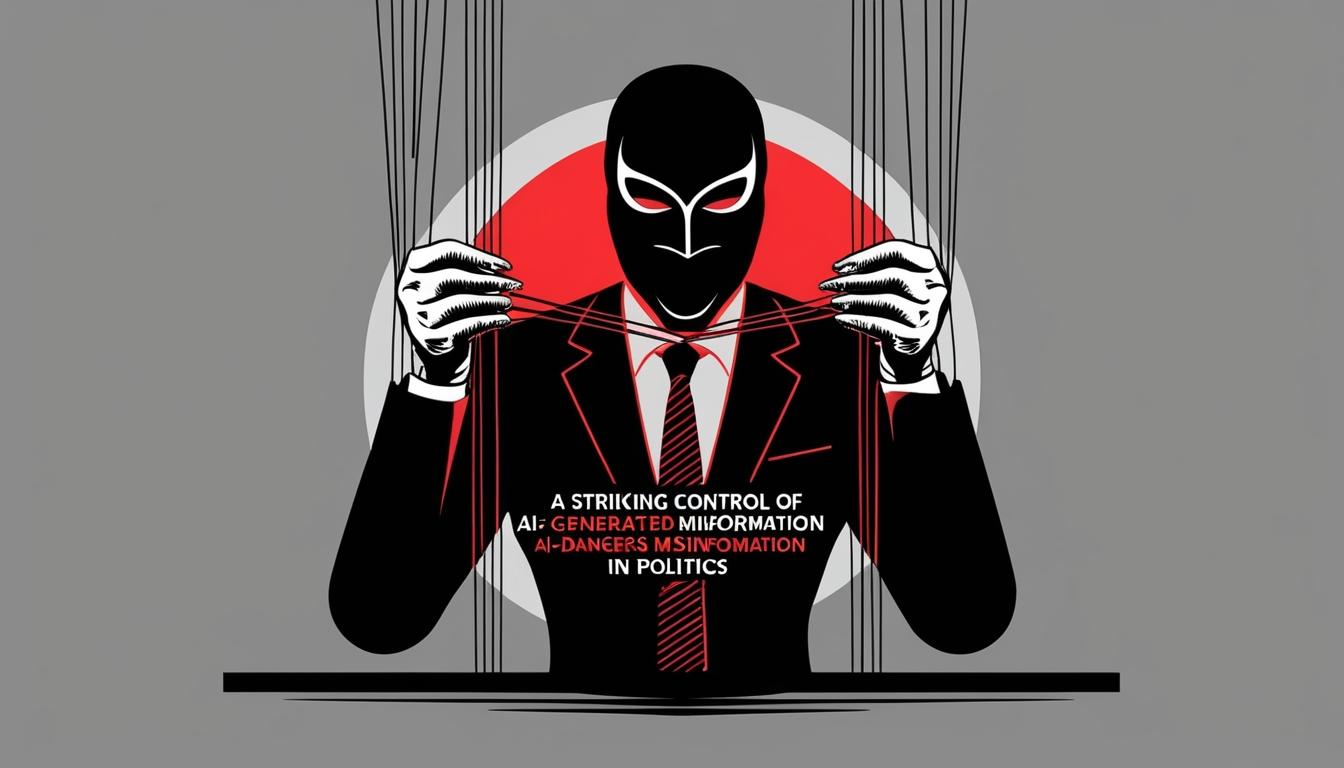
India is experiencing a notable increase in the adoption of artificial intelligence (AI), driven by the nation's robust economic growth and its position as the world's second most populous country. Despite this surge, experts caution that the absence of a comprehensive AI policy poses substantial risks, particularly around the proliferation of disinformation, deep fakes, and erroneous videos. The lack of regulation may empower malicious entities, thereby eroding public trust and threatening democratic processes.
AI's influence in various sectors is already evident; it is being utilized in legal translation within India's lower courts and is instrumental in analysing biological pathways for vaccine development. The advent of AI has compounded existing issues related to fake news and misinformation, significantly impacting the electoral landscape. A recent incident involving audio clips allegedly linking political leaders Supriya Sule and Nana Patole to financial misconduct illustrates this concern—these clips have been flagged by experts as likely being AI-generated.
The intersection of AI and politics came to the forefront during the 2024 General Elections, with visually and audibly manipulated content being disseminated widely. Prime Minister Narendra Modi himself participated in this trend, sharing an AI-generated meme video of himself dancing at a rock concert, remarking, “Like all of you, I also enjoyed seeing myself dance; such creativity in peak poll season is truly a delight.” Meanwhile, similar deep fakes depicting Hindi cinema actors were circulated in support of political parties, leading to the arrest of individuals associated with distributing doctored footage.
Furthermore, a representative from Meta stated that AI's impact on global elections in 2023 was modest, despite its extensive involvement on platforms like Facebook and Instagram. However, Meta's role is just one facet of a larger AI ecosystem that continues to evolve.
Currently, India lacks a unified stance on AI regulation. The Data Protection Act, introduced in 2023, marks a step forward, yet it illustrates the slow pace at which legislative measures are advancing. The National Strategy for Artificial Intelligence (NSAI), introduced by NITI Aayog in 2018, sets a vision for India to emerge as a global "AI Garage," geared towards creating scalable solutions. This strategic framework advocates for piloting projects across priority sectors and fostering innovation through stakeholder engagement.
However, the lack of a dedicated AI regulation raises critical questions among experts. While some express concerns that comprehensive legislation could stifle innovation and might be premature, others advocate for a specialised legal framework to tackle the unique threats posed by AI. These discussions underline the need for a balanced approach that addresses emerging risks without hindering progress.
Addressing AI-generated misinformation is seen as vital for maintaining societal safety and democratic integrity. To navigate these challenges, experts propose several strategies, including transparency in the use of AI in political campaigns and the establishment of independent oversight bodies to enforce ethical practices. Enhancing public media literacy to help citizens discern credible information from AI-generated content is also crucial.
Technological interventions, such as leveraging AI to identify and label synthetic media, could alleviate misinformation challenges, while updated regulatory frameworks must close gaps related to AI-generated content. Establishing a dedicated AI governance body could provide specialised oversight and address growing concerns, particularly around the potential misuse of AI by state actors.
Collaboration among stakeholders, including governments, technology firms, and civil society, is highlighted as essential for devising effective solutions. As AI's role in society deepens, addressing the dual imperatives of fostering innovation and mitigating misinformation will be critical for preserving democracy and individual rights in an increasingly digital world.
The complexities of AI integration into governance, business practices, and public consultation are poised to escalate, necessitating timely and thoughtful regulatory responses to ensure that the benefits of AI can be harnessed safely and responsibly.
Source: Noah Wire Services