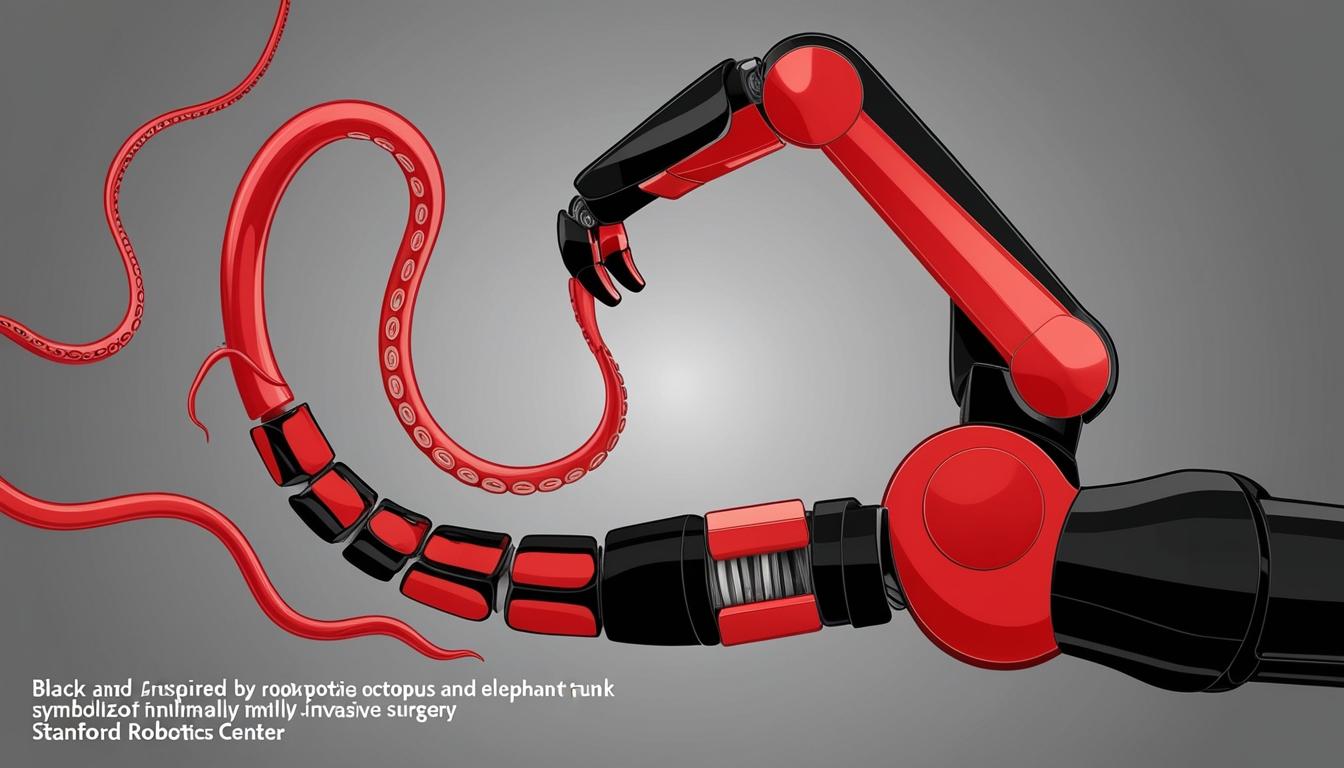
The recent inauguration of the Stanford Robotics Center has set the stage for significant advancements in the field of soft robotics, particularly as it pertains to minimally invasive surgical techniques. The centre, which opened this fall, boasts six dedicated bays designed for testing and showcasing innovations developed by Stanford Engineering faculty. This open environment is specifically tailored to encourage collaboration among researchers, enhancing interdisciplinary efforts across various fields within engineering.
Karen Liu, a professor of computer science at Stanford, highlighted the encouraging atmosphere for research at the new facility. On Stanford's website, she stated that “the research takes place side-by-side in an open space, fostering more research collaboration across the board.”
A focal point of exploration at the centre is soft robotics, with implications for developing better surgical techniques. Assistant professor of mechanical engineering, Renee Zhao, articulated the advantages of these systems, saying, “We’re interested in soft systems because in soft systems, you essentially have infinite degrees of freedom—every single material point can deform.” This flexibility allows soft robotic devices to interact more effectively with the human body, which is primarily composed of soft tissues.
Zhao's team is pioneering the creation of robots that are described as “origami-like,” constructed from soft plastics and magnets, and their designs draw inspiration from various animals. According to the article, these inspirations include the dexterous movements of an octopus arm, an elephant trunk, and the unique locomotion of an inching earthworm.
A recent innovation from Zhao’s engineering lab is a swimming, pill-sized robot equipped with a propeller. This thiết bị was tested using a polymer replica of the brain’s blood vessels, simulating the challenge of navigating through the vasculature. The objective of this research is to develop a method to direct the swimmer towards a blood clot in order to facilitate treatments for strokes. Control of the device is achieved with a joystick, which manoeuvres the robot through a magnetic field during trials.
Zhao expressed optimism about the future applications of this technology in surgical environments, suggesting that it could allow doctors to track the robot’s movements via X-ray imaging. This capability would significantly enhance the precision with which medical professionals could guide the device to problematic areas, such as blood clots. “One of the biggest challenges for procedures using interventional radiology is the trackability and navigation capability,” Zhao remarked, expressing her aim to “revolutionize the existing minimally invasive surgery.”
Overall, the developments at the Stanford Robotics Center reflect a forward-looking perspective in the intersection of robotics and medicine, earmarking a future where surgical procedures could become less invasive and more effective, driven by innovations in soft robotics technology.
Source: Noah Wire Services