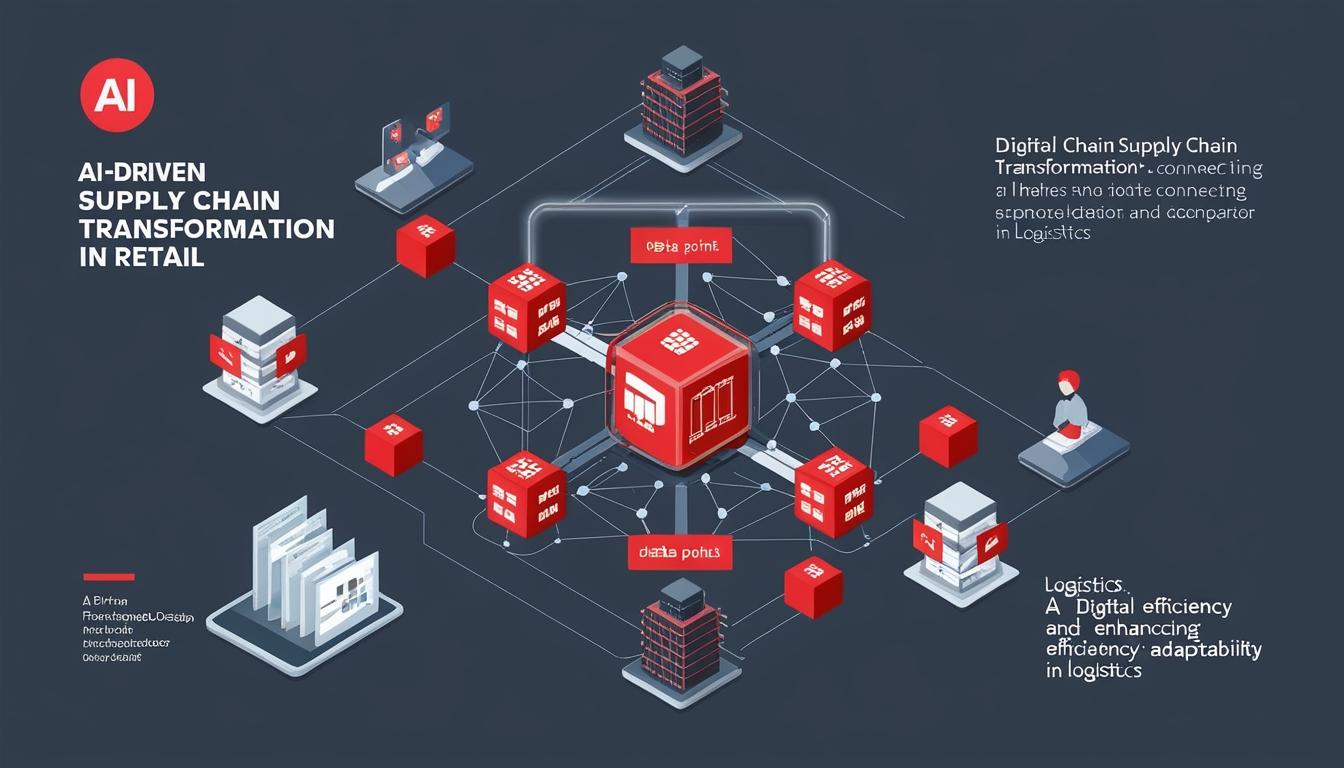
The retail sector is undergoing significant transformation as the potential of artificial intelligence (AI) becomes increasingly apparent, particularly in the realm of supply chain optimisation. The RSM Middle Market AI Survey 2024, covering responses from leaders across the U.S. and Canada, indicates that a comprehensive AI strategy is essential for businesses looking to navigate the complexities of modern supply chains. The survey reveals that nearly two-thirds (67%) of middle-market leaders recognise the necessity of external expertise to fully leverage AI’s capabilities.
Retail executives are directing their efforts towards enhancing productivity, improving profit margins, and driving revenue growth, with supply chain advancements frequently taking centre stage. The financial benefits are notable: businesses are experiencing improved product availability, reduced seasonal discounting, decreased supplier costs, and lower production expenses as a result of refined demand and supply planning. This optimisation is increasingly reliant on innovative AI applications, which utilise data-driven technology solutions to streamline operational processes.
Historically, supply chains thrived on predictable demand and supply patterns; however, recent disruptions have illuminated the need for adaptability. Events such as the COVID-19 pandemic have emphasised the significance of agile supply chains capable of responding promptly to changing conditions. AI tools are proving essential for making sense of diverse structured and unstructured data sources, paving the way for forward-thinking retail strategies. For example, AI-driven systems can predict supply chain disruptions, such as port strikes, by providing alternative freight routes and advising on procurement adjustments to mitigate associated risks.
Transitioning to AI-enhanced supply chains involves several critical steps for retailers moving away from traditional management methods. A robust data strategy is foundational, and companies are encouraged to create a digital twin of their supply chain. This entails integrating data from procurement, logistics, vendor portals, and Internet of Things (IoT) devices into a cohesive data framework. Following this, the development of targeted business cases is vital, identifying essential data, specific challenges, anticipated costs, and value-driven metrics.
The process includes prototyping a proof of concept to validate AI applications and secure approval for further development. After testing, the focus shifts to moving from concept to live implementation, prioritising scalability and adaptability. Finally, robust change management practices must be adopted to continuously measure impact, ensuring long-term sustainable value.
Key use cases of AI in supply chain automation demonstrate the technology's versatility in addressing common operational needs. For instance, AI can enhance production scheduling and management by optimising processes to maximise yield and profitability. It enables dynamic adjustments to disruptions while considering factors such as energy consumption and production costs, ultimately driving down expenses and boosting margins.
Inventory rebalancing is another critical area where AI is invaluable, as it allows for proactive management of inventory levels, improving overall network health and meeting on-time item fulfilment goals by efficiently aligning supply with demand. Additionally, AI plays a vital role in supplier management by identifying risks that may lead to supply disruptions and allowing companies to mitigate potential impacts from external events like extreme weather.
Logistical challenges can also be navigated effectively with AI, which empowers businesses to adapt their supply and demand strategies in real time, optimising overall logistics to enhance customer satisfaction and minimise waste.
The overarching conclusion from these insights underscores the necessity for retailers looking to incorporate AI-driven automation into their supply chains to adopt a data-centric approach. In today’s environment, information technology has evolved beyond being a mere support function to become a strategic cornerstone that drives competitive advantage in the retail industry.
Source: Noah Wire Services