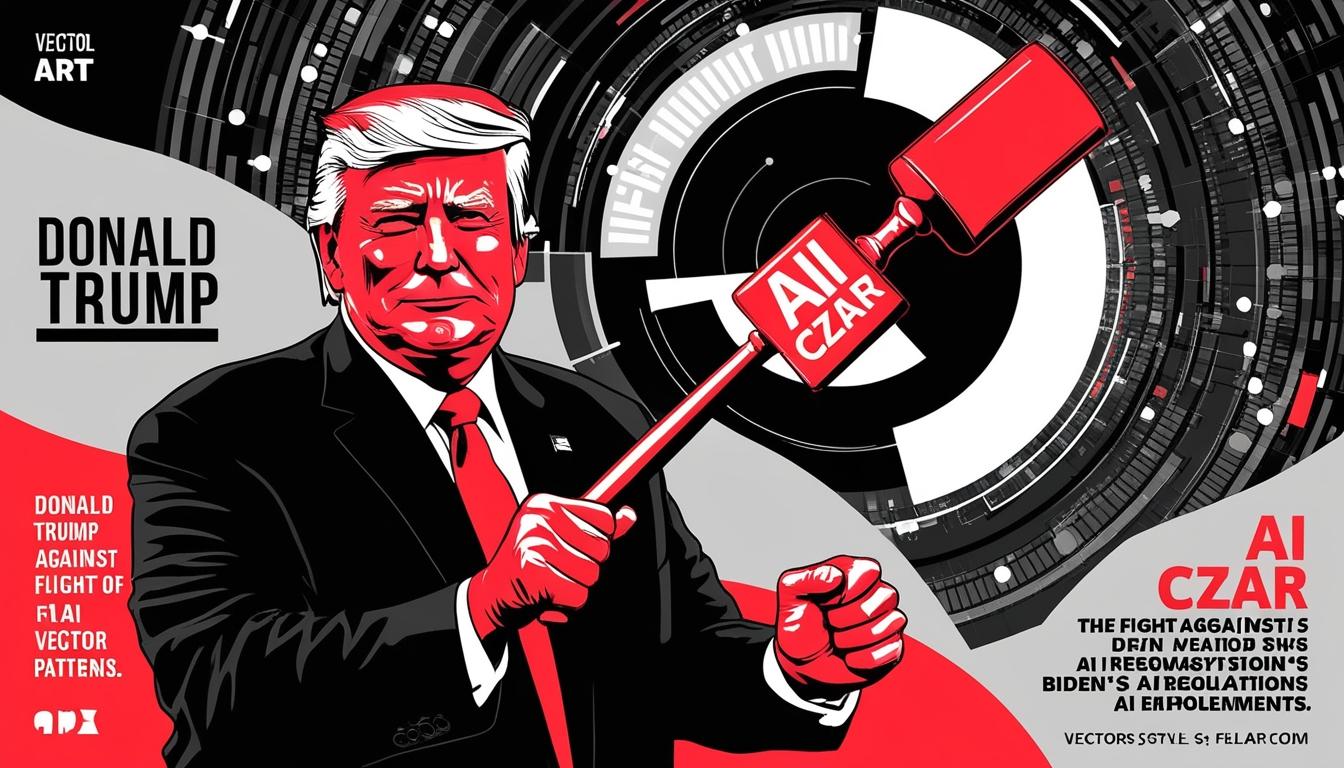
Donald Trump is making waves in the artificial intelligence (AI) landscape with a pivotal campaign promise directed at reversing President Joe Biden’s Executive Order 14110, a comprehensive 63-page document that sets forth a regulatory roadmap for AI technologies. Established during Biden's administration, the executive order is said to encompass critical topics such as equity, climate change, and potential existential risks posed by AI, sparking a political debate over its implications and scope. In outlining his agenda, Trump aims to pivot the discussion away from what he describes as unnecessary regulatory overreach.
Recently, Trump proposed the appointment of an “AI czar,” signifying a strategic move to counter Biden's regulatory framework. This role would be key in challenging the extensive guidelines and controls introduced under the Biden administration, reflecting Trump’s desire to eradicate what he characterizes as constraints on innovation and freedom in the digital sphere. Speaking to TheBlaze, Trump’s platform positions the repeal of the Biden EO as paramount not only for the future of AI but also for preserving a space for conservative viewpoints in the increasingly monitored and regulated digital landscape.
The implications of Biden's executive order have already resonated within major companies navigating the AI field, particularly Google. Reports from earlier this year indicated that Google's AI model, Gemini, faced backlash for implementing racial balancing in its image outputs, resulting in misrepresentations of historical figures. Specifically, criticism arose regarding images that inaccurately rendered individuals in positions that contradict established historical narratives. Google has publicly acknowledged adherence to the stipulations of Biden's executive order, suggesting that this regulation has influenced their AI model development.
In partnership with the U.S. AI Safety Institute, companies like OpenAI and Anthropic are also navigating the compliance landscape, although specifics about recommended changes to mitigate political bias in their models remain undisclosed. Research conducted in recent months has highlighted that certain large language models appear to exhibit political leanings, sparking concerns over bias in AI responses and outputs.
Trump's potential path to dismantle the Biden administration's regulatory framework calls for a multi-faceted approach: not only the repeal of the executive order itself but also proactive measures to prevent lingering impact from policies and metrics established during Biden's tenure. He suggests that repealing the executive order will halt new regulations but acknowledges it may not obliterate existing mandates. The role of the AI czar would thus be vital in identifying and dismantling entrenched policies.
In his vision, Trump advocates for explicit bans on regulatory objectives linked to equity and climate initiatives, which he believes could threaten freedom of thought in AI. Republican Senator Ted Cruz has also taken legislative steps through amendments to the Future of AI Innovation Act, aiming to mitigate the influence of diversity, equity, and inclusion (DEI) standards in federal AI policies. He proposes that federal AI assessments re-evaluate the use of datasets and performance metrics created to meet equity goals, often perceived as politically motivated and constraining.
Future developments in AI regulation will likely be shaped significantly by the actions of upcoming administrations as they navigate this complex policy landscape. The AI czar’s role, alongside federal oversight to ensure transparency in AI audits and guidelines, will be critical in determining how AI is governed in the United States. Trump's approach also indicates an intention to safeguard internet freedom as AI technology proliferates, reinforcing the need for a balanced dialogue in shaping future AI-related business practices.
Source: Noah Wire Services