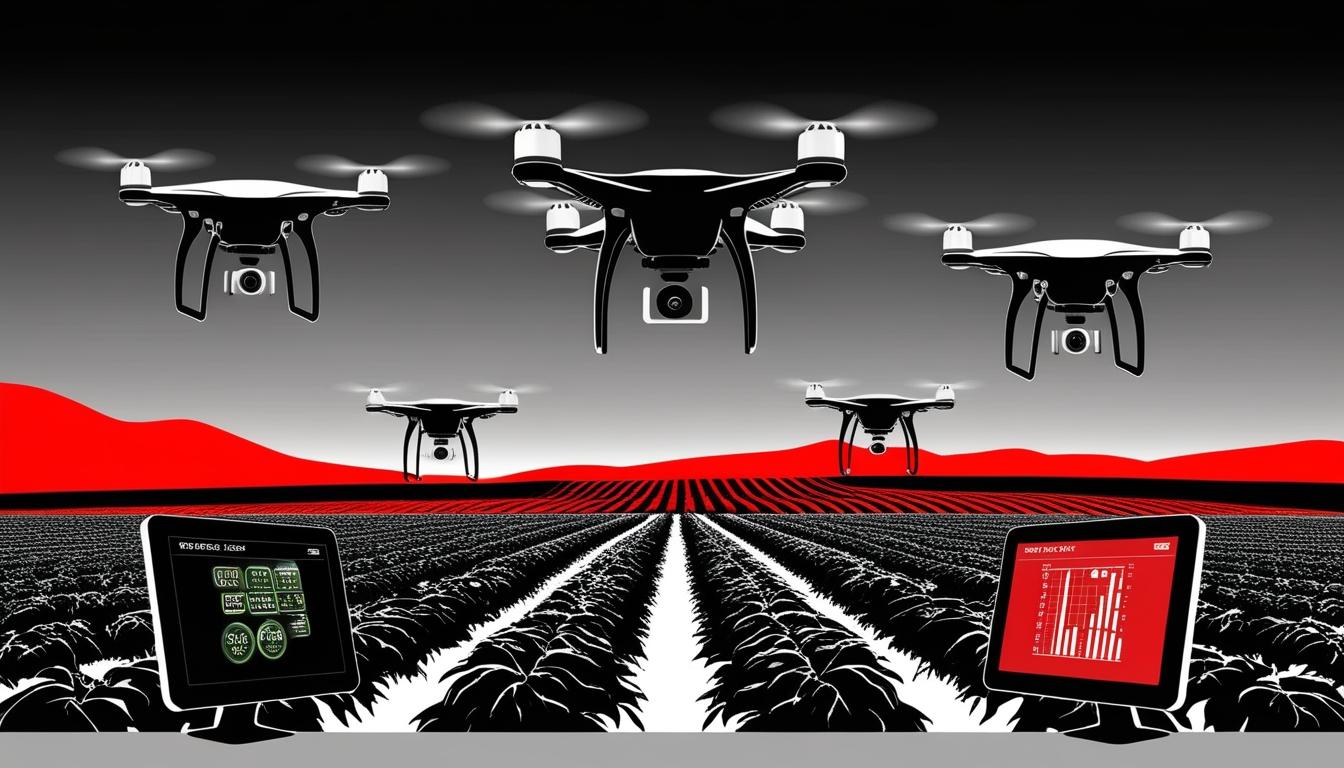
The artificial intelligence (AI) market in agriculture is expected to experience substantial growth, according to a report from The Insight Partners. This market, which was valued at $1.63 billion in 2022, is projected to expand at a compound annual growth rate (CAGR) of 21.9%, ultimately reaching an estimated value of $7.97 billion by 2030. The growth is attributed chiefly to the rising need for real-time analytics within the agriculture sector.
The report emphasizes the various components and applications of AI technologies in agriculture, which are anticipated to strengthen in the coming years. Real-time analytics play a crucial role, providing farmers with vital data regarding soil moisture, crop growth, and weather patterns, which enable informed decision-making about planting, irrigation, and fertilisation. Advanced data collection methods—utilising sensors, drones, and soil sampling—are widely adopted by farmers in regions such as North America, South America, and Europe, allowing for heightened agricultural precision and efficiency.
Notably, government support significantly bolsters this sector's development. For instance, in September 2021, the French government initiated the AgriTech programme to foster innovation in the AgriTech and FoodTech industries. More recently, in January 2024, researchers at Harper Adams University are advancing AI utilisation to enhance sustainability and productivity in farming. Similar initiatives have been taken by the UK government, which allocated approximately $39.82 million to stimulate AI project development across various sectors, including agriculture.
Technological advancements in agriculture have seen countries leveraging IoT and AI for transformations. For example, the project "Ploovium," presented at Maker Faire Rome in November 2023, showcases an advanced preventive irrigation planning solution that learns soil water behaviour and informs farmers when and how much to irrigate.
The geographical analysis indicates that North America holds a dominant position in the AI agriculture market, with Europe ranking second and Asia Pacific following. The market is further segmented into components such as hardware, software, and services, with hardware maintaining the larger market share as of 2023. Application-wise, precision farming has also been identified as the leading segment.
Key players in the AI agriculture domain include notable names such as Tule Technologies Inc, Precisionhawk Inc, Easytosee Agtech Sl, and major corporations like IBM and Microsoft. These entities are actively involved in product innovations, joint ventures, and geographical expansion to enhance their presence in this competitive landscape.
The insights into market trends indicate that AI's role in agriculture extends beyond just efficiency; it also provides substantial insights for increasing yields, minimising waste, and addressing environmental concerns. As traditional farming methods shift towards AI-driven methodologies, the demand for real-time analytics continues to grow, driving the market forward.
Further measures are being taken in related fields, such as intelligent traffic management, as reported by GlobeNewswire. The Intelligent Traffic Management Market, valued at approximately $9.74 billion in 2023, is projected to expand to $21.15 billion by 2034 with a CAGR of 7.4%. The rise in urbanisation and vehicular traffic persists worldwide, which has called for the implementation of enhanced traffic management systems driven by real-time data and AI functionalities.
Overall, both agricultural and traffic management sectors highlight the significant impact and growing influence of AI technologies across various industries, shaping the future landscape of operations, efficiency, and sustainability.
Source: Noah Wire Services