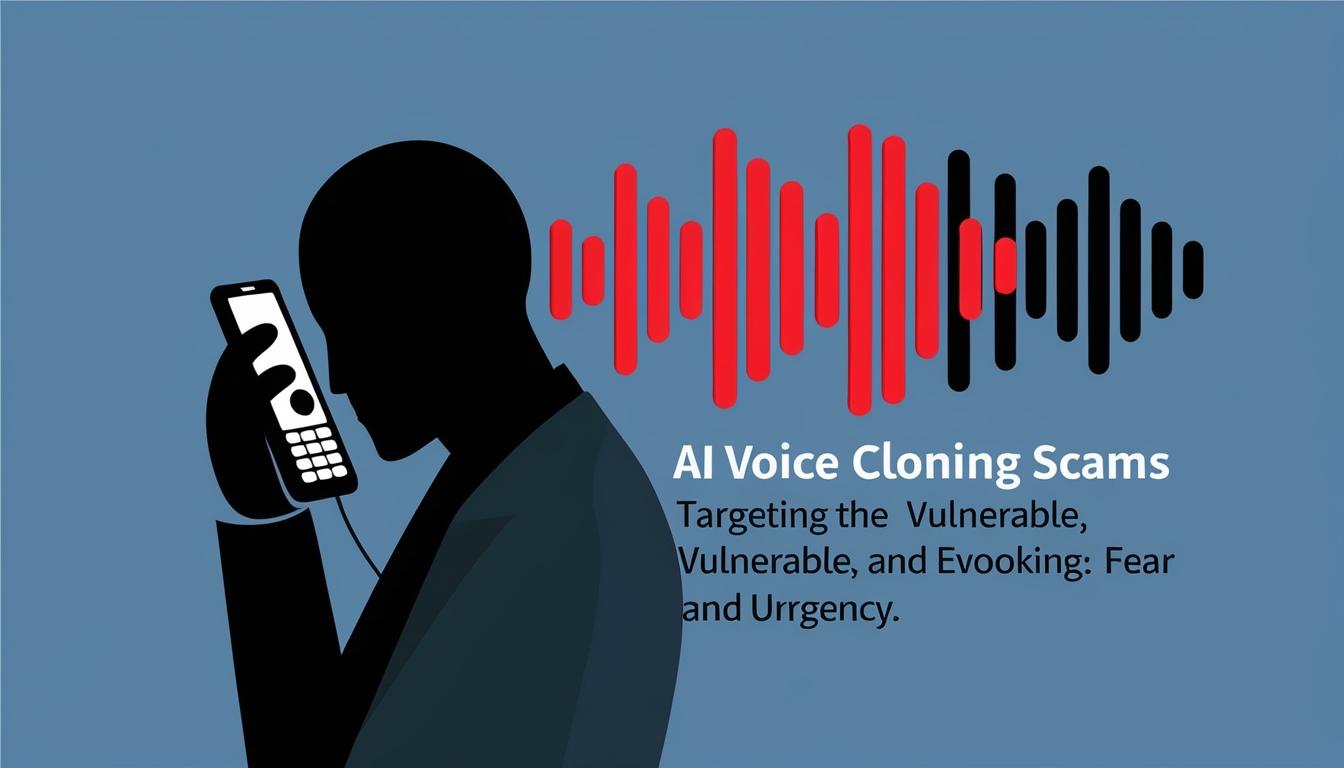
Artificial intelligence technology is playing a pivotal role in transforming various aspects of business operations, notably through the realm of voice cloning. CBS News highlights a concerning trend wherein criminals are leveraging AI-enabled voice cloning tools to mimic the voices of strangers, significantly enhancing their ability to perpetrate scams. The advancements in this technology have enabled fraudsters to deceive victims into parting with substantial sums of money under false pretences.
A prevalent example of such scams is the so-called "grandparent scam," where a scammer impersonates a victim's grandchild, claiming to be in urgent need of cash, often suggesting they are ensnared in a problematic situation. These scams are particularly alarming as older individuals—who may not be fully acquainted with emerging technologies—are frequently targeted. Additionally, the perpetrators use techniques like phone number spoofing to make the call appear legitimate, further complicating the victim's ability to discern the threat.
Recent data from the FBI has revealed that in 2023, senior citizens were conned out of approximately $3.4 billion in various financial schemes. The agency noted that the integration of AI in these scams has escalated the credibility of the criminals' approaches, aiding them in creating persuasive content and rectifying potential human errors that could otherwise raise suspicions.
Chuck Herrin, the field chief information security officer for F5, a security and fraud prevention firm, explained to CBS MoneyWatch the psychological underpinnings driving these scams. "So much of it is based on psychology and hacking the limbic system," Herrin stated, highlighting how scammers exploit emotional responses to fear. He further noted that when individuals are frightened, they tend to make hasty decisions, which scammers take advantage of.
In light of these growing threats, cybersecurity experts and law enforcement officials suggest a proactive approach for families to safeguard against such scams: the establishment of a family "safe word". This involves creating a phrase or term that is challenging to guess and not easily discoverable online. According to Scobey from the Identity Theft Resource Center, “It needs to be unique and should be something that's difficult to guess.” He cautioned against using readily available information, such as street names or phone numbers.
A practical measure would be to have a safe phrase consisting of at least four words, which significantly enhances security. Experts advocate maintaining a routine where identity verification is mandatory before providing financial assistance. Herrin elaborated on the broad reach of scammers, asserting that they target numerous individuals indiscriminately. "They don’t care about you, they just care about bad security," he remarked. Establishing a robust security posture can drastically reduce the likelihood of falling victim to these scams.
Eva Velasquez, CEO of the Identity Theft Resource Center, supports the efficacy of family safe words. However, she stresses the importance of educating family members on how to use them correctly to avoid inadvertently disclosing the password. She presented a scenario where a fraudulent grandchild could easily manipulate a grandparent into revealing their safe word during an emotional crisis. “I do think they can be a very useful tool, but you have to explain to the family how it works so you don’t volunteer it,” Velasquez cautioned.
The landscape of AI and automation in business continues to evolve, and while it presents numerous benefits, it also introduces substantial challenges that necessitate increased awareness and proactive measures to protect vulnerable populations from emerging threats.
Source: Noah Wire Services