As businesses kick off the New Year, they are increasingly prioritising advancements in artificial intelligence (AI) and automation to enhance operational efficiency and workforce competency. Industry Today is reporting on several key trends and developments in the manufacturing and industrial sectors that are shaping the future of AI automation.
One of the most notable initiatives underway is the AEM Manufacturing Express, spearheaded by the Association of Equipment Manufacturers (AEM). This extensive 18-week tour has covered 13,500 miles, visiting over 80 manufacturing facilities across 20 states. With nearly 100 elected officials engaged and over 9,000 employees connected, the tour aims to raise awareness about the U.S. equipment manufacturing industry and its significant workforce of 2.3 million individuals.
Highlighting the automotive sector, Stella Ioannidou, a Senior Research Director with The Josh Bersin Company, underscores the pressing need for manufacturers to cultivate a workforce equipped with next-generation skills. In her article, "How to Get to Cruising Speed in the Race to the EV Future," she notes, “The research shows that automotive manufacturers need to urgently invest in building a workforce equipped not only for traditional ‘metal-bashing’ production lines but also for emerging business models such as automated manufacturing, innovative product development, and direct-to-consumer sales.” The emphasis on acquiring IT and software expertise is essential as these skills are increasingly in demand across various tech-driven industries.
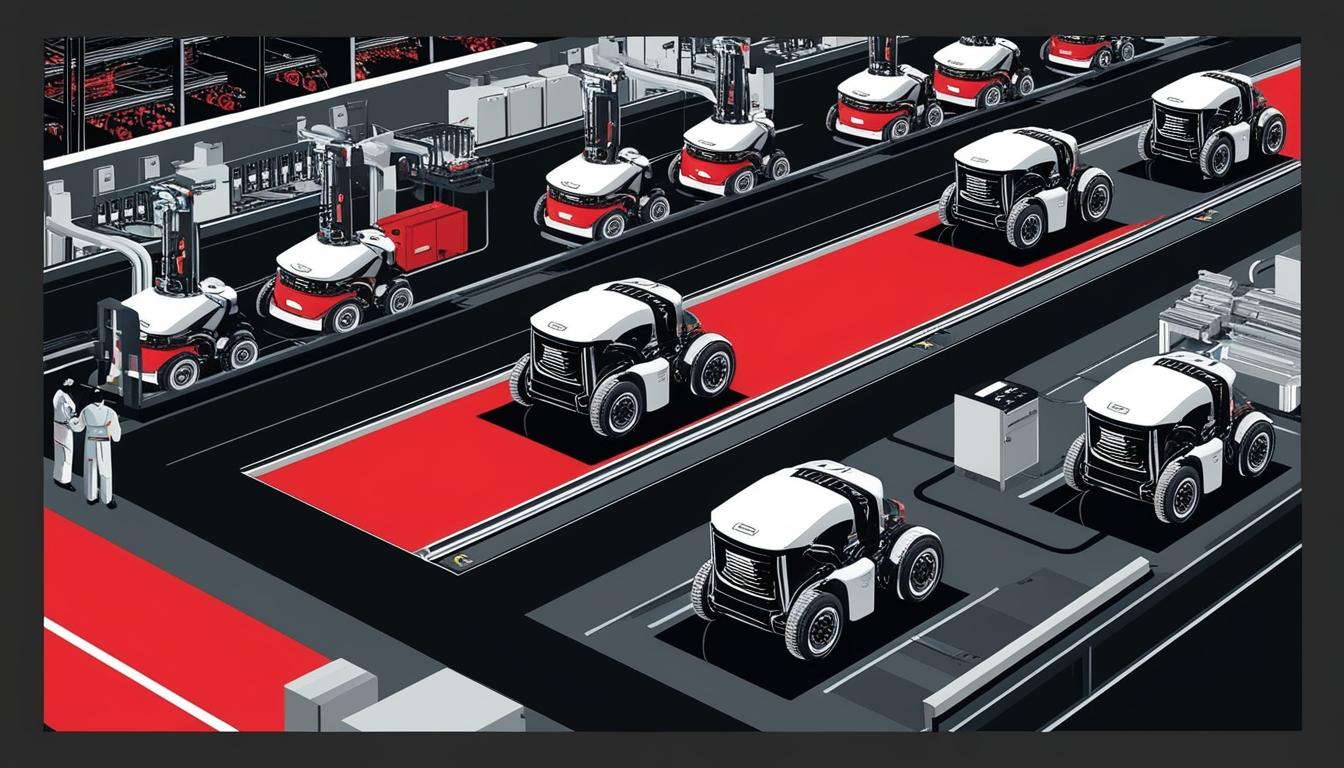
The integration of technology into warehousing operations is another area experiencing rapid advancement. An article by Senior Editor David Soyka profiles America in Motion, a company specialised in designing all-in-one materials handling solutions through the deployment of custom-built Automated Guided Vehicles (AGVs). These mobile robots, capable of transporting payloads from mere pounds to several tons, can independently navigate within manufacturing facilities, thus optimising operational workflows.
In terms of collaboration within organisations, Matt Wyatt, VP of Professional Services at TeamViewer, draws attention to the isolation often experienced between Information Technology (IT) and Operational Technology (OT) teams. In "Together at Last: IT and OT," he highlights that “A recent survey found that 90% of businesses report their IT and OT teams are isolated.” Bridging this gap is not solely about improving efficiency and lowering costs; it also significantly empowers frontline workers while enhancing overall quality and productivity.
Further advancements in the domestic production of sustainable materials have been made through BioMADE’s recent announcement of a substantial investment totalling $26.9 million in 17 projects. This funding is earmarked for enhancing U.S. bioindustrial manufacturing innovation and development, with a dual focus on the production of sustainable materials for consumer products and defence applications while concurrently building the workforce of the future.
In regional developments, Oklahoma's manufacturing sector demonstrates resilience with over 4,200 businesses employing nearly 130,000 workers. This robust sector is detailed in the publication’s coverage on the state’s manufacturing success.
Finally, developments in Buffalo, New York provide insight into how the city has become a favourable destination for Canadian business expansion. Thomas A. Kucharski, President and CEO of Invest Buffalo Niagara, elaborates on the factors contributing to this pro-business environment.
Overall, Industry Today remains committed to delivering pertinent news and insight from industry leaders, reflecting the dynamic landscape of AI innovations and automation trends that are set to reshape business practices across various sectors in the coming years. The publication encourages readers to stay informed through regular updates available on their digital platform.
Source: Noah Wire Services