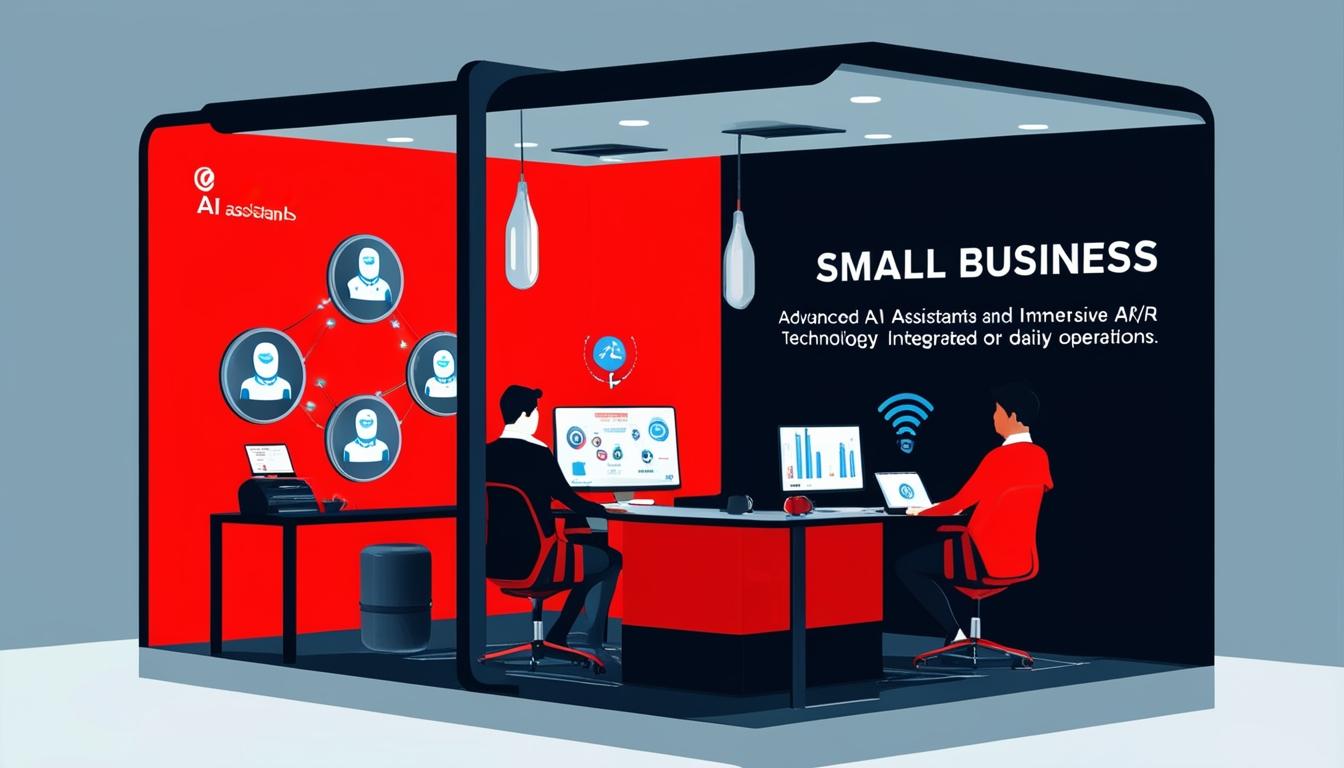
As businesses navigate the rapidly evolving landscape of technology, notable trends in artificial intelligence (AI) and automation are emerging that suggest a transformative future for small enterprises. The conversation surrounding these impending advancements has been invigorated by cultural reflections in cinema, where films offer insights into the societal shifts tied to technological evolution.
One such film, "Iron Man," presents a vision of agentic AI, illustrated by J.A.R.V.I.S, the smart assistant that embodies advanced AI capabilities. As we move towards 2025, the emergence of assistant technologies like Microsoft’s Copilot, Google’s Gemini, and Anthropic’s Claude suggests that businesses could significantly streamline operations. These systems will be capable of executing tasks autonomously, such as managing inventory or updating bookings without direct human intervention. This raises pertinent questions for small business owners regarding their operational processes. As John Egan, CEO of L’Atelier, mentioned, understanding the extent to which processes are documented and digitised is essential. Owners may start to consider how AI could enhance productivity and customer service, particularly during non-traditional hours.
Another noteworthy trend is the the growing influence of augmented reality (AR) and virtual reality (VR), reminiscent of the immersive environments seen in "Ready Player One." While the full-sensory virtual worlds depicted in such films are still on the horizon, current advancements like Meta’s Quest and Apple Vision Pro are paving the way with improved displays and audio capabilities. This merging of digital and physical environments has already begun, as consumers increasingly find themselves using their smartphones to check prices directly while in physical stores—or making transactions that bridge the virtual and physical spaces. Small business owners are thus encouraged to rethink their digital strategies. They might explore how their platforms can foster interactivity or consider the potential of virtual training environments for their staff or customers.
Looking further into the future, films like "Star Trek" envision a world where computing power is seamlessly integrated into everyday life through ambient computing and conversational interfaces. The reality is that small businesses have access to remarkable computing capabilities today, thanks to advancements in natural language processing and the proliferation of smart devices. Connectivity improvements, such as StarLink, enable even remote areas to benefit from high-speed internet. The challenge now lies in leveraging these technologies to enhance business processes. Owners are prompted to assess how many tasks can be streamlined through integrated smart technologies, allowing for enhanced engagement with customers and more efficient operations.
The discussions stimulated by these films underline the importance for businesses to remain attuned to technological signals that may shape their operations in the coming years. Industry experts suggest that businesses can learn from the narratives woven into science fiction, not only to remain competitive but also to strategically position themselves for success. With the potential of AI automating tasks, providing critical insights, and helping to manage operations more effectively, small businesses have an opportunity to harness these advancements for sustainable growth.
The reflections and insights derived from popular culture serve as a lens through which to view the complex interplay between technology and business today. Although the roadmap to future advancements is yet to be fully realised, the ongoing dialogue surrounding AI and automation presents a significant opportunity for small business owners to embrace the changes on the horizon.
Source: Noah Wire Services