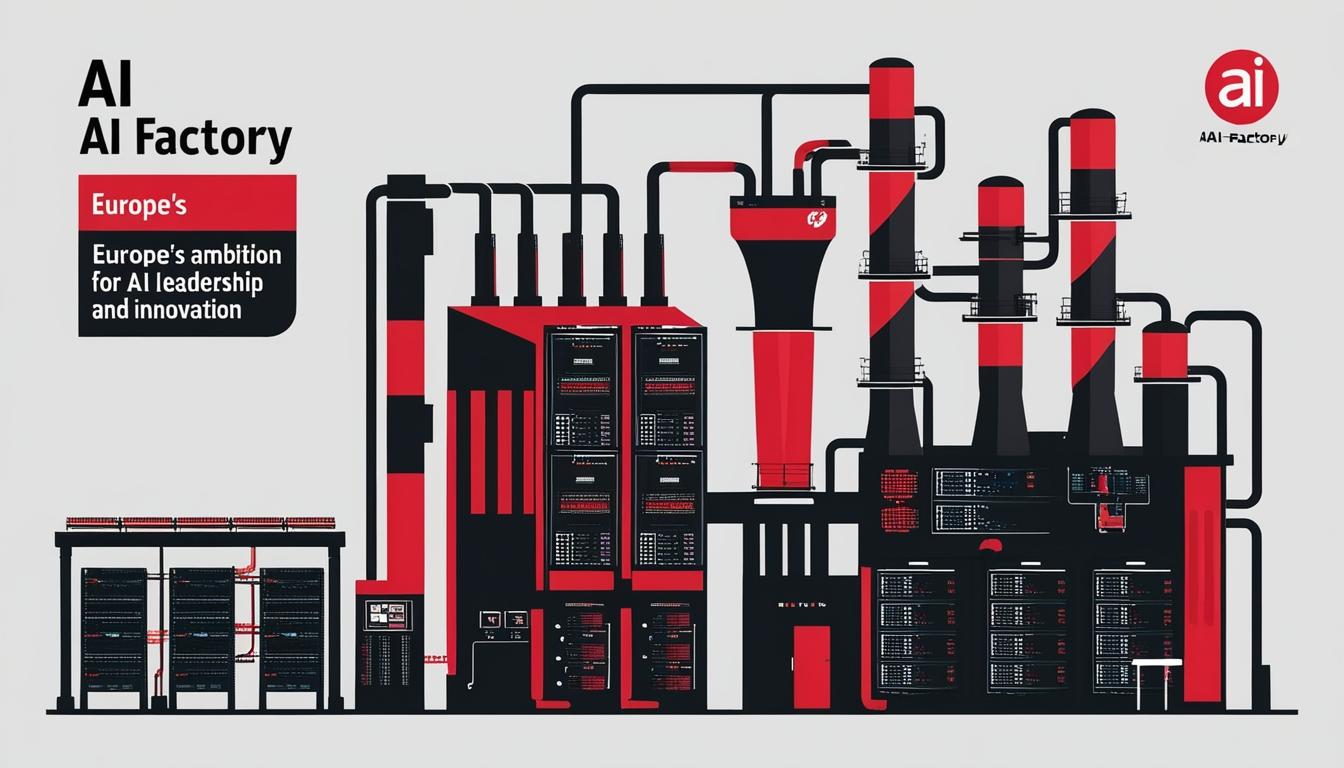
The European Union has recently finalised the locations for seven new “AI factories” aimed at advancing artificial intelligence (AI) development across various sectors. These factories will be strategically located in Finland, Germany, Greece, Italy, Luxembourg, Spain, and Sweden, utilising the region's most powerful supercomputers.
The initiative, managed by the European High Performance Computing Joint Undertaking (EuroHPC JU), is designed to enhance the continent's capabilities in AI research and application in fields such as health, manufacturing, energy, climate, and finance. According to the plan, these interconnected facilities are projected to more than double the EU's data capacity by 2026. The focus is on providing access to high-performance computing resources for AI startups, small and medium enterprises, and researchers, contributing crucial components necessary for successful AI development, which include computing power, data accessibility, and expert talent.
Of the seven planned sites, five will involve the deployment of new AI-optimised supercomputers. For instance, the facility in Kajaani, Finland, designated as LUMI AF, will be established with a budget of at least €556 million. The factory in Athens, Greece, will upgrade the existing DAEDALUS supercomputer to enhance its capabilities, with a budget of €30 million. The site in Barcelona, Spain will also see an upgrade to the MareNostrum 5 system, with funding amounting to €198 million.
The financial backing for the initiative will come from a combination of the EuroHPC JU, the European Commission, and contributions from individual EU member states, totalling €2.1 billion. Furthermore, the EU is set to allocate €100 million to support incubation and start-up activities, with aims to attract an additional €1 billion from private investors.
The significance of these AI factories lies in their potential to reduce barriers to entry that have traditionally hampered the adoption of AI technology, such as high installation costs of necessary hardware, talent shortages, and data security concerns. These factories will also facilitate compliance with strict EU data protection and AI ethics regulations, as their respective management teams will take responsibility for adherence to these critical standards.
Recent commentary from Mario Draghi, former President of the European Central Bank, highlighted concerns around the EU’s competitive position relative to other global regions, particularly in advanced technology innovation. The establishment of these AI factories is intended to address this competitiveness gap, ensuring strategic autonomy and greater control over data and security processes within the region.
Henna Virkkunen, the executive vice-president for Tech Sovereignty, Security and Democracy, stated, “Now we are ready to lead with the right infrastructure in our ambition for the EU to become the AI continent.” This indicates a confident outlook towards positioning Europe as a frontrunner in the global AI landscape.
The timeline for operations indicates that the first of these AI factories is expected to be operational by early 2025, with all facilities completed by 2026. Following the proposal submissions that were opened in November and formally announced on December 10, further interest has emerged from additional member states, including Cyprus and Slovenia. A deadline of February 1 has been set for the next round of proposals, suggesting that the EU’s commitment to bolstering its AI capabilities may continue to grow in the forthcoming years.
Source: Noah Wire Services