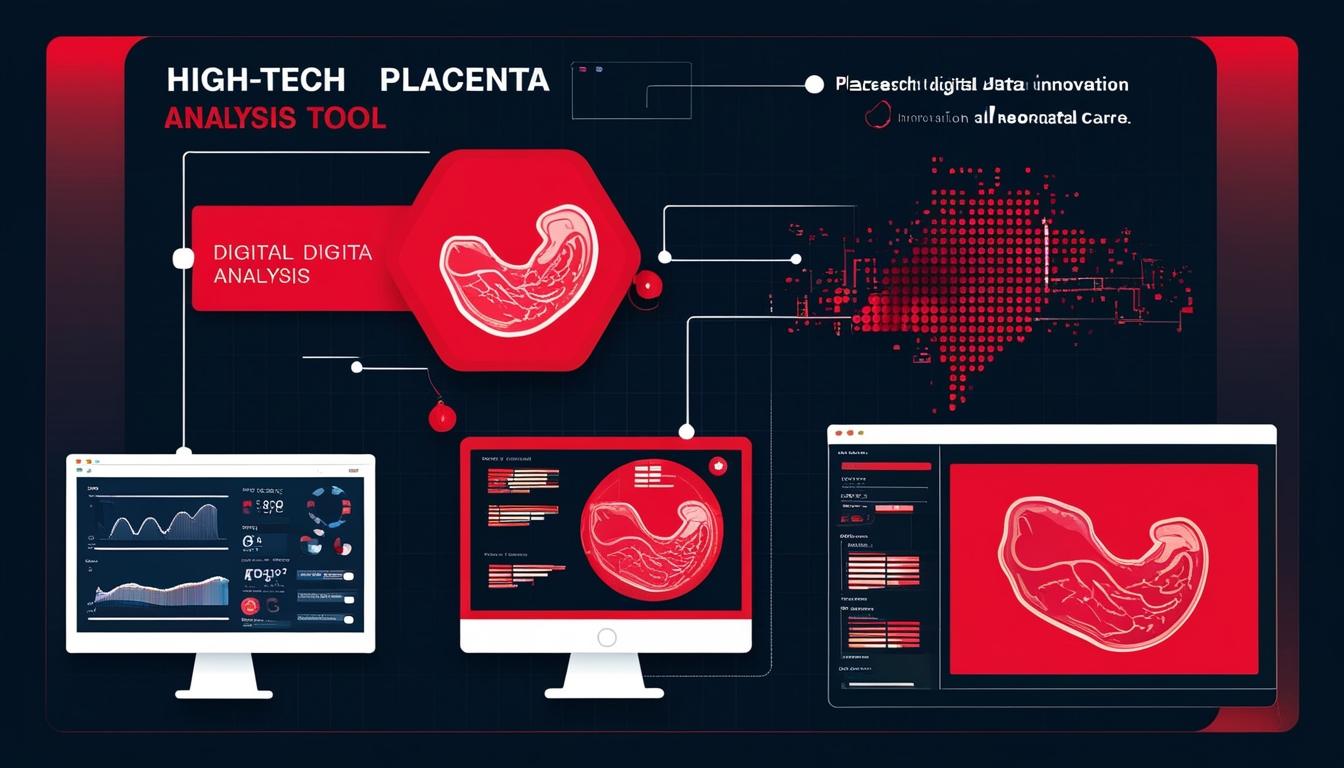
Researchers at Northwestern Medicine and Penn State University have initiated an innovative approach to improve neonatal care through the development of a computer program designed to analyse placentas post-birth for any abnormalities. This tool, named PlacentaVision, utilises artificial intelligence and computer vision technologies to detect critical health issues, such as infections and neonatal sepsis, conditions that are life-threatening and impact millions of newborns worldwide.
The details of this promising advancement have been published in a study in the journal Patterns, dated December 13. According to a press release from Northwestern Medicine, there is currently a standard practice where placentas are sent to laboratories for in-depth testing. However, the introduction of PlacentaVision aims to provide immediate insights that could significantly enhance medical decision-making in neonatal intensive care units (NICUs). Dr. Jeffery Goldstein, who serves as the director of perinatal pathology and an associated professor at Northwestern University Feinberg School of Medicine, highlighted the urgency of timely diagnoses. “When the neonatal intensive care unit is treating a sick kid, even a few minutes can make a difference in medical decision making. With a diagnosis from these photographs, we can have an answer days earlier than we would in our normal process,” he stated in the release.
The initiative is particularly relevant in areas with limited access to healthcare resources. Alison Gernand, an associate professor at Penn State and the principal investigator on the project, developed the concept for PlacentaVision with a focus on serving women who deliver at home due to scarce medical facilities. Gernand commented on the prevalent issue of unexamined placentas: “Discarding the placenta without examination is a common but often overlooked problem. It is a missed opportunity to identify concerns and provide early intervention that can reduce complications and improve outcomes for both the mother and the baby.”
In addition to potential benefits in low-resource settings, the tool is expected to streamline care in well-equipped hospitals. Yimu Pan, a doctoral candidate at Penn State's College of Information Sciences & Technology and the lead author of the study, remarked on its future applications. “In well-equipped hospitals, the tool may eventually help doctors determine which placentas need further, detailed examination, making the process more efficient and ensuring the most important cases are prioritised,” he explained.
The groundwork for PlacentaVision involves a robust machine-learning model, PlacentaCLIP+, designed to accurately analyse placental images irrespective of varying delivery conditions, from lighting discrepancies to differences in image quality. This technology was developed with a comprehensive dataset that included placental images and pathological reports covering a substantial 12-year period.
Looking ahead, the research team envisions the creation of a user-friendly mobile application to facilitate the tool's use in clinics and hospitals requiring minimal training for medical professionals. “The user-friendly app would allow doctors and nurses to photograph placentas and get immediate feedback and improve care,” Pan stated, outlining their plans for the next steps in the project's development.
The researchers are also keen to enhance the system's efficacy by testing it across diverse clinical environments and incorporating a broader range of placental features as well as additional clinical data to refine their predictive capabilities. As the healthcare landscape continues to evolve with advancements in technology, tools such as PlacentaVision exemplify the potential to reshape practices in maternal and neonatal care.
Source: Noah Wire Services