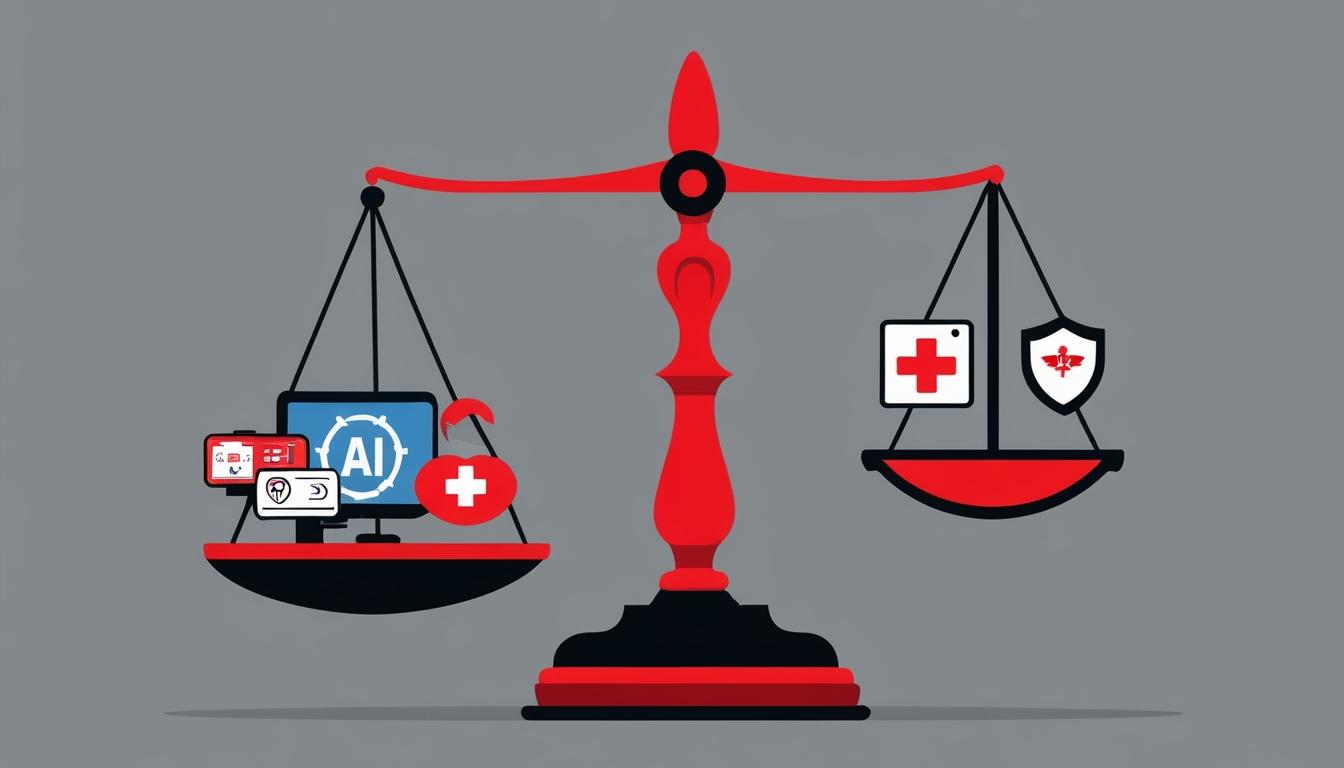
Paragon Health Institute has released a comprehensive report titled Healthcare AI Regulation: Guidelines for Maintaining Public Protections & Innovation, which outlines the necessity for meticulous and context-specific regulation of artificial intelligence in the healthcare sector. The report appears at a time when numerous state legislatures are considering AI-related bills, and the federal government is advocating for expansive cross-agency AI regulation, emphasising the urgency and relevance of this discourse.
The report highlights a significant concern regarding AI misregulation, which could potentially compromise public safety while simultaneously inflating costs and stifling the medical advancements that policymakers are aiming to harness through AI technologies. The focus is on striking a balance between ensuring public protections and fostering innovation within the healthcare landscape.
Among the key recommendations proposed is the need for regulations to define both the specific type of AI technology and the particular healthcare context in which it is employed. This nuanced approach is illustrated by suggesting that terminology used in regulations should be far more precise, e.g., “artificial neural networks in medical image analysis” rather than using vague categories like “healthcare AI.” By tailoring regulations to both the type of technology and its application, the report acknowledges the intricate relationship between the risks posed by AI and these two defining factors.
Furthermore, the report advocates for existing regulatory bodies to spearhead AI governance in healthcare rather than establishing a centralized office or appointing a singular AI overseer. The report asserts that centralisation might dilute the regulatory understanding of industry-specific nuances and could lead to overlapping rule-making processes across various government agencies. By empowering established regulatory institutions, which already possess industry knowledge and expertise, the report aims to enhance the efficacy of governance concerning AI technologies in healthcare.
The guidelines also delve into specific issues that regulatory frameworks should address, including:
- Aligning regulatory efforts with the Food and Drug Administration’s (FDA) historical role in analysing software functioning as medical devices.
- Developing approaches for instances where AI-enabled devices demonstrate empirical benefits but are challenging to explain from a mechanistic standpoint.
- Addressing concerns related to algorithmic discrimination and data privacy associated with AI systems.
Kev Coleman, the report's author and visiting research fellow, emphasised the potential of AI to contribute significantly to American healthcare. “AI is poised to make remarkable contributions to American healthcare, but these contributions can be jeopardized by a suboptimal regulatory framework,” he stated. He advocates for a regulatory approach that maintains safety standards without favouring large AI corporations at the expense of innovative newcomers to the market.
As the healthcare industry continues to embrace AI advancements, the insights from the Paragon Health Institute's report are positioned to guide policymakers towards a regulatory landscape that maximises innovation while safeguarding public health.
Source: Noah Wire Services