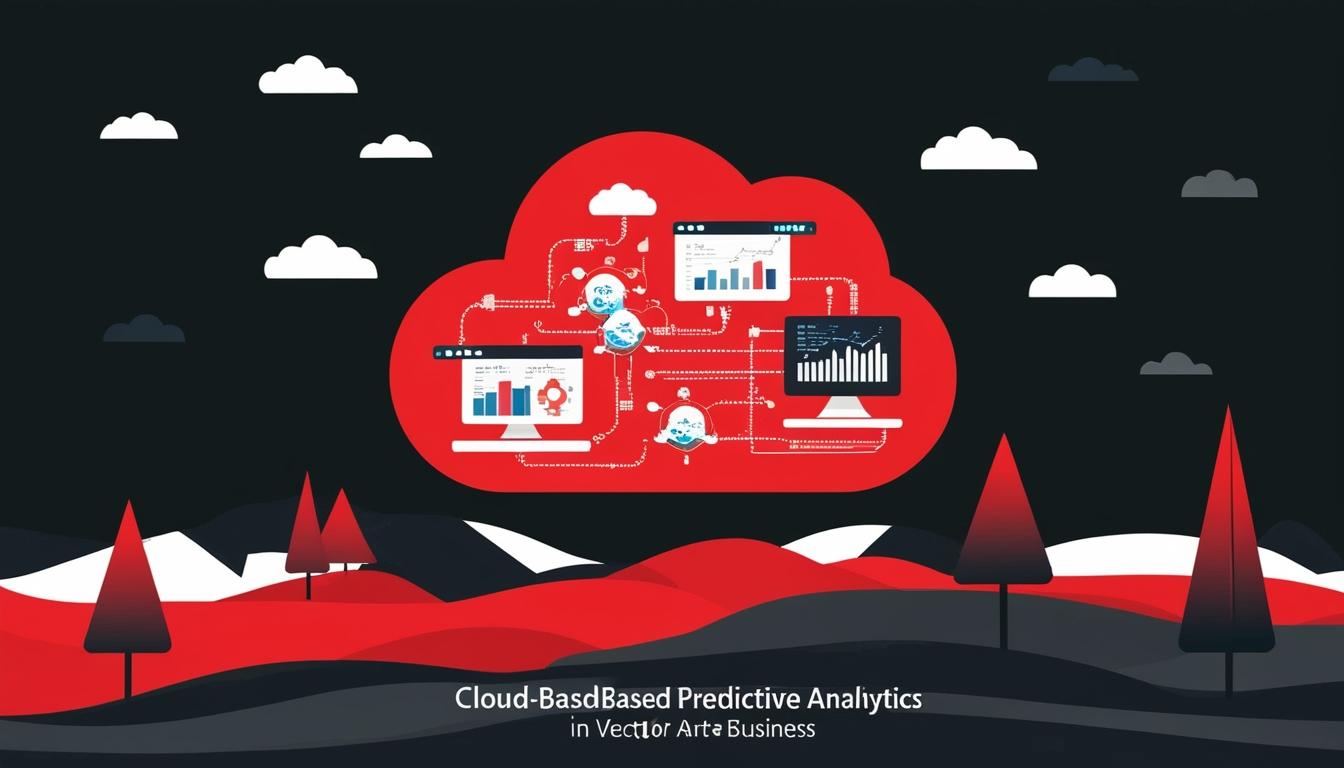
Recent analysis from Future Market Insights indicates a significant growth trajectory for the predictive analytics market, with an expected compound annual growth rate (CAGR) of 15.8% over the period from 2022 to 2032. The market, valued at approximately USD 12.8 billion in 2022, is projected to reach USD 55.5 billion by the year 2032.
The increasing implementation of cloud technologies is a driving force in this expansion. As noted in the RightScale 2019 State of the Cloud report, around 94% of businesses have adopted cloud deployment, and more than half of business data resides on these platforms. This trend highlights a growing preference for cloud-based predictive analytics, attributed to advantages like enhanced intuitiveness and simplified maintenance.
Cloud deployment offers businesses a range of benefits, including the seamless integration of artificial intelligence (AI) and cognitive capabilities, greater scalability, agility, and improved resource management. This deployment model also demands a lower initial investment while providing a more stable revenue trajectory. Major cloud services such as Google Drive, One Drive, and Office 365 exemplify the resources available for organisations looking to leverage predictive analytics.
The integration of AI into predictive analytics tools, particularly through platforms like Google Cloud AI, allows businesses to transition from merely analysing past performance to making informed predictions about future outcomes. This capability is aided by Google’s Vertex AI, which helps specialists develop complex models more efficiently and cost-effectively.
The migration towards cloud-based solutions facilitates easier implementation and integration, reducing the burden on IT personnel within organisations. Additionally, cloud computing enhances accessibility to vast data sets, many of which are exclusively available online, while improving data transfer speeds for businesses.
Key findings from the market analysis indicate that the banking, financial services, and insurance (BFSI) sector is expected to demonstrate the highest growth rate, with a projected CAGR of 15.7% during the forecast period. The United States is anticipated to remain the leading market for predictive analytics, with an absolute dollar growth opportunity estimated at USD 14.8 billion between 2022 and 2032.
An analyst from Future Market Insights remarked, "During the projected period, the rise of big data and machine learning are likely to become key drivers in raising the predictive analytics market revenue."
In the competitive landscape of predictive analytics, major industry players are increasingly prioritising research and development to gain a competitive edge. A notable example includes the decision by Bharti Airtel, a leading communication service provider in India, to adopt Oracle Fusion Cloud ERP and Oracle Fusion Cloud Supply Chain & Management (SCM) in February 2022 to streamline its financial planning and supply chain processes.
The market segmentation for predictive analytics includes components such as solutions—split into predictive financial, risk, marketing, sales, customer, and web and social media analytics—and associated services. The deployment mode is segmented into cloud and on-premises options, while organisation size classifications range from large enterprises to small and medium-sized enterprises (SMEs). Various industry verticals, including healthcare, telecommunications, and government, are also identified as potential markets for predictive analytics applications.
The findings from Future Market Insights paint a detailed picture of a rapidly evolving field that is increasingly anchored in technological advancements and cloud integration, underlining the transformative effects anticipated for business practices across diverse sectors.
Source: Noah Wire Services