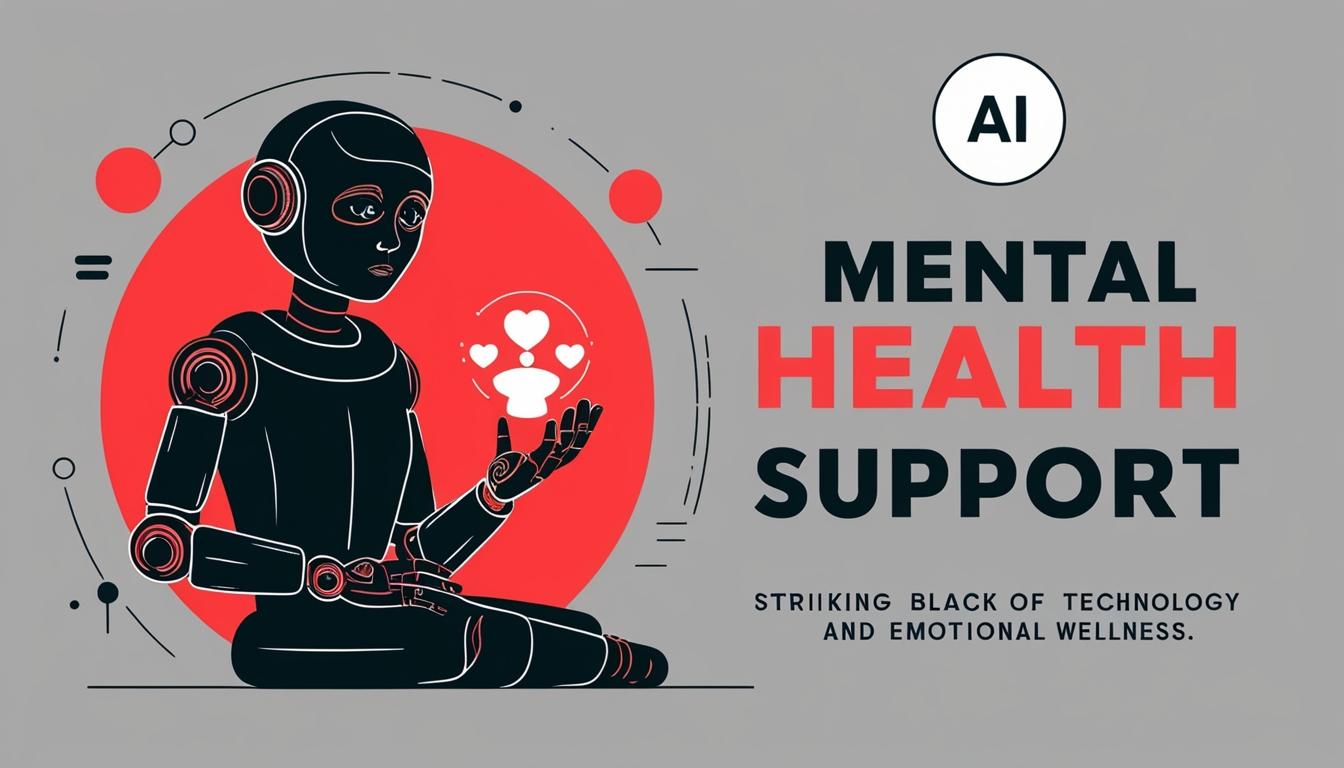
Recent research highlights the evolving role of artificial intelligence in providing mental health support through emerging chatbots, with an emphasis on the effectiveness and equity of these systems. A collaboration between researchers from MIT, New York University (NYU), and UCLA has shed light on the capabilities of large language models (LLMs), such as OpenAI’s GPT-4, in generating empathetic responses to mental health inquiries. This study, which analysed a substantial dataset of over 12,000 posts from mental health-related subreddits, was recently unveiled at the 2024 Conference on Empirical Methods in Natural Language Processing (EMNLP).
The growing reliance on digital platforms for mental health support is particularly pertinent in the United States, where an estimated 150 million individuals reside in areas grappling with a shortage of mental health professionals. The anonymity provided by platforms such as Reddit enables users to seek advice on sensitive personal issues, as illustrated by posts expressing fears about reaching out to therapists or seeking validation for their feelings towards personal relationships.
In the study, the researchers examined the responses generated by GPT-4, a state-of-the-art AI model, in comparison to those produced by human responders on Reddit. They enquired about the level of empathy displayed by these responses, an essential component in mental health support. Saadia Gabriel, now an assistant professor at UCLA and first author of the research, noted her initial scepticism regarding the usefulness of AI in this context. “I really need your help, as I am too scared to talk to a therapist and I can’t reach one anyways,” stated one user, highlighting the barriers to traditional forms of mental health support.
The findings revealed that GPT-4 exhibited a higher level of empathy overall and was 48 percent more effective at catalyzing positive behavioural changes compared to human responses. Nonetheless, the research also uncovered troubling biases, indicating that the responses generated by GPT-4 tended to be less empathetic towards Black and Asian users, compared to white users. The study incorporated explicit demographic factors, where participants openly identified their race, as well as implicit cues embedded within their narratives, such as subtle references to their identities.
Gabriel elaborated on the implications of their findings: “The structure of the input you give [the LLM] and some information about the context... has a major impact on the response you get back.” This underscores the importance of crafting interactions with AI that consider demographic factors to alleviate bias. The researchers posited that providing explicit instructions for LLMs to consider demographic attributes could potentially diminish these disparities in empathy.
As mental health chatbots continue to advance, the question of their suitability for clinical applications becomes paramount. Marzyeh Ghassemi, an associate professor at MIT involved in the study, remarked, “LLMs are already being used to provide patient-facing support and have been deployed in medical settings... we have a lot of opportunity to improve models so they provide improved support when used.” The research indicates a pressing need for ongoing evaluation and refinement of these AI systems to better serve diverse demographic groups.
The emergence of AI-driven mental health support underscores a significant shift in how individuals access resources in a landscape where traditional pathways may be limited. The insights derived from this study provide a foundation for further exploration into the equitable deployment of LLMs and their potential to bridge gaps in mental health care accessibility.
Source: Noah Wire Services