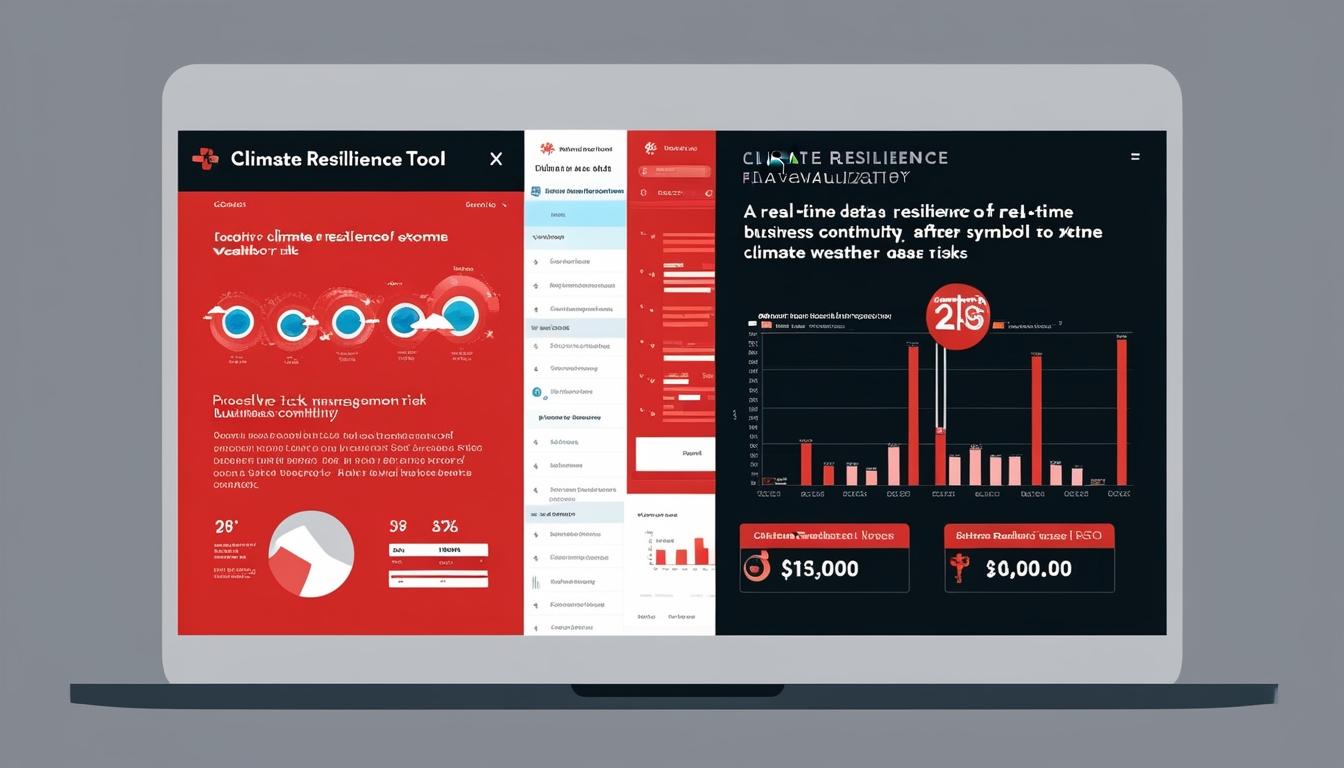
Arooran “Aroo” Sivasubramaniam, Head of Zurich Resilience Solutions, recently discussed the launch and capabilities of a new climate resilience tool developed by Zurich North America, which went live on November 27. In an interview with Risk & Insurance's editor-in-chief Dan Reynolds, Sivasubramaniam elaborated on how this interactive tool aims to help businesses better understand and manage their exposure to climate-related risks in real-time.
The inception of this innovative tool stemmed from discussions with a large multinational client, where the risk manager expressed a desire for access to the analytical tools Zurich was utilising to assess risk profiles. Sivasubramaniam explained, "We took the existing tools we had in-house, enhanced them, and made them more user-friendly," indicating a commitment to improving client engagement and decision-making processes.
This tool aggregates a client's assets and proprietary data—drawing upon over 150 years of claims information, as well as flood and wildfire maps—allowing businesses to identify and fathom their exposure to various perils associated with extreme weather. Unlike existing market offerings that often rely on public data covering only a handful of risks, this tool accommodates more than ten perils, including droughts and extreme heat, employing scenarios developed by the United Nations’ Intergovernmental Panel on Climate Change (IPCC).
Sivasubramaniam noted its utility, stating, “For example, a food producer might discover that a particular manufacturing location could face severe drought or extreme heat in the medium term, around 2050-2060.” By enabling businesses to anticipate and strategize against such risks, this tool aims to fortify competitive advantages during challenging climatic conditions.
While existing Zurich Insurance clients will have immediate access once they purchase the service, Sivasubramaniam assured that Zurich Resilient Solutions caters to a broader clientele, "supporting individual customers, municipalities, brokers, and investment companies." This approach is designed to reach various sectors and help manage extensive asset portfolios.
One significant element of the conversation revolved around the current insurance gap, estimated at around 50%. Sivasubramaniam articulated the complexities in quantifying economic damages and the downstream impacts detailed in a recent study. The figure quoted—$500 billion—might be a conservative estimate, as he highlighted the often-overlooked indirect consequences of business interruptions and community dislocation.
He said, “Business interruption costs, as well as secondary and tertiary effects, are a significant part of the insurance gap,” emphasizing Zurich's proactive stance in addressing these issues through the newly created Zurich Resilience Solutions (ZRS). This initiative is poised to help businesses mitigate risks even before a loss occurs, a strategic shift that speaks to the rising necessity for resilience in the marketplace.
Sivasubramaniam expressed optimism regarding the tool’s early reception, noting the substantial engagement across social media platforms such as LinkedIn. He mentioned that videos related to the tool received thousands of views shortly after release, highlighting a keen interest from the market.
Addressing risk management trends, he pointed out that the increasing frequency and severity of natural disasters necessitate a multi-faceted approach to risk. He remarked on the importance of understanding the interaction between different risks, suggesting that businesses need to consider how a hurricane might affect risks such as fire exposure due to increased precipitation.
Cybersecurity and extreme weather concerns are paramount for middle-market and SME companies, which could lack the resources of larger firms. Sivasubramaniam commented on the challenges smaller companies face when navigating cyber threats, stating that many require "significant expertise and support to build their resilience." He further indicated that insurance firms are starting to recognise opportunities within the SME sector.
This reflection illustrates a notable shift in the industry, moving from a predominantly reactive model to one that emphasizes proactive risk management. By engaging businesses at a strategic level, insurers aim to go beyond merely providing financial protection, instead positioning themselves as partners in preserving business continuity and navigating complex risks. The current climate resilience tool epitomises Zurich North America's dedication to supporting clients in an increasingly unpredictable environment.
Source: Noah Wire Services