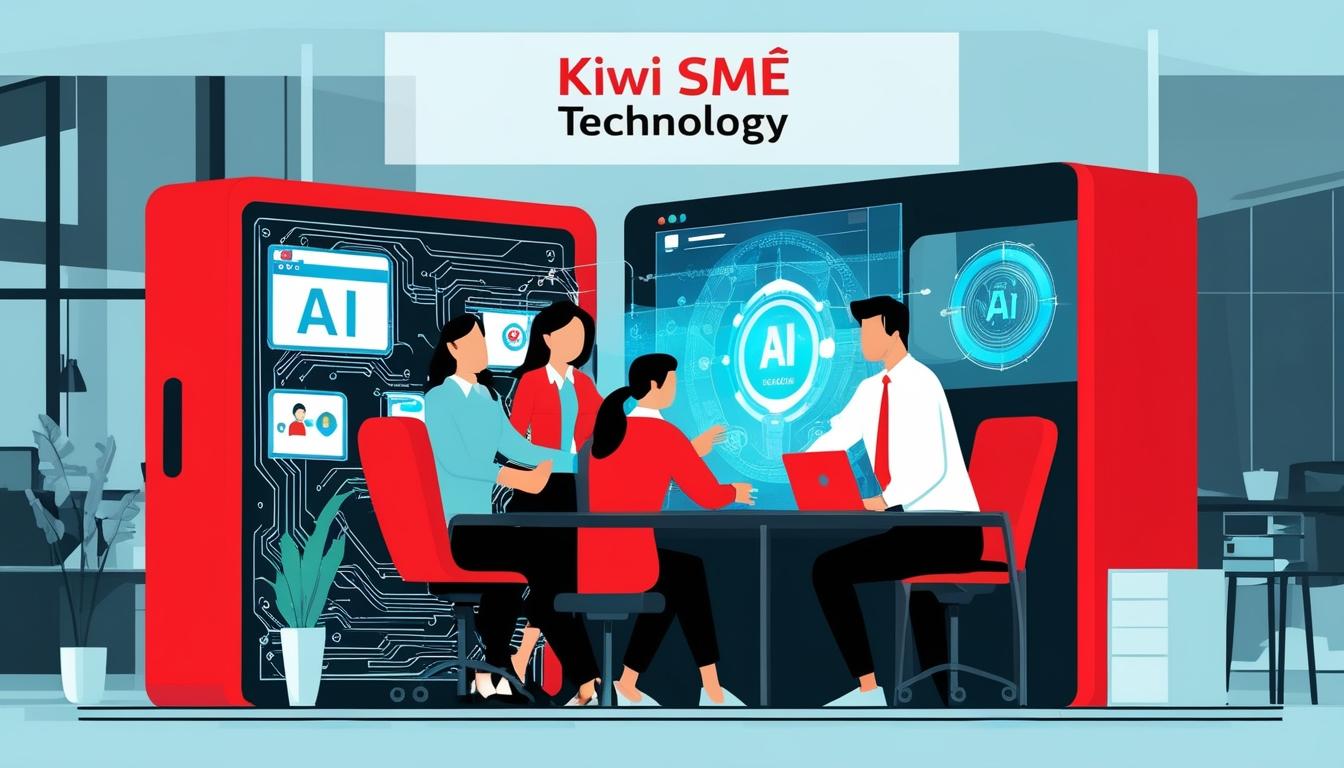
Small and medium-sized enterprises (SMEs) in New Zealand are rapidly adopting artificial intelligence (AI) technologies, significantly surpassing many of their global counterparts in this trend. According to recent insights from Salesforce’s Small & Medium Business Trends report, 82 percent of Kiwi SMEs are either experimenting with or actively implementing AI tools, which is notably above the global average of 75 percent and the Asia-Pacific region’s average of 63 percent.
The report highlights that among those SMEs utilising AI, an impressive 95 percent have reported increased earnings through enhancements in marketing strategies, automation of customer service tasks, and tailored recommendations. Adrian Towsey, Salesforce’s Area Vice President for Emerging SMBs in Australia and New Zealand, remarked on the tangible benefits observed: “Small to medium businesses across New Zealand are reporting overwhelmingly positive results from their early adoption of AI. Business leaders who have seized on early AI use cases – such as marketing optimisation and customer service – are scaling faster, with improved operating margins.”
Despite the optimistic outlook, which sees 74 percent of SME leaders expressing confidence in their future as AI adoption accelerates—outpacing the APAC average of 70 percent—challenges still loom regarding technological advancements. A substantial 70 percent of business leaders admit to the difficulties in keeping pace with the quick evolution of AI tools.
Furthermore, a report by Deloitte titled "AI at a Crossroads: Building Trust as the Path to Scale" sheds light on a critical obstacle faced by New Zealand organisations. It indicates that fewer than 10 percent have implemented mature AI governance frameworks, which are necessary for risk management and cultivating trust in AI systems. In New Zealand, prevalent concerns related to AI deployment focus on reliability and errors (87 percent), security vulnerabilities (85 percent), and privacy issues (85 percent).
Amy Dove, Trustworthy AI Lead Partner at Deloitte New Zealand, spoke about these risks: “We’re seeing real concerns around the risks associated with AI, but we also know that these risks can be managed with people, process and technology so that New Zealand businesses and organisations can reap the benefits of AI safely and responsibly.”
The skills gap in AI proficiency persists, with less than half of employees expressing confidence in using AI tools ethically and legally. To bridge this gap, nearly two-thirds of organisations have sought third-party partnerships. Additionally, the stakes for establishing mature AI governance are high; businesses that have done so report a 28 percent increase in staff adoption of AI solutions and nearly 5 percent higher revenue growth than those lacking such frameworks.
Microsoft's latest report, "From Hype to Habit: Exploring the Value of Generative AI at Work," reflects an almost universal adoption of AI tools across Kiwi businesses, with 98 percent reporting utilisation of these technologies. However, it also raises concerns regarding the implementation of a “use it or lose it” policy, which places pressure on employees to demonstrate quick returns on investment or risk losing access to AI tools. Lucy Debono, Microsoft’s Modern Work Business Group Leader for ANZ, cautioned against this approach: “With AI fast becoming fundamental to our way of working, these organisations ... risk falling behind competitors who are successfully adopting AI.”
The report emphasises that businesses reaping measurable returns are those investing in workforce empowerment and fostering a culture of AI literacy, which is essential for effectively integrating these tools in sustainable ways.
As AI becomes increasingly entrenched within New Zealand's SMEs, the research underscores a critical dual challenge: facilitating adoption while ensuring that governance, trust, and capabilities progress in tandem. Businesses adept at navigating this balance could unlock significant operational efficiencies and revenue growth. In Towsey’s words, “By using AI and autonomous agents to create personalised content and provide improved service, SMEs can improve the customer experience and build trust.”
Source: Noah Wire Services