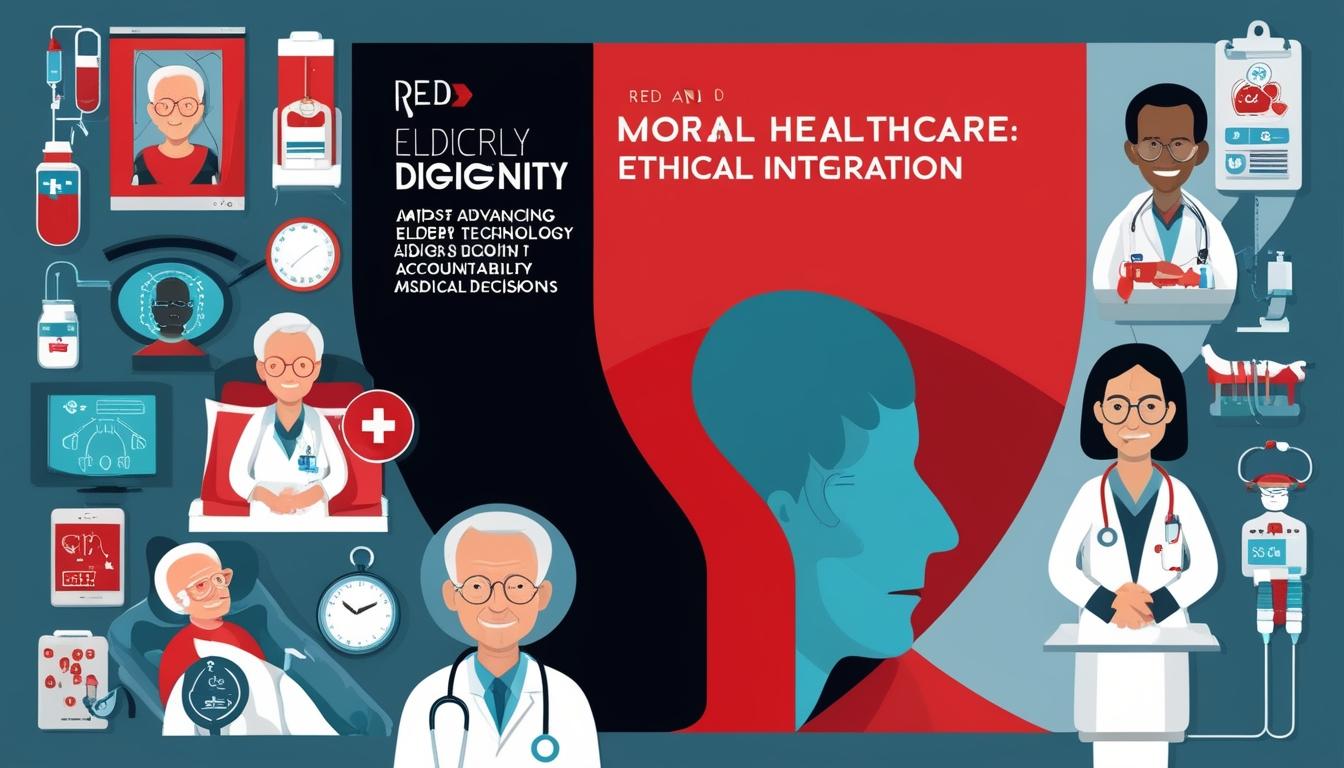
In recent discussions surrounding artificial intelligence (AI) and its integration into healthcare, experts have voiced both optimism and caution regarding its potential impacts, particularly concerning elderly patients. A notable contribution to this dialogue comes from Peter Abadir, MD, and Rama Chellappa, PhD, who articulated their vision for AI in healthcare in The Journals of Gerontology earlier this year. Abadir, a gerontologist at Johns Hopkins University School of Medicine, and Chellappa, an AI researcher within the same institution, highlighted that the foremost aim should be to create an environment where AI complements traditional healthcare practices while prioritising the dignity and well-being of older adults.
The authors outlined several noteworthy advancements in AI technology that they believe have the capacity to enhance healthcare delivery. These include a sophisticated algorithm developed at Stanford Hospital for evaluating a patient's mortality risk, which promotes vital end-of-life discussions; a Google AI platform that surpasses human radiologists in lung cancer detection accuracy; and another AI system from Johns Hopkins that assists surgeons in identifying optimal candidates for spinal surgery. Additionally, they mentioned a Bayesian Health data integration system designed to aid physicians in the timely detection of sepsis, a critical medical condition.
Despite these promising developments, the integration of AI into healthcare does not come without challenges, particularly in the ethical and moral dimensions of medical practice. Sarah Hull, MD, a cardiologist and clinical ethicist at Yale School of Medicine, shared her concerns during a recent interview with JAMA, stating, “Medicine is as much a moral endeavor as a technical one.” She emphasised that while AI holds potential as a supplementary tool for data interpretation, it raises critical questions about accountability and the ethical implications of its use in medical decision-making.
Hull recounted an early career experience involving a diagnostic dilemma where her intuition, rather than algorithmic data, led to a life-saving decision. She pointed out that entrusting AI with critical diagnostic responsibilities could lead to a lack of ethical accountability, especially if complications arise from robotic procedures. “Someone needs to own the ethical repercussions of that outcome,” she stressed. Hull raised concerns that the relentless drive for efficiency, as often seen with the implementation of electronic medical records, might overshadow the essential quality of care provided to patients.
The apprehensions regarding AI technology extend to its potential impact on the patient experience. Hull noted that patients often express feelings of being rushed through appointments, and an increased emphasis on productivity might exacerbate these sentiments. She believes that the integration of AI should not merely aim to increase throughput among healthcare providers but should ultimately focus on enhancing care quality.
In calling for a more collaborative approach to AI deployment, Hull urged healthcare providers and engineers to engage with a wide array of stakeholders, particularly those from historically underrepresented communities. She posed an important question regarding the priorities of these groups, asking, “What would they like to see AI do for them?” This dialogue, she asserts, is essential for ensuring ethical and effective integration of AI into healthcare systems moving forward.
As the conversation on AI in healthcare continues to develop, it is pertinent for all involved parties to consider the balance between enhancing efficiency and maintaining patient-centred care. The emergence of AI technologies presents opportunities for improved healthcare delivery, yet the path ahead requires careful consideration of the ethical implications and the prioritisation of patient welfare.
Source: Noah Wire Services