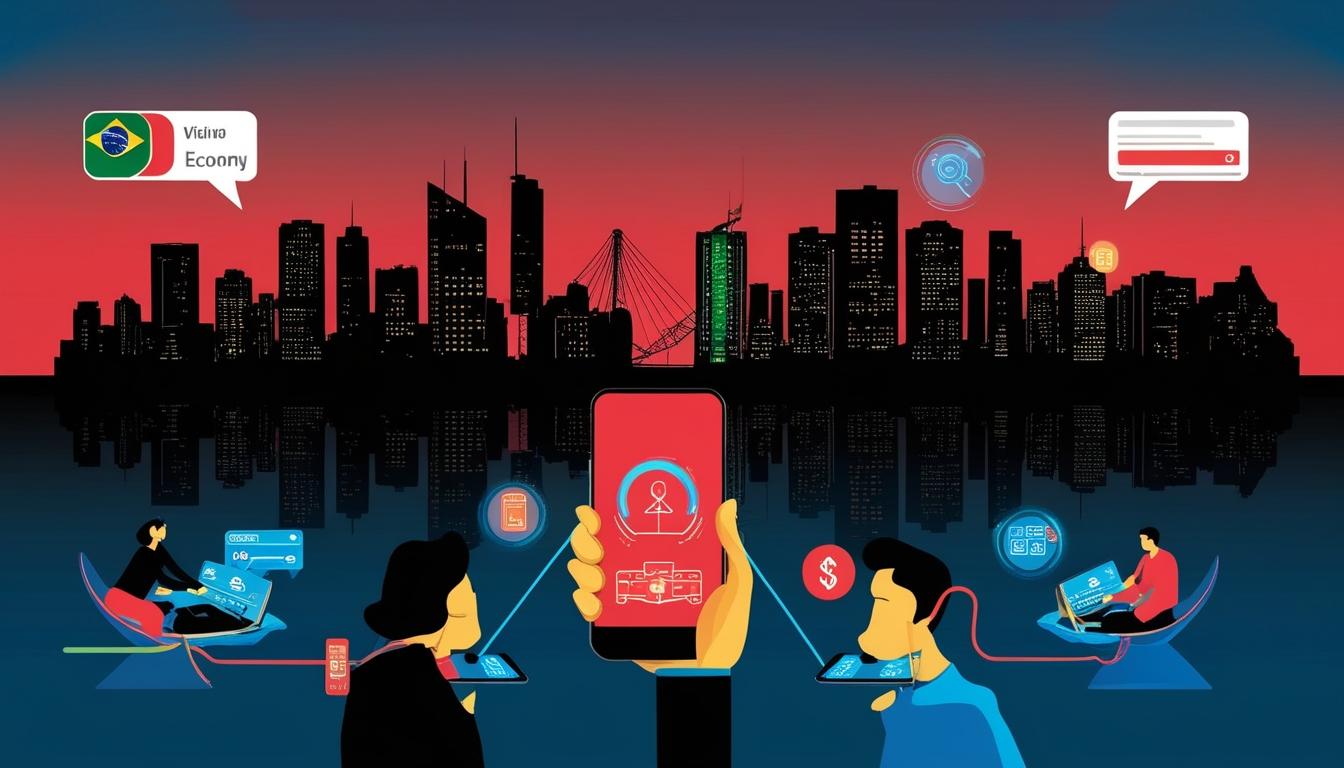
Brazil has emerged as a leader in digital connectivity as highlighted by the latest PYMNTS Intelligence data. The research categorises the country’s integration into the "Connected Economy," which encompasses various digital activities such as work, communication, and e-commerce. The statistics reveal that Brazilians engage in an impressive 361 digital activity days annually, translating to an average of 12 activities per day, significantly higher than the global average of 281 activity days.
With a population of approximately 215 million, the accessibility of technology in Brazil is noteworthy. Two-thirds of consumers own smartphones, and 92% have access to at least a 4G network. This robust infrastructure supports a digital lifestyle where online interactions, particularly in banking and shopping, are commonplace. Recent figures indicate that about 75% of consumers possess debit cards, and a remarkable 77% utilized Brazil’s instant payment system Pix as of 2022. The engagement with financial services firms via mobile is echoed by nearly two-thirds of the consumer base, showcasing a strong reliance on digital platforms for managing finances.
E-commerce is also flourishing, with consumers dedicating over 22 days each year to online shopping. Data from Brazil's central bank concerning Pix reveals an escalating trend in payment transactions, particularly notable during significant shopping events. For instance, on Black Friday, November 29, 2023, there were 239 million transactions processed, totaling around 130 billion reais (approximately $21 billion), marking an increase of nearly 121% compared to the previous year. Furthermore, statistics for the beginning of December show a continuation of high spending, with 250 million transactions leading to a value of approximately 124.2 billion reais (around $20.3 billion).
The expansion of Pix continues to gain momentum through recent collaborations and initiatives aimed at enhancing the payment system. A notable development includes cross-border payment platform dLocal, which has secured certification as a payment service provider in Brazil. This allows the company to facilitate Pix payments within the Open Finance ecosystem, streamlining the payment process without needing customers to switch to their banking apps. This advancement is expected to enhance merchant conversion rates by simplifying the checkout experience.
Additionally, a partnership between Peru’s B89 and PagBrasil has been established to integrate Pix International for merchants located outside of Brazil. This collaboration seeks to enhance the payment experience for Brazilian customers purchasing from physical and online retailers in other Latin American countries.
In a further step towards digitisation, the Pix by Proximity service is set to roll out to all users by February of next year, allowing payments via mobile devices in proximity to payment terminals, utilizing bank accounts linked to Google Wallet. This initiative exemplifies the increasing trend towards contactless payment methods in both brick-and-mortar and digital commerce.
Overall, Brazil's rapid adoption and adaptation of digital payment technologies exemplify the country’s commitment to integrating modern financial solutions within its economy, indicating a significant evolution in consumer behaviour and business operations within the region.
Source: Noah Wire Services