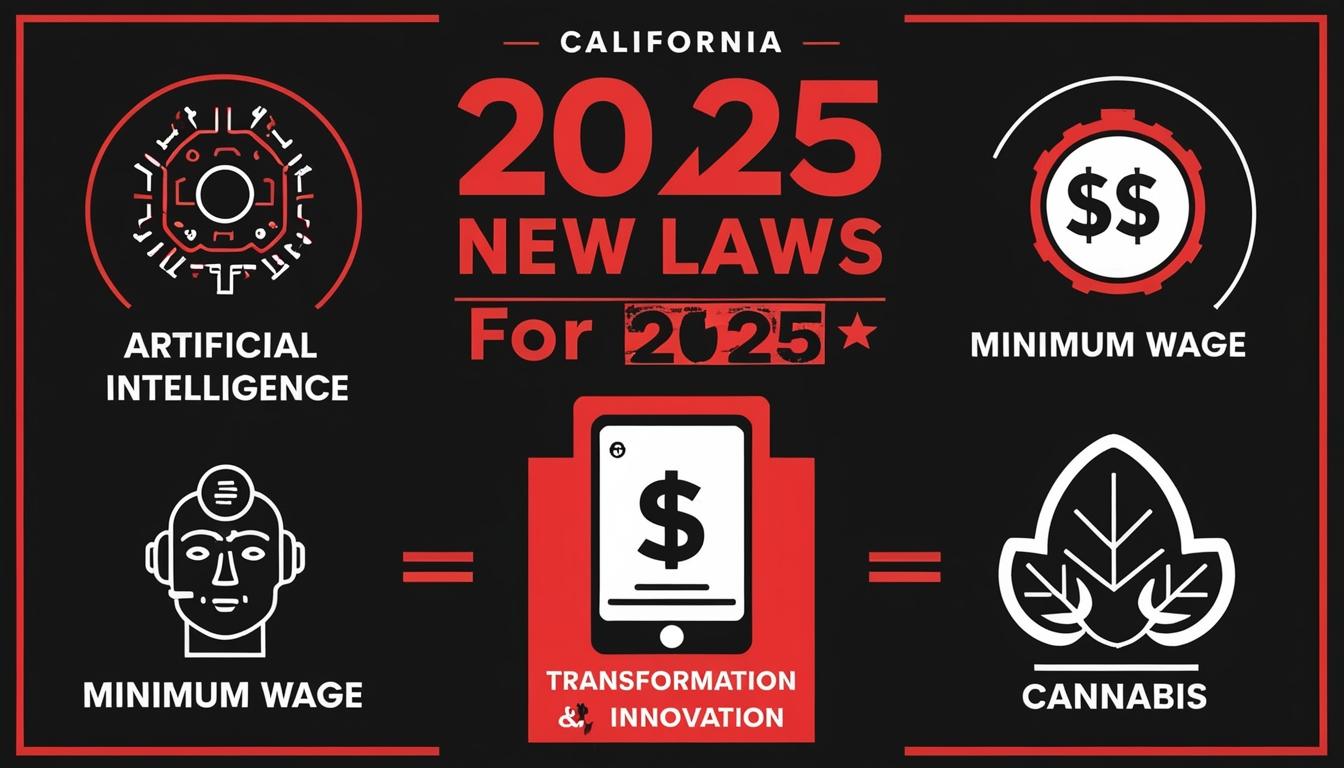
As California prepares for the onset of a new year, residents can anticipate a multitude of new laws that will take effect on January 1, 2025. These legislative changes will span several areas including public safety, business regulations, health, and workers’ rights, reflecting the state's ongoing efforts to adapt to contemporary challenges.
A significant focus of this legislative update is the growing prominence of artificial intelligence (AI) in various sectors, particularly in Hollywood. Under Senate Bill 926, the creation and distribution of sexually explicit images that are artificially generated, yet designed to appear authentic, will be prohibited if the intent is to cause emotional distress to the individual depicted. This law aims to address the rise of deepfakes, a technology that has raised notable concerns in terms of consent and personal privacy.
Another aspect of the new legislation is aimed at protecting the rights of deceased performers. Assembly Bill 1836 mandates that any digital replication of a deceased actor's image, likeness, or voice must obtain prior consent from their estate. To further bolster performers’ rights, Assembly Bill 2602 allows actors to terminate contracts if the language allows for future digital replication without explicit consent.
In the realm of workplace regulations, the California minimum wage is set to be adjusted to $16.50 per hour for all employers as stipulated in Assembly Bill 2123, with higher wages for fast food workers and healthcare facility employees. The law also expands the provisions surrounding paid family leave, allowing employees to use this benefit without having to first exhaust their accrued vacation time.
Freelance workers will notice changes with Senate Bill 988, which obligates employers to provide written contracts for professional services exceeding $250, thereby increasing transparency regarding payment terms and work expectations.
Further legislation impacting businesses includes Assembly Bill 1775, which grants licensed cannabis retailers the ability to operate cafes or lounges, enabling customers to consume cannabis products alongside meals or live performances. Additionally, Senate Bill 969 permits local governments to designate entertainment zones, providing a venue for the sale of alcoholic beverages on public streets, building upon laws enacted previously.
In the area of gun safety, several new bills have been introduced, including Assembly Bill 2917, which allows threats made towards individuals or groups to be considered in court when determining the issuance of restraining orders that could limit firearm purchases. Assembly Bill 574 requires an acknowledgment from firearm purchasers that they have confirmed possession of all firearms within the last 30 days, while Assembly Bill 1598 mandates that firearm dealers provide safety pamphlets highlighting risks associated with firearm ownership.
Health-related legislation will also see notable changes, with Senate Bill 729 requiring insurance coverage for infertility treatments, including in vitro fertilization. Assembly Bill 2515 takes a stance on health safety by prohibiting the distribution of menstrual products that may include hazardous chemicals, while Senate Bill 540 requires cannabis retailers to disseminate information regarding the health risks associated with cannabis.
These bills form part of a larger trend of reform within California, reflective of the state’s adaptability to emerging technologies and societal changes. As 2025 approaches, the implications of these new laws will unfold, reshaping aspects of daily life, business practices, and the regulatory landscape in California.
Source: Noah Wire Services