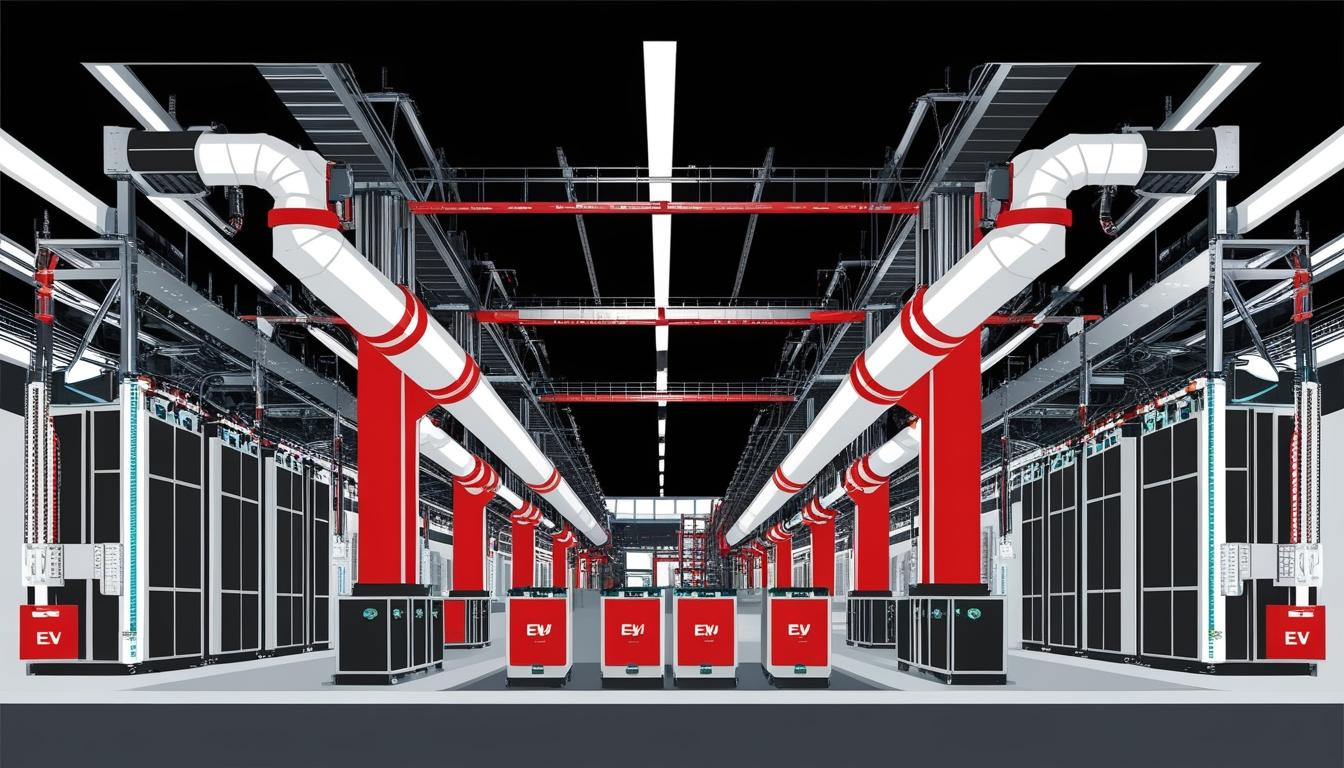
The electric vehicle (EV) boom is significantly reshaping the sheet metal industry, marked by the emergence of extensive EV battery plants across the United States. These large-scale facilities not only reflect a shift in automotive manufacturing but also highlight the unique demands of ductwork and climate control systems required for the production of EV batteries. This transformation has prompted sheet metal contractors to adapt their strategies to meet new specifications that are crucial for the efficient functioning of these facilities.
During a recent webinar hosted by ACHR NEWS, Cassie Todtenhagen, product manager of insulation systems at Johns Manville, underscored the specific needs of EV manufacturing plants, particularly in relation to ductwork. She noted that many of these facilities require an extraordinary volume of ductwork, with one facility necessitating as much as 37 miles. Furthermore, Todtenhagen emphasised that the standards for duct leakage are exceptionally stringent, calling for levels below ½ of ½%. She remarked, "What's unique about EV compared to a lot of the others, and just the manufacturing segment in general, is the technology that's required to maintain the internal environment is so much more important than it ever has been."
The substantial scale of these plants is comparable to that of sports arenas or skyscrapers; however, their technical requirements are what notably distinguish them from other manufacturing operations. Maintaining precise internal environmental conditions is critical for producing EV batteries, thereby necessitating advanced methods of insulation and climate control. Consequently, there has been a notable shift in insulation strategies; companies are increasingly favouring external insulation over more traditional internal duct lining. "What we've seen from an insulation perspective is a switch from internal to external insulation," said Todtenhagen, stressing the preference for wrapped duct systems which prioritise thermal efficiency.
As the location of these plants increasingly overlaps with residential areas, the issue of acoustics has begun to resurface as a concern. Todtenhagen highlighted this trend, stating, "As they get closer to residential spaces, the acoustics are being required either as a retrofit or as a part of the design from the beginning of the project."
Mike Bailey, Senior Vice President of Sales at Mestek Machinery, shared insights into the enormity and intricacy of these facilities, showcasing images from a significant EV battery plant in Jackson, Tennessee. He pointed out the astonishing scale of the ductwork involved, stating, "37 miles of ductwork inside this plant just for batteries is phenomenal. 2.2 million pounds of ductwork to support this project." Ventcon, the largest sheet metal contractor in the Detroit area, has been actively engaged in several of these massive projects, particularly within Ford's Blue Oval City initiative. In response to the high demands, Ventcon has strategically invested in new machinery and established dedicated sheet metal shops close to each project site, facilitating enhanced coordination and logistics.
Bailey further highlighted the importance of effective communication and planning in supporting Ventcon’s successful execution of these projects. "When you have projects like this coming down the pipeline, communication is key," he stated.
The passage of the Inflation Reduction Act (IRA) has served to further catalyse the EV manufacturing sector, leading to commitments exceeding $165 billion aimed at bolstering domestic production capabilities. This growth is generating unprecedented demand for sheet metal contractors and manufacturers alike. Patrick Newland, manager of business development at Hercules Industries, spoke about the responsiveness of his company to this evolving landscape. Hercules Industries has expanded its operations with a new 100,000 square foot duct fabrication facility and has integrated vertically, which allows them to keep costs low and maintain sufficient material inventories. Newland detailed the expansive reach of their operations, narrating, "We're shipping material all the way into Indianapolis for some of these EV plants and all the way into Nevada, all the way from Denver to Phoenix."
The effects of the IRA are resonating broadly within the manufacturing sector, stimulating growth beyond merely the mega initiatives. Newland indicated that regions like Phoenix, which host clusters of chip plants and data centres, are currently witnessing a surge in residential construction activity alongside the creation of new job opportunities. Consequently, this has led to an uptick in demand for sheet metal products within the multifamily housing sector.
As the EV revolution forges ahead, sheet metal contractors are positioned to play an indispensable role in developing the necessary manufacturing infrastructure. By adapting to new technologies and implementing innovative strategies, these contractors can effectively navigate and capitalise on the sweeping changes unfolding within the industry. The webinar from ACHR NEWS is available on demand, providing additional insights from industry experts about the challenges and prospects present in this rapidly evolving sector.
Source: Noah Wire Services