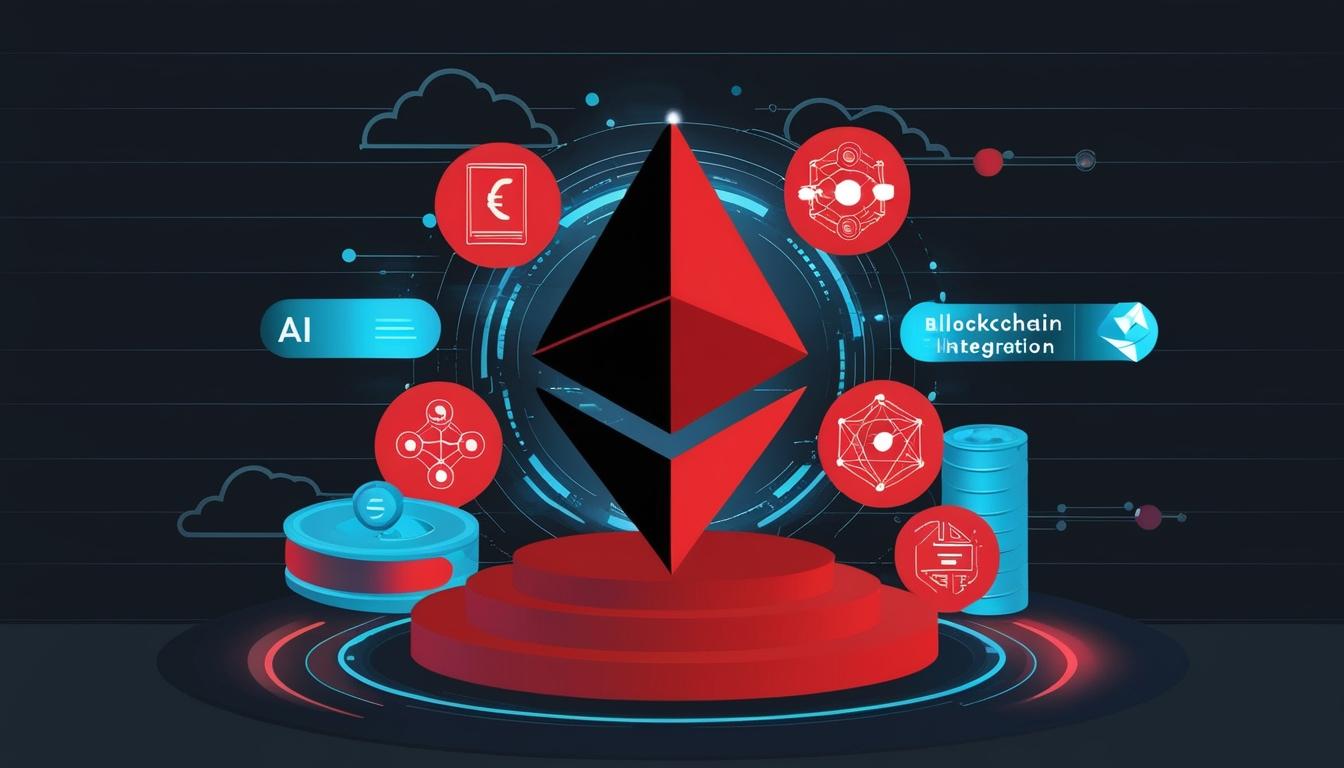
Ethereum has solidified its status as a widespread platform for developing decentralised applications (DApps), thanks in large part to its strong smart contract functionalities and robust blockchain infrastructure. The technology enables developers to create scalable, secure solutions, effecting significant transformations across various industries, including finance and supply chain management. By utilising Ethereum’s capabilities, developers can automate processes, enhance transparency, and build trust without the need for intermediaries.
Recent insights reveal the essential components of Ethereum’s architecture, the process for creating smart contracts, scalability solutions such as sharding and Layer 2 technologies, and security best practices. The Bitcoinist reports that Ethereum's transition to a proof-of-stake consensus mechanism has substantially decreased its energy consumption by 99.9%, addressing growing environmental concerns linked to blockchain technologies.
In addition, the approval of spot Ether exchange-traded funds (ETFs) has improved accessibility for investors, allowing them to engage with Ethereum's value without requiring a digital wallet. The large community of developers surrounding Ethereum continues to spur innovation, securing its critical role in the blockchain ecosystem.
While Ethereum’s established dominance in the decentralised application domain is evident, emerging projects like Lightchain AI are expanding the horizons of blockchain technology by integrating artificial intelligence (AI) directly into the blockchain framework. This symbiosis facilitates advanced capabilities such as real-time AI computations and AI-driven smart contracts, functionalities not inherently supported by Ethereum.
Lightchain AI focuses on specific applications of AI where complex data processing and machine learning are paramount, thereby addressing niche requirements beyond what general-purpose blockchains like Ethereum can offer. The emergence of such innovative projects indicates an evolution in the landscape of blockchain technology, expanding potential applications particularly in AI integration.
For developers seeking to build on Ethereum, the process involves a series of key steps. First, a solid understanding of Ethereum’s decentralized, peer-to-peer network is crucial, along with knowledge of its consensus mechanisms, transaction processes, and data storage methods. Learning the Solidity programming language, Ethereum’s main language for writing smart contracts, is essential for creating secure and efficient contracts.
The comprehensive development process also includes defining a clear use case, designing the application’s architecture, writing, and deploying smart contracts, along with rigorous testing and auditing protocols to identify vulnerabilities. Developers should prioritize optimising their DApps for scalability and user experience to enhance functionality and ensure security against potential attacks.
Real-world applications powered by Ethereum span multiple sectors. In the realm of decentralised finance (DeFi), platforms such as MakerDAO enable users to engage in lending and borrowing facilitated by smart contracts. Notable examples are found in the non-fungible token (NFT) space, with projects like CryptoKitties showcasing Ethereum’s capacity for handling digital ownership and scarcity. Further, applications in supply chain management improve product tracking, while gaming innovations, such as Axie Infinity, give players ownership and the ability to monetise in-game assets.
Lightchain AI is attracting attention in the Ethereum ecosystem due to its focus on AI integration. Its platform offers distinct advantages for industries requiring advanced AI functionalities and benefits from seamless compatibility with Ethereum’s smart contracts. The presale of the LCAI token presents an opportunity for early investors in this forward-thinking initiative.
As blockchain and AI integration progresses, both Ethereum’s architecture and the capabilities of AI-focused platforms suggest a bright future for innovative decentralised applications. With technology continuing to evolve and gain mainstream acceptance, emerging use cases are expected to reshape industries by improving efficiency, transparency, and trust. The future of blockchain and AI integration is poised for substantial growth, with developers invited to explore and innovate within this dynamic landscape.
Source: Noah Wire Services