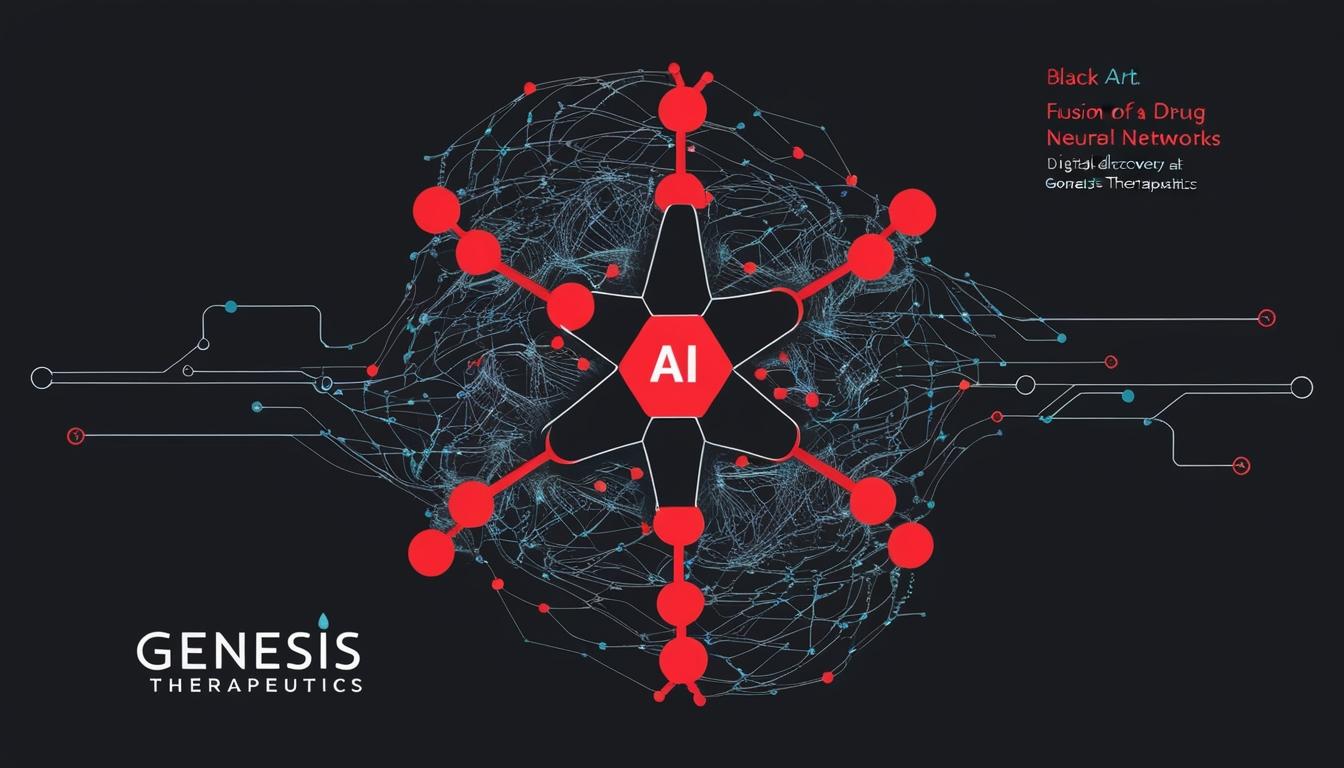
Genesis Therapeutics, a pioneering firm in the field of molecular AI, was founded in 2019, emerging from the Stanford University lab of Vijay Pande, PhD. Evan Feinberg, PhD, a key figure in the company, co-invented PotentialNet, a neural network algorithm that significantly advanced the use of graph neural networks in predicting molecular properties, particularly in relation to protein–ligand binding affinity.
The company quickly gained traction, securing $52 million in a Series A financing the year after its inception, and subsequently raising over $300 million in total financing rounds, including a notable $200 million Series B completed in 2023. Prominent investors in this latest round include NVentures, the venture capital arm of Nvidia, known for its leadership in AI chip production. Recently, Nvidia increased its investment in Genesis with an undisclosed additional amount, solidifying a strategic partnership aimed at enhancing Genesis’ AI platform, referred to as Genesis Exploration of Molecular Space (GEMS).
GEMS is designed to facilitate the development and optimisation of molecules tailored for complex targets using a range of proprietary AI methodologies including language models and diffusion models, alongside physical machine learning simulations. "Nvidia is the leader in many aspects of the AI stack, both in terms of hardware, but also the lower-level software layers on top of that hardware, whereas Genesis has been pioneering molecular AI as an intellectual area," Feinberg stated in an interview with GEN Edge. This partnership aims to synergistically advance their respective strengths in AI and molecular drug discovery.
Focusing on specific tasks relevant to drug development, the collaboration will enhance the performance of equivariant neural networks, which are particularly effective for processing 3D geometric data such as molecular structures. The need for efficiency in computation for various neural network architectures is crucial for the advancement of drug discovery technologies.
The emergence of novel neural network types, specifically tailored for molecular applications, has been central to Genesis’ ongoing research and development efforts. Feinberg noted the evolution from traditional AI fields like computer vision to molecular AI, which necessitated the creation of distinct algorithms suitable for chemical data. This evolution includes the implementation of new computational strategies specific to molecular AI, an area in which Nvidia is actively assisting.
Genesis is strategically channelling resources towards drug discovery, particularly in oncology and immunology. Notable projects in oncology are in advanced lead optimisation phases, targeting treatments for cancers such as breast and colorectal, while efforts in immunology focus on developing therapies for autoimmune disorders and severe genetic autoinflammatory diseases.
Along with its internal research initiatives, Genesis has formed partnerships with major biopharmaceutical companies. Recently, a collaboration with Gilead Sciences was formalised, which includes a financial commitment of $35 million for the development of small molecule therapies across various targets. Past collaborations include partnerships with Eli Lilly, valued at up to $670 million, and a multi-target collaboration with Genentech, part of the Roche Group.
Genesis operates from its headquarters in Burlingame, California, with a fully integrated laboratory established in San Diego, employing around 80 staff members. As the company seeks to expand through funding and partnerships, Feinberg indicated a significant growth trajectory in headcount and capabilities, though specific projections remain open-ended.
Source: Noah Wire Services